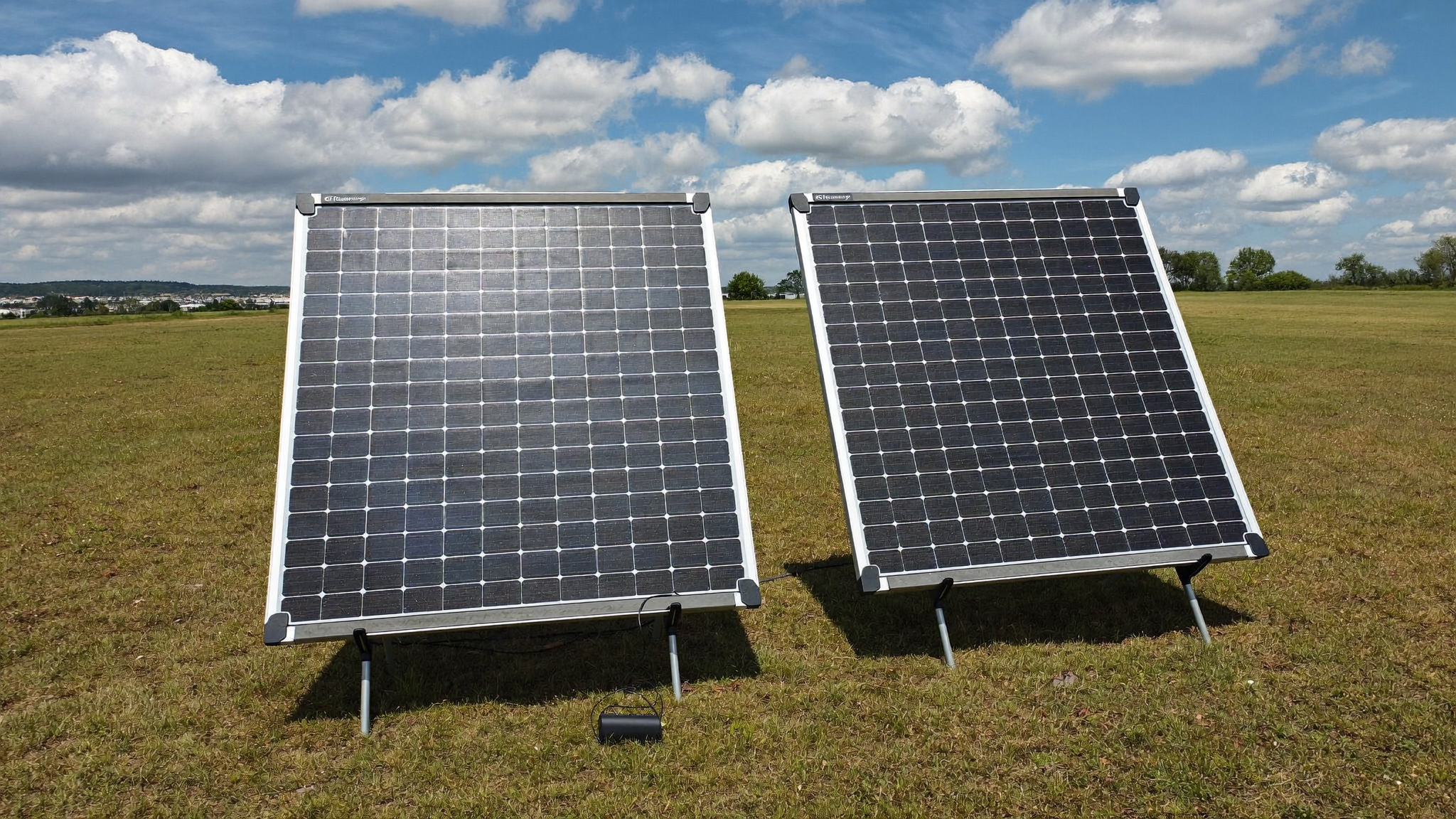
What Anker Solar Panels Actually Are
Disclosure: This article contains affiliate links, which means we may earn a commission if you purchase through them, at no extra cost to you.
Anker solar panels sit in a specific category: portable, foldable panels designed to pair with portable power stations rather than replace a rooftop installation. That distinction matters more than most product pages let on. If you’re expecting to run a refrigerator indefinitely or cover a house’s baseload, these aren’t that. But if you want to recharge a battery pack while camping, keep a balcony power setup topped off, or build a compact emergency system — this is exactly the right tool.
The lineup spans from compact panels suited for phone-and-light charging all the way up to larger foldable units capable of meaningful power generation. Most use monocrystalline silicon cells, which is the right call for portable use: higher efficiency per square inch means a smaller, lighter panel that still produces useful wattage.
Efficiency: What the Numbers Mean in Practice
Anker solar panels advertise efficiency ratings that sound impressive on spec sheets. Here’s how to read those numbers honestly.
Panel efficiency tells you how much of the sunlight hitting the surface actually becomes electricity. A panel rated at 23% efficiency converts 23% of incoming solar energy — the rest is lost as heat or reflection. For portable panels, anything above 20% is genuinely good. It means the panel can be physically smaller while still hitting its wattage target.
But rated wattage assumes Standard Test Conditions: 1,000 watts of solar irradiance per square meter, a cell temperature of 25°C, and a specific light spectrum. You’ll almost never hit those conditions outdoors.
In real use:
– Direct midday sun in summer: you might reach 80–90% of rated output
– Partly cloudy days: expect 40–60%, sometimes less
– Morning or late afternoon: the angle drops output significantly
– Hot days: cell temperature rises, and efficiency drops — sometimes by several percent
A 100W panel on a hazy afternoon through a dirty cell surface might give you 50–60W. That’s not a flaw; it’s physics. Plan your system around realistic output, not peak ratings.
The MPPT and MC4 Questions
Two specs come up constantly with anker solar panels, and both are worth understanding before you connect anything.
MPPT vs PWM Charge Controllers
Most portable power stations use Maximum Power Point Tracking (MPPT) charge controllers internally. MPPT extracts the most power possible from a panel across varying light conditions — it constantly adjusts the electrical load to stay at the panel’s most productive operating point. This is why pairing a quality solar panel with a cheap PWM-only charge controller throws away efficiency unnecessarily.
If you’re using anker solar panels with a compatible portable power station, the MPPT is handled for you inside the station. Just plug in and monitor output.
Connectors and Compatibility
Portable foldable panels typically use one of two connector types: MC4 (the industry standard for outdoor solar) or proprietary barrel-style connectors. Anker panels generally ship with adapters for multiple connection types, but always verify your power station’s input connector before assuming it’s plug-and-play.
Paralleling two panels to double output is possible — but only when the voltage and current specs are within your power station’s input limits. Stacking wattage beyond what the charge controller can handle doesn’t speed up charging; it wastes the excess.
Daisy-Chaining and Expandability
One practical advantage of anker solar panels is support for chaining multiple units together. You can connect several panels in parallel to increase current (amps) while keeping voltage the same — useful if your power station accepts high amperage at a fixed voltage.
Series wiring increases voltage, which some stations handle better than others. Read your power station’s solar input spec carefully:
– Maximum input voltage: never exceed this; it can damage the charge controller
– Maximum input wattage: the hard ceiling on what the station will accept
– Recommended voltage range: the sweet spot for efficient charging
For most portable power station setups, parallel wiring of two or three panels is the practical limit before you hit the station’s wattage ceiling anyway.
Real-World Use Cases That Actually Work Well
Overlanding and Van Life
Foldable panels that lay flat on a roof rack or fold out at a campsite are a natural fit here. The compactness matters when storage space is tight. A pair of well-positioned panels can meaningfully offset how often you need shore power or generator time — not eliminate it, but reduce it significantly on sunny days.
Balcony Power Systems
This use case has grown fast in Europe and is catching on elsewhere. A foldable panel angled against a railing feeds a small battery, which then powers lights, a fan, or keeps devices charged. It’s not grid-scale production, but it’s real and measurable offset.
Emergency Preparedness
A solar panel stored flat in a closet doesn’t degrade meaningfully over years. When grid power goes out for days — after a storm, during an extended outage — a panel and a charged battery station is a genuinely useful combination. Anker solar panels with a large-capacity portable power station can handle phone charging, small appliances, a CPAP machine, and lighting for multiple days if managed carefully.
Base Camping
Car camping or base camping where the panel sits stationary for hours is probably the best-case scenario for output. Set it up, angle it properly, and let it run while you hike. Come back to a topped-off battery. This is where the wattage ratings come closest to real-world results.
Getting Maximum Output: Positioning Matters More Than You Think
Panel angle and orientation have a larger effect on output than most people expect until they test it.
- Aim for perpendicular to the sun: the panel should face the sun directly, not at an angle. Even a 30° tilt away from optimal can cut output noticeably.
- Avoid partial shade: a single shaded cell can drag down the whole panel’s output disproportionately because of how cells connect in series strings.
- Keep cells clean: dust, bird droppings, and fingerprints reduce output. A quick wipe with a damp cloth before a charging session makes a real difference.
- Reposition through the day: the sun moves. A panel optimally angled at 10am is losing output by 2pm if you haven’t adjusted it. Even one mid-day repositioning adds meaningful energy.
Durability and Long-Term Use
Portable solar panels take physical abuse that rooftop panels never face: folding, unfolding, being packed and unpacked, rained on, and left in hot car trunks. The weak points are almost always the cables and connectors, not the cells themselves.
Inspect connector ends periodically. Any corrosion or physical damage to the connector is worth addressing early — a damaged connector causes resistance, which causes heat, which reduces output and can eventually cause failure.
The cells inside anker solar panels are rated for a substantial lifespan, with gradual efficiency degradation over years. Portable use is gentler on cells than harsh rooftop UV exposure, but rougher on everything mechanical. Treat the cables with care and the panels will outlast most other gear in your kit.
What Anker’s Solar Lineup Doesn’t Cover
Be clear-eyed about the category limits. Anker solar panels are not designed for:
– Permanent roof mounting
– Grid-tied systems
– High-voltage string installations
– Powering heavy appliances directly without a battery buffer
For those applications, the right tool is a different category entirely — fixed rigid panels, an inverter, and a proper charge controller.
For portable, flexible, go-anywhere solar that pairs with modern battery storage, the ecosystem is well-designed and the components genuinely work together. Understanding exactly what you’re working with — the efficiency realities, the connector specs, the positioning discipline required — is what separates a frustrating experience from one that reliably delivers.
Leave a Reply