Category: Uncategorized

  • Jackery 500: What It Actually Does and Who It’s For

    Jackery 500: What It Actually Does and Who It’s For

    (This article contains affiliate links. If you buy through them, we may earn a small commission at no extra cost to you.)

    What the Jackery 500 Actually Is

    The jackery 500 is a 518-watt-hour lithium portable power station — a self-contained battery unit with a built-in inverter, multiple output ports, and a solar-input port. That number in the name refers to its usable capacity in watt-hours, which is the single most important figure to understand before you do anything else with it.

    It weighs around 13.3 pounds. That matters because this class of power station sits in a specific zone: heavy enough that you won’t casually throw it in a daypack, but light enough to carry in one hand from your car to a campsite. It’s genuinely portable in a way that larger 1,000+ Wh units simply aren’t.


    Understanding the Capacity: What 518 Wh Means in Practice

    Watt-hours tell you how much energy is stored. To translate that into real-world use, you divide the device’s wattage draw into the total capacity — then apply a conversion efficiency discount of roughly 85–90%, because no inverter is perfectly efficient.

    Here’s what that looks like for common devices:

    Devices It Handles Comfortably

    • Laptop (45–65W): Roughly 6–9 full charges depending on the laptop
    • Smartphone (18W fast charge): 25–30 charges
    • LED camping lantern (5–10W): 40+ hours of runtime
    • Mini fridge (40–60W average draw): Approximately 8–10 hours of continuous operation
    • CPAP machine without heated humidifier (~30–40W): 10–13 hours — enough for a full night, comfortably
    • Drone battery charger (50–80W): 6–8 charges
    • Small box fan (25–50W): 8–15 hours

    What It Struggles With

    The jackery 500 has a 500W continuous AC output rating with a peak surge capacity around 1,000W. That sounds like a lot until you look at what common household appliances actually draw:

    • Microwave: won’t run — a “700W” microwave rating refers to cooking power; the appliance actually draws 1,000–1,200W from the outlet, well past this unit’s 500W continuous rating, so the overload protection shuts it off within seconds. Microwaves of any size are off the table for the 500 Wh class
    • Hair dryer: 1,200–1,875W — too much for the continuous rating
    • Electric kettle: 1,200–1,500W — same problem
    • Power drill (startup surge): Often exceeds 1,000W on startup; may or may not trigger the overload protection
    • Space heater: Almost always 750W+, often 1,500W — not a good match

    The honest answer is that the 500 Wh class is a 12V and small-appliance station. It’s not a whole-home backup. People who expect to run a coffee maker, microwave, and laptop simultaneously are going to be disappointed. People who need lights, phone charging, a CPAP, and maybe a small cooler are going to love it.


    Charging the Unit: Speed and Options

    The jackery 500 can be recharged three ways:

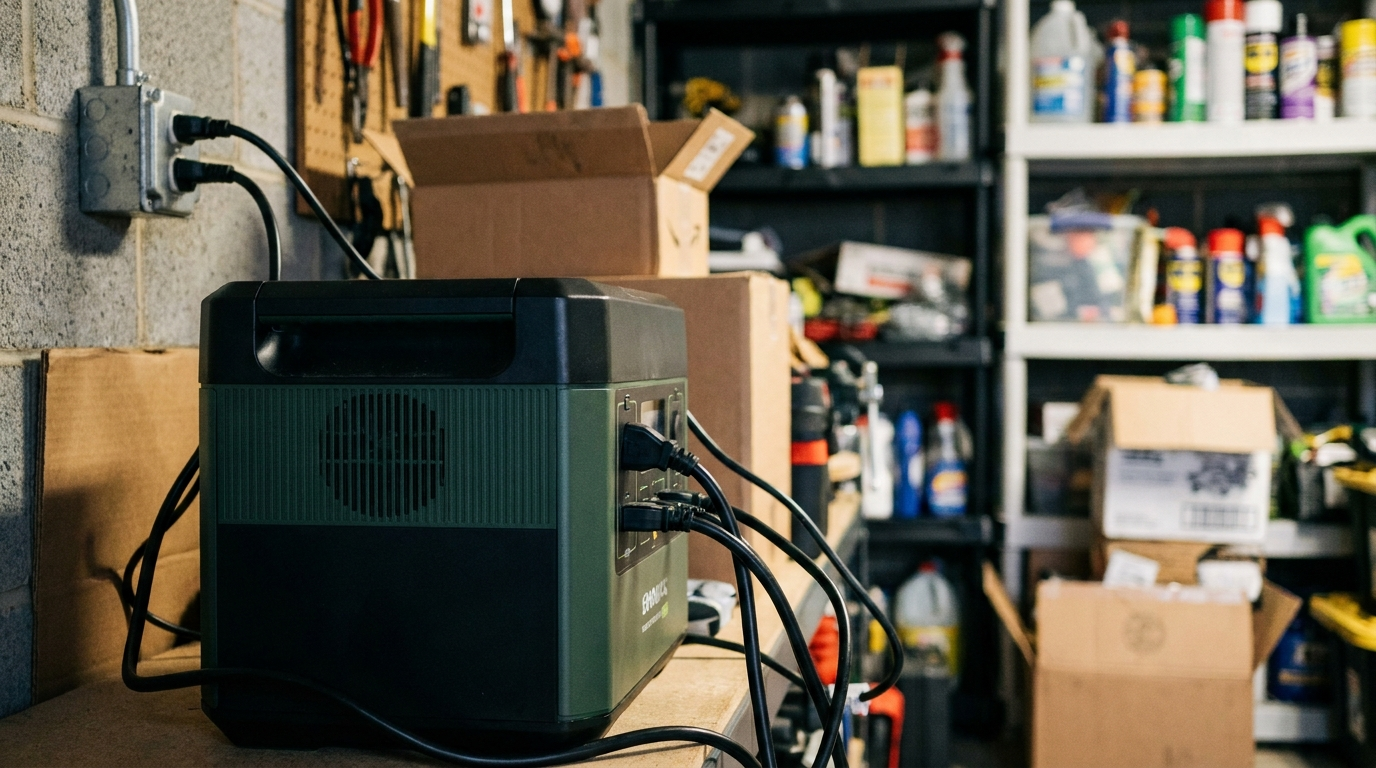
    Wall outlet (AC adapter): This is the fastest method. Using the included adapter, you’re looking at roughly 7–8 hours from near-empty to full. That’s slower than some competitors in the same class, which is worth knowing. It’s not a problem for planned use — charge it the night before a camping trip — but it’s annoying if you need it fast.

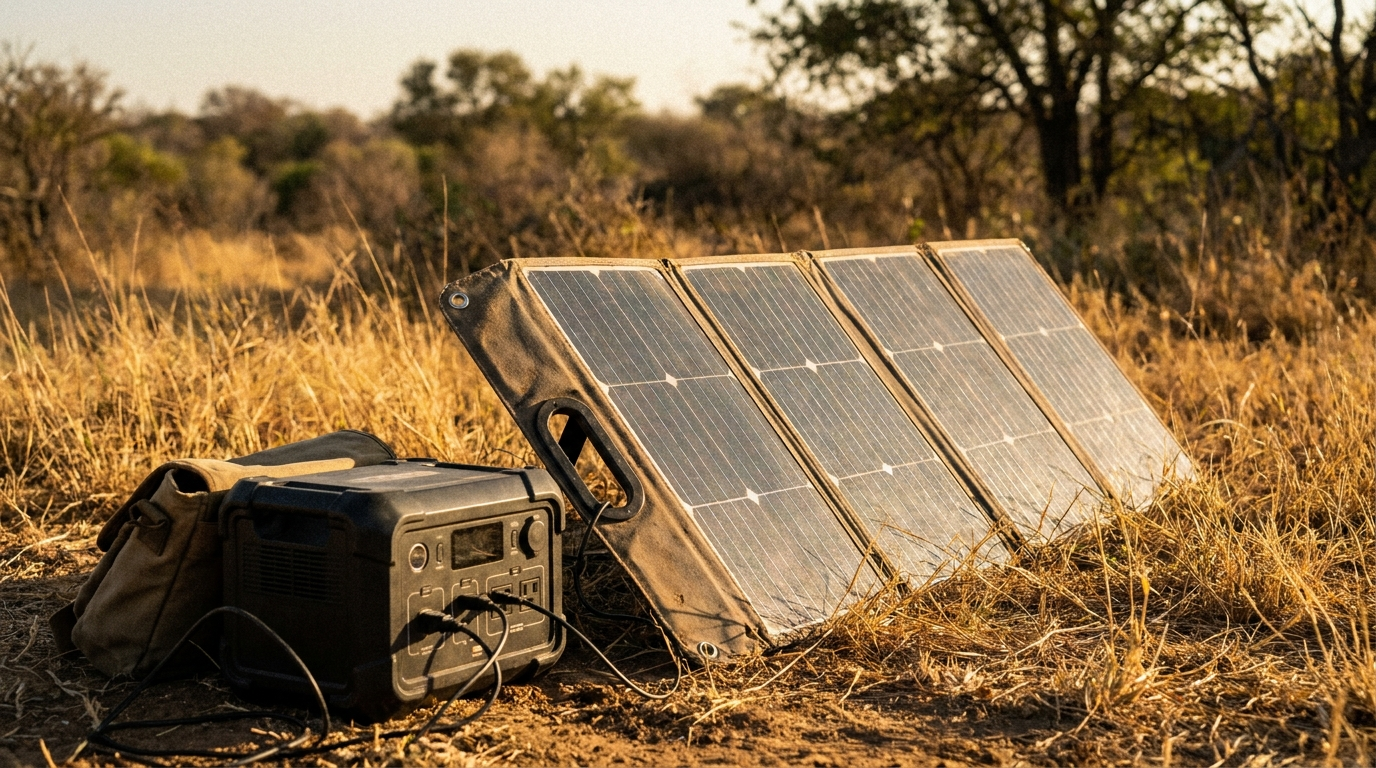
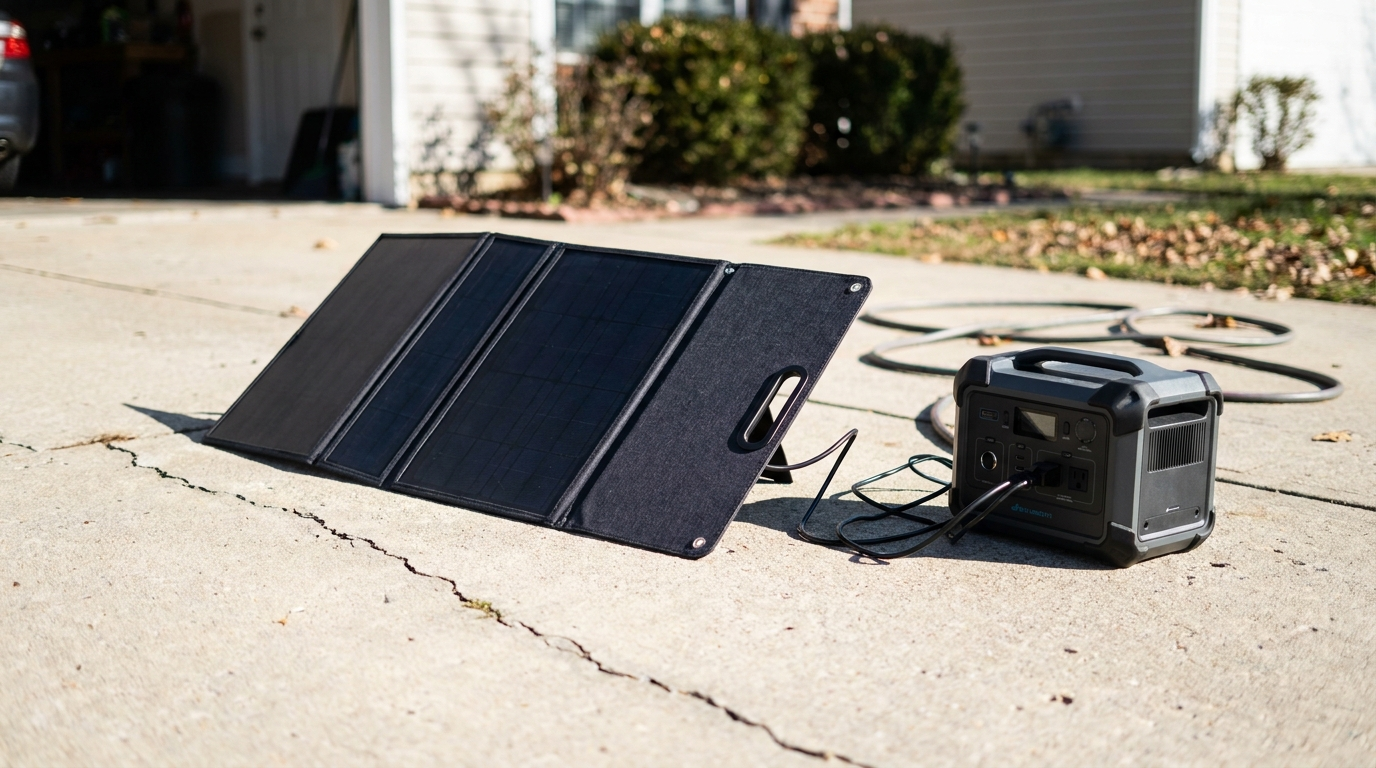
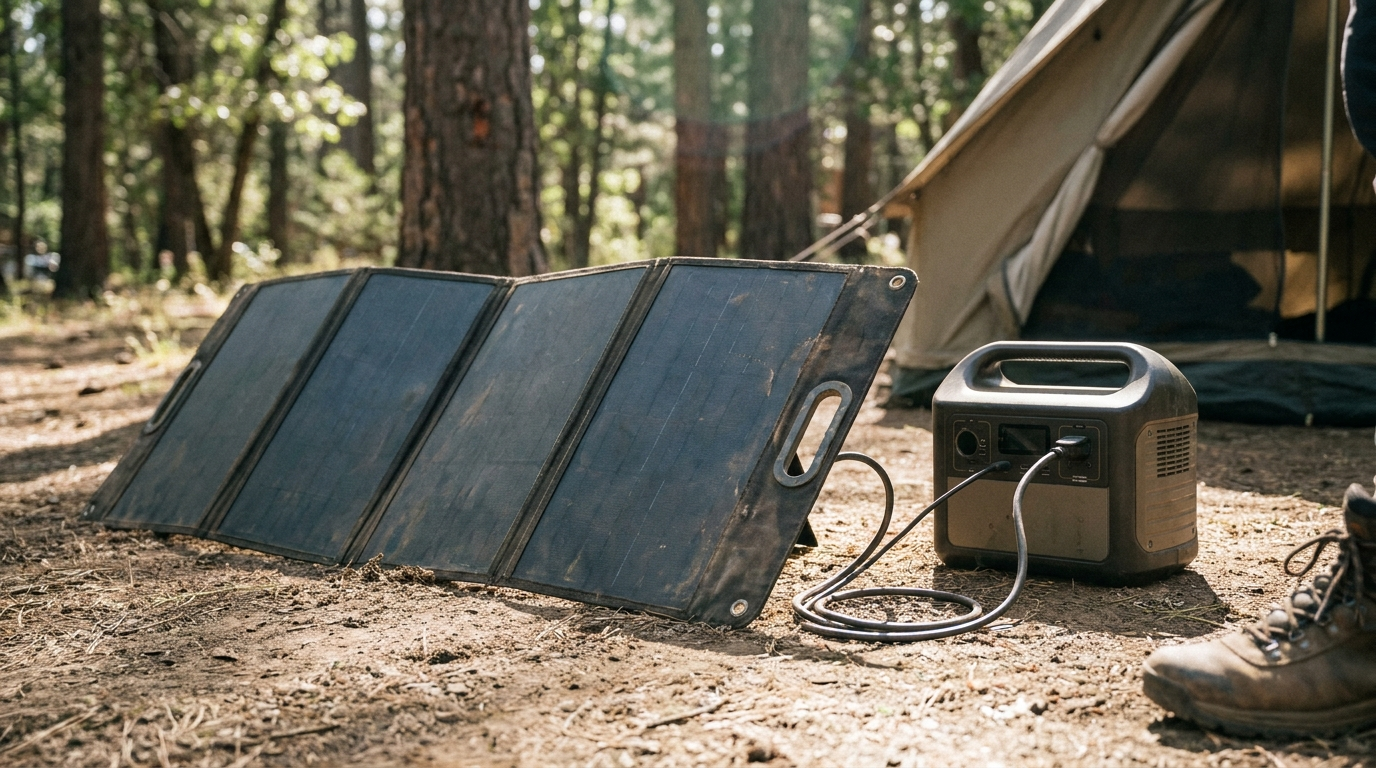
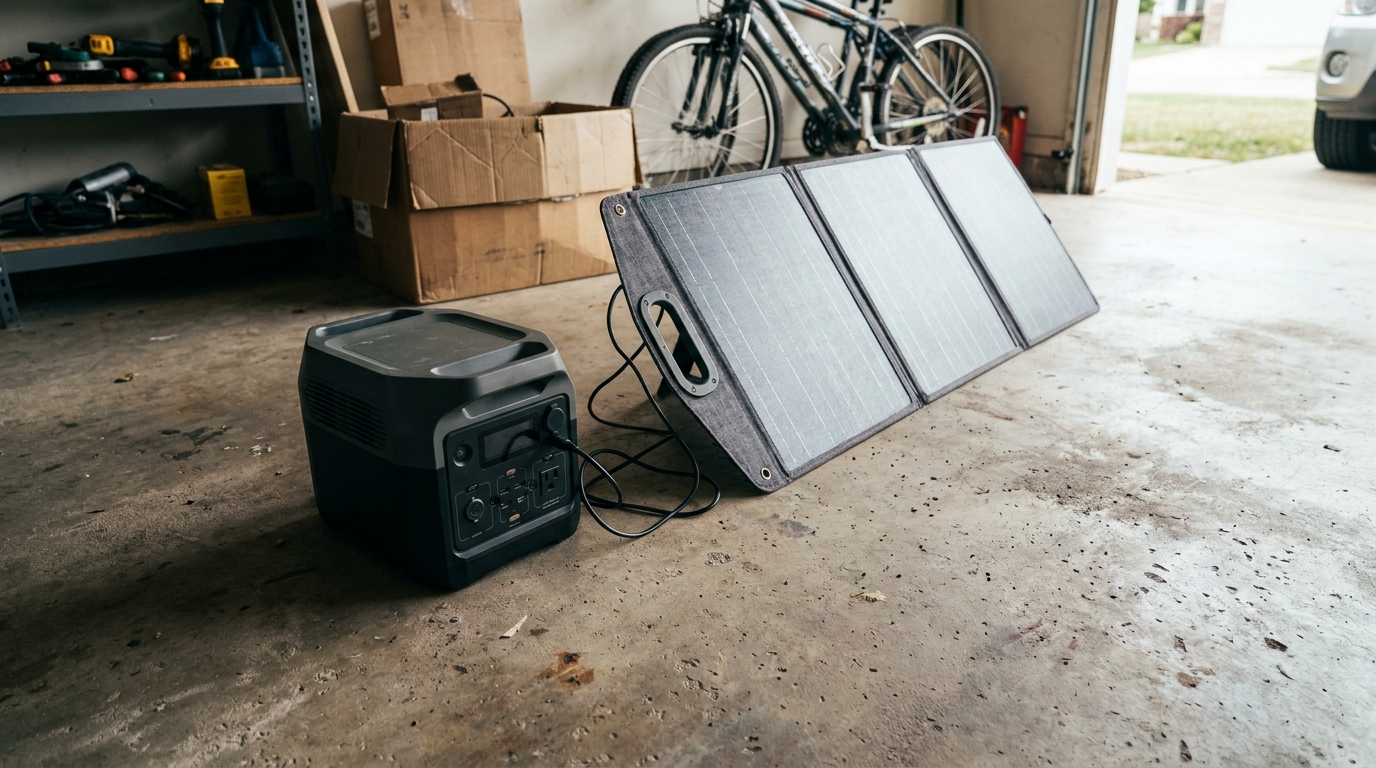
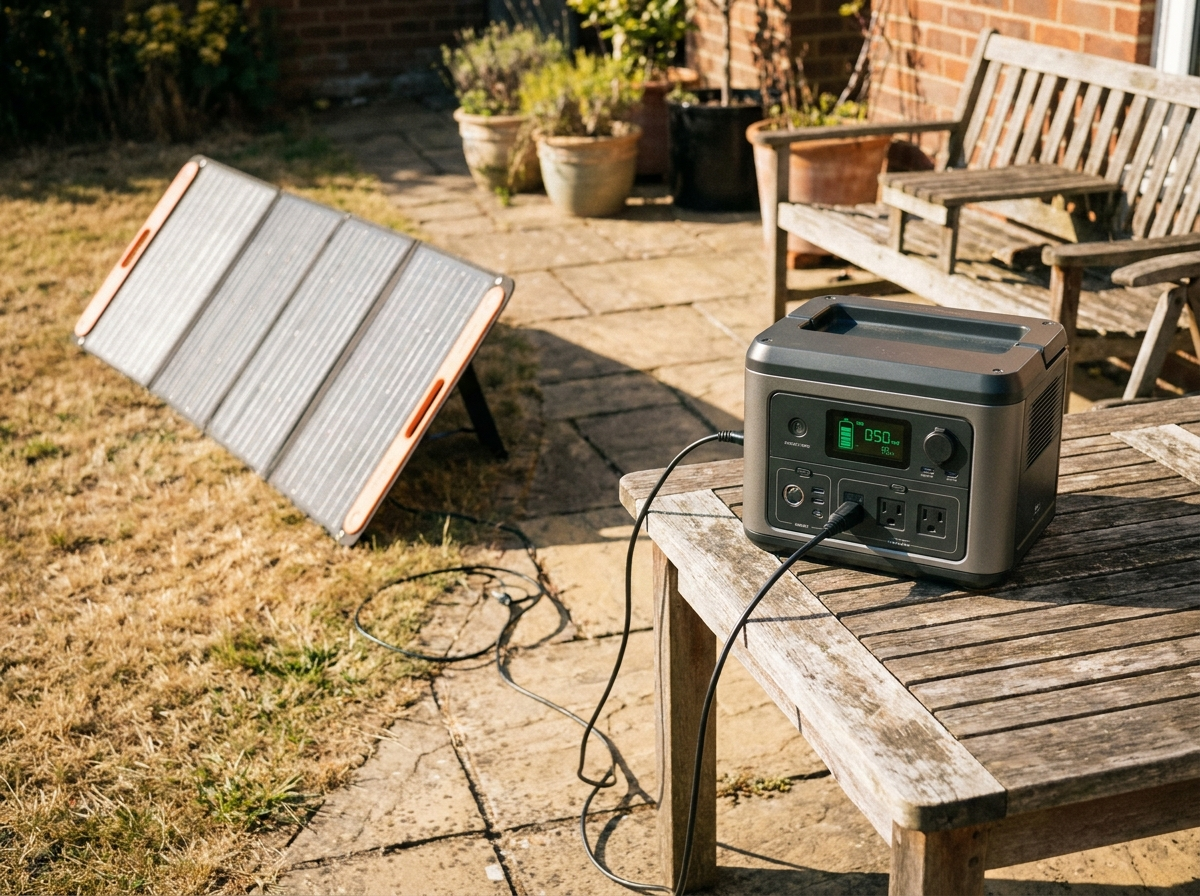
    Solar panels: This is where the unit shines for off-grid users. The DC input port accepts solar panels up to 100W (verify your panel’s voltage and amperage specs fall within the unit’s accepted range before connecting anything). In good direct sunlight with a well-matched 100W panel, you’re looking at 6–8 hours to full charge. Partial cloud cover can stretch that to 10–14 hours or kill charging almost entirely on heavily overcast days. Solar input is genuinely useful for extended camping; it’s not a reliable daily driver in a cloudy climate without multiple panels.

    12V car outlet: Works, but slow — expect 8+ hours. Fine for topping off on a long road trip, not practical as a primary charging method.


    Ports and Real-World Layout

    The output options on this unit are more useful than they might look on paper:

    • Two AC outlets (120V): Standard three-prong, 500W continuous each (shared total)
    • USB-A ports: Multiple, useful for phones and smaller accessories
    • USB-C port: Included, with reasonable wattage output for laptops that accept USB-C charging
    • 12V car-style output (cigarette lighter socket): For 12V accessories like tire inflators, coolers designed for car use, or CPAP machines that run on 12V DC
    • DC barrel ports: For specific 12V devices

    The car output socket is actually a frequently overlooked feature. Running a 12V cooler or CPAP directly from the DC port rather than through the AC inverter is more efficient — you skip the inverter conversion loss. If your device has a 12V option, use it.


    Where This Unit Actually Gets Used

    From real-world use patterns, the jackery 500 shows up most often in a few specific situations:

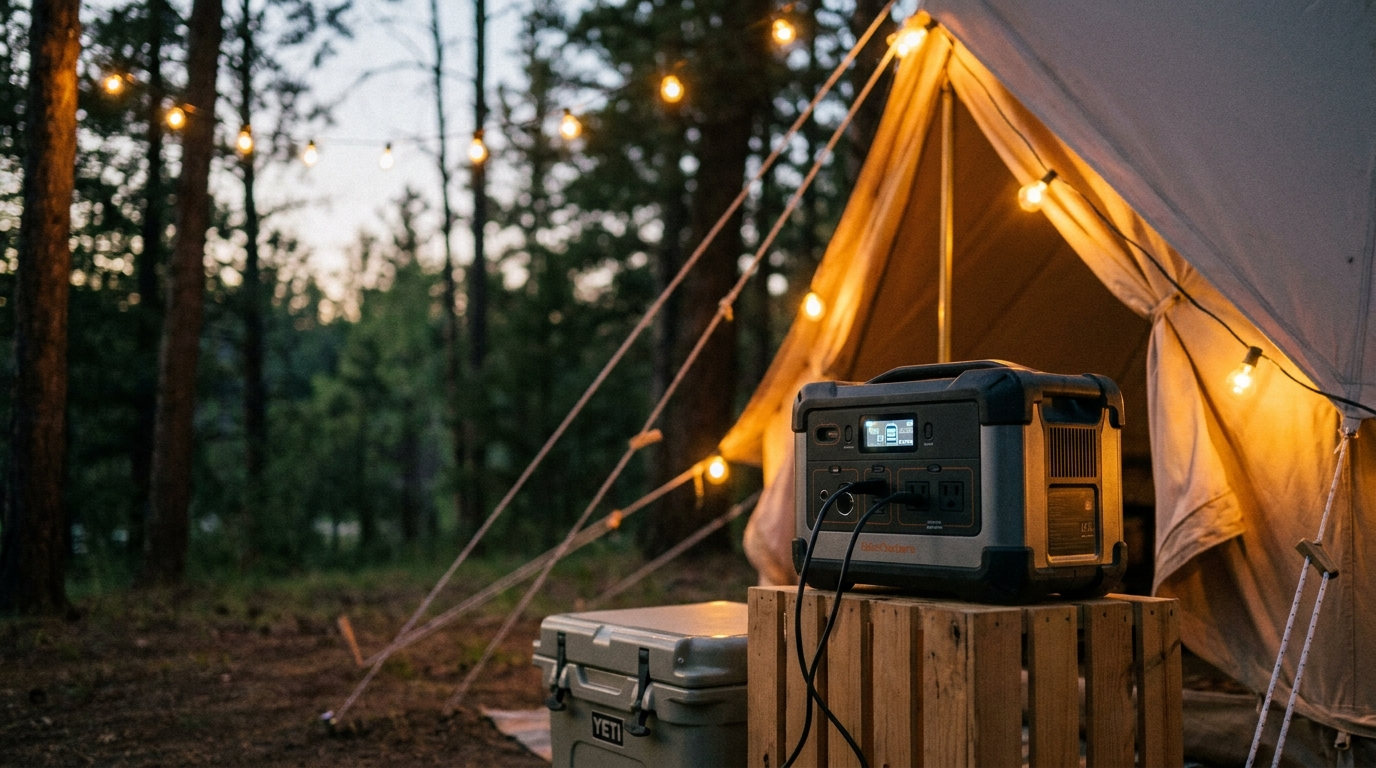
    Car camping and overlanding. It fits behind a seat or in a truck bed easily. You’re not worried about weight the way you are backpacking, and 518 Wh handles a weekend comfortably for a couple — lights, phones, a tablet, maybe a small cooler running at night.

    Van life essentials. Not as a primary house battery (that role belongs to a proper lithium bank wired into the vehicle), but as a supplemental unit or a way to get started before building out a full system.

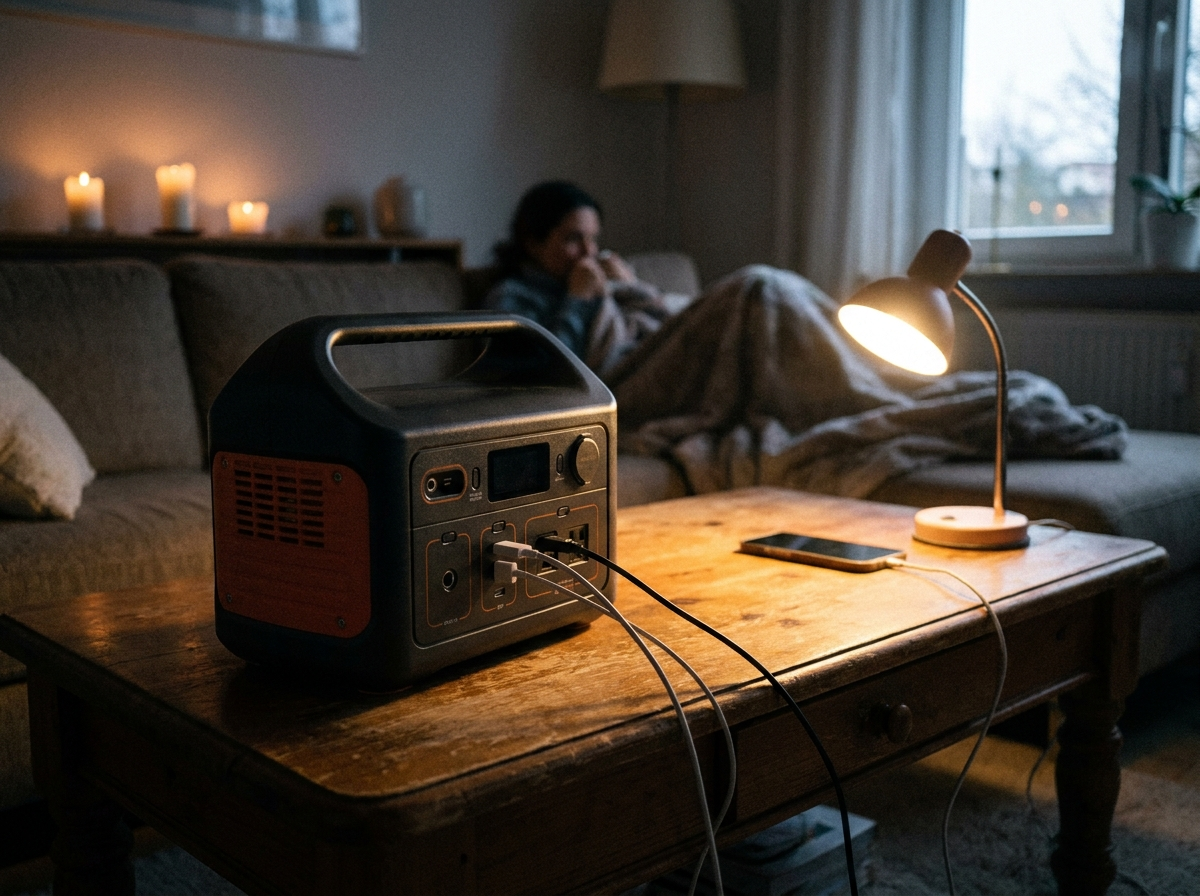
    Emergency home backup for specific devices. If a power outage hits and you need to keep a CPAP running, charge phones, and run some lights, the 500 Wh class covers you for one to two nights without issue. It’s not a generator replacement; it’s a targeted backup.

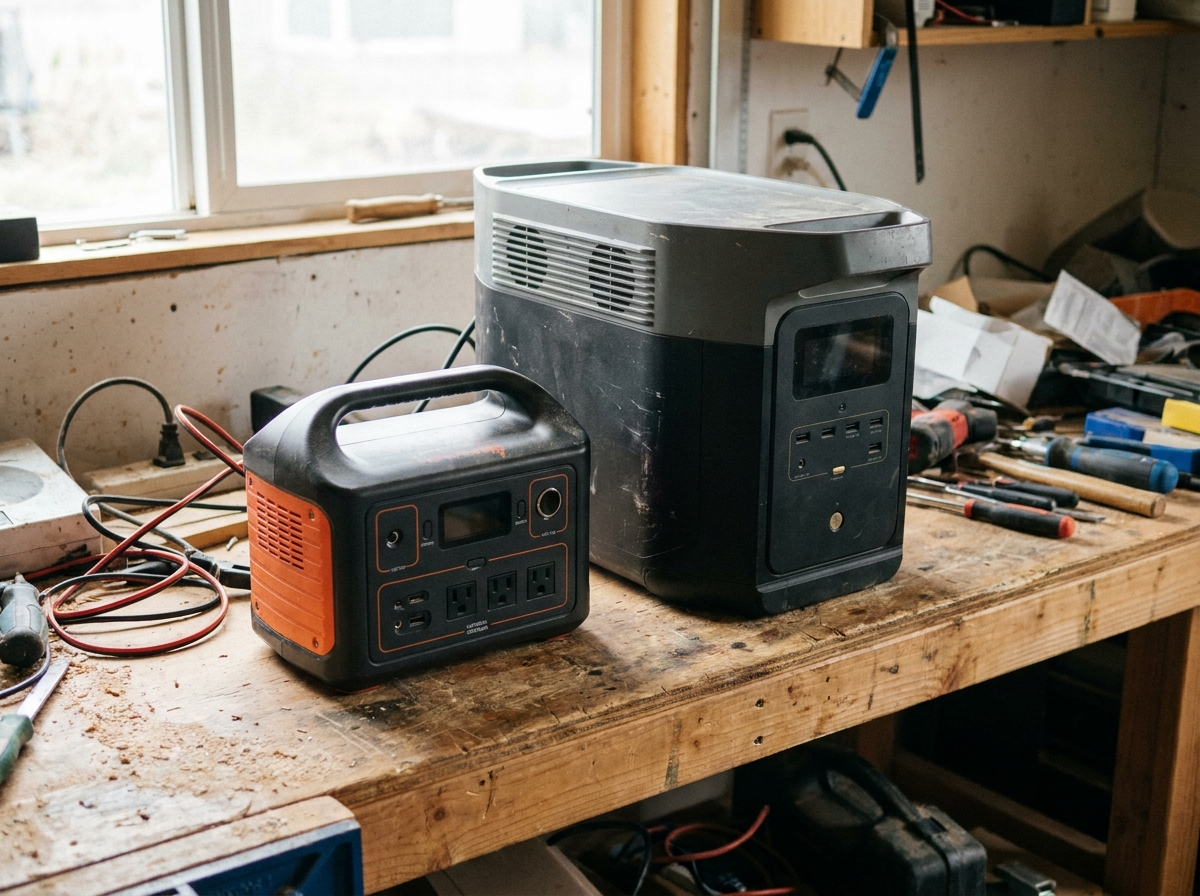
    Work sites without power access. Charging tools, running a laptop or monitor, keeping a phone charged — the 500W inverter handles most of that without issue.

    Medical device users. CPAP users specifically make up a large portion of the audience for this class of station. Without the heated humidifier, a CPAP typically draws well under 40W, and the DC output option extends runtime further.


    Honest Limitations Worth Knowing

    The LCD display shows remaining charge as a percentage, not in watt-hours. That’s less useful than it sounds — 50% of 518 Wh is roughly 259 Wh, but knowing that requires mental math. Some people find the percentage display fine; others prefer stations that show time-to-empty based on current draw.

    The battery chemistry is standard lithium-ion NMC, not LFP (lithium iron phosphate). That means the cycle life is lower than LFP-based competitors — typically rated to around 500 full cycles to 80% capacity. If you’re using this unit daily, that matters significantly. For occasional weekend camping or emergency backup use, it’s a non-issue.

    The fan runs audibly under load. It’s not loud, but it’s not silent. Light sleepers using it next to a bed for CPAP charging should know this ahead of time.

    And the charging speed from wall power is genuinely on the slower side compared to some newer entrants in this category. If rapid recharge is important to your use case, compare that spec carefully across options.


    Getting the Most Out of It

    A few practical habits make a measurable difference:

    • Charge to 80% for storage. Storing at full charge degrades lithium batteries faster. Most users won’t do this religiously, but if the unit sits unused for months between camping seasons, storing at partial charge helps long-term.
    • Use DC outputs when possible. Bypassing the inverter saves 10–15% of energy per use cycle.
    • Check your device wattage before assuming it’ll work. A 500W limit sounds generous until you plug in a coffee maker. The unit will protect itself with an overload shutoff, but that’s disruptive mid-use.
    • Pair with a foldable solar panel if you’re doing multi-day trips. The solar input transforms this from a one-weekend station into something that can sustain indefinitely with enough sun.

    The jackery 500 occupies a useful middle ground — genuinely portable, genuinely capable for its target use cases, and straightforward enough that it doesn’t require a manual after the first use. Know what you’re asking it to power, and it holds up well.
  • Jackeries Explained: Which Model Actually Fits Your Needs

    Jackeries Explained: Which Model Actually Fits Your Needs

    Jackeries Explained: Which Model Actually Fits Your Needs

    Disclosure: This site may earn a small commission if you purchase through links here, at no extra cost to you.

    Most people start researching jackeries the same way — they had a power outage, or they’re planning a camping trip, and someone recommended “that orange battery thing.” Then they land on Jackery’s website and find fifteen different models and have no idea which number means what. This guide cuts through that.

    Jackery makes some of the most approachable portable power stations on the market. That’s genuinely true. But approachable doesn’t mean every model is right for every use case, and buying the wrong capacity is one of the most common — and most avoidable — mistakes people make.

    The Number Is the Watt-Hours — Here’s Why That Matters

    The model names (Explorer 300, Explorer 1000, etc.) refer to watt-hours of stored energy. That number tells you how much total energy the battery holds, not how fast it can deliver power. Those are two different things.

    A quick way to think about it: a 1000Wh battery can theoretically run a 100W device for about 10 hours. In practice, figure closer to 85–90% of that due to conversion losses. Not a dealbreaker, but worth knowing before you expect to run something all night.

    The other number to watch is the inverter’s continuous output wattage — how much power the unit can supply at once. Some smaller jackeries have a 300W or 500W output limit, which means you cannot run a microwave or a hair dryer no matter how much capacity the battery has. Always check both numbers.

    Which Use Case Maps to Which Tier

    Car Camping and Day Trips: 300–500Wh Range

    For keeping phones, laptops, a small fan, and maybe a portable fridge running over a weekend, units in this range work well. They’re light enough to carry with one hand and small enough to fit under a truck seat.

    The limitation is recharge time and peak output. If you need to run a CPAP machine at higher pressure settings, or you want to use an induction cooktop even briefly, this tier won’t cut it. Also, solar recharge with a small panel at this size takes most of a sunny day — plan accordingly.

    Extended Camping, Van Life, or Power Outage Backup: 1000–2000Wh Range

    This is the sweet spot for most buyers. A unit in this range can keep a full-size CPAP running all night, charge multiple devices repeatedly, run a 12V compressor fridge for 24–36 hours, and still have reserve capacity. It’s also heavy — typically 22–30 lbs depending on chemistry — so portability becomes a real conversation.

    Jackery’s Explorer 1000 and 2000 Pro sit in this tier. The Pro models use lithium NMC cells; the Plus models (where available) use LFP (lithium iron phosphate) chemistry. LFP has a much longer rated cycle life — often 3,000+ cycles to 80% capacity versus 500–1,000 for NMC. If you plan to use this as a daily driver or long-term backup, LFP is worth paying more for.

    Home Backup for Essentials: 2000Wh and Up

    Once you’re looking at jackeries in the 2000Wh-plus range paired with solar panels, you’re getting into genuine partial home-backup territory. Running a refrigerator, lights, a router, and phone charging during an outage becomes realistic — not indefinitely, but for a meaningful stretch while you figure out the situation.

    At this level, you need to think seriously about recharge input. A 2000Wh unit with a single 200W panel in winter takes most of a short day just to recover half its capacity. Jackery’s solar generator bundles match their panels to units reasonably well, but stacking two panels (if the unit supports it) is often worth the extra cost upfront.

    Real Trade-Offs Nobody Talks About Enough

    Fan noise. Under moderate load, most jackeries run a cooling fan. In a quiet tent at night with a CPAP running, you will hear it. The newer Pro models are meaningfully quieter than the original Explorer line. If noise matters to you, look up actual audio comparisons before buying.

    Pass-through charging. Jackery officially recommends against using pass-through charging (charging the unit while simultaneously powering devices) regularly, as it generates more heat and can reduce battery longevity over time. For occasional use it’s fine. If your use case requires constant pass-through, that’s worth factoring in.

    Cold weather performance. Lithium batteries lose usable capacity in the cold — sometimes significantly. Below about 32°F (0°C), you might see 20–30% less effective capacity than rated. LFP chemistry handles cold somewhat better than NMC, but neither is immune. Keep the unit insulated overnight if you’re winter camping.

    App and display accuracy. The time-remaining estimates on Jackery’s displays are calculated from current draw and can swing wildly if you have variable loads. A fridge cycling on and off will show dramatically different estimates minute to minute. Don’t make decisions based on that number; use it as a rough reference.

    Solar Panels: Bundled vs. Third-Party

    Jackery’s SolarSaga panels are solid — foldable, reasonably efficient, and they pair cleanly with their units. The connectors are proprietary (Anderson-to-DC5525 or similar depending on model), so mixing brands requires an adapter.

    Third-party panels are often cheaper per watt, especially rigid panels if you’re mounting them. The tradeoff is convenience and portability. For a dedicated home-backup setup, third-party rigid panels with a proper charge controller might be the smarter long-term investment. For car camping where you want to fold everything into one bag, Jackery’s own panels make more sense.

    One thing worth knowing: Jackery rates their panels at open-circuit voltage (Voc), which is the maximum voltage with no load. Real-world charging output under typical afternoon sun, accounting for cable losses and panel temperature, is usually 75–80% of peak rated wattage. That’s industry-standard, not a Jackery-specific issue — just don’t design your recharge plan around peak numbers.

    What Jackery Does Better Than Competitors

    The UI is genuinely well designed. The displays are clear, the buttons are intuitive, and setup for a new user takes about three minutes. Customer support has a decent reputation for response time. The Explorer line has been on the market long enough that real-world durability data exists — these aren’t untested newcomers.

    Build quality on the Explorer Pro and Plus line is noticeably better than the original Explorer series. Heavier chassis, better port covers, more robust handles. If you’re buying new, skip the older generation unless you find a significant discount.

    What to Watch Out For

    The Explorer 300 and 500 are frequently discounted and marketed aggressively, but they’re genuinely underpowered for most home-backup use cases. They’re fine products for their intended purpose — car trips, small electronics — but a lot of buyers purchase them for outage prep and discover they can’t run what they actually need.

    Also, extended warranties are sold through third parties and the terms vary. Read the fine print on what voids coverage, especially regarding charging practices and storage conditions.

    A Simple Decision Framework

    • Weekend car camping, no powered devices besides phones/laptops: 500Wh, standard Explorer line
    • CPAP, compressor fridge, or multi-day trips: 1000–1500Wh, Pro or Plus model
    • Home outage prep, van/RV, or regular use: 2000Wh+, LFP chemistry, pair with at least 400W of solar input
    • Running appliances like a full-size refrigerator long-term: Look at dedicated home battery systems; portable power stations are stopgap solutions, not permanent replacements

    The best jackeries for most buyers land in the 1000–2000Wh range with LFP cells. If budget is tight, a smaller NMC unit used carefully will still serve well — just treat it gently, store it at 50–80% charge when not in use, and don’t leave it sitting fully depleted for weeks at a time. Battery hygiene matters more than the spec sheet suggests.

  • Powerness Solar Generator: Honest Buyer’s Guide

    Powerness Solar Generator: Honest Buyer’s Guide

    Powerness Solar Generator: What to Know Before You Buy

    Disclosure: This site may earn a small commission from purchases made through links in this article, at no extra cost to you.

    If you’ve stumbled across the powerness solar generator while shopping for backup or off-grid power, you’re probably trying to figure out whether it’s a legitimate option or just another crowded-market also-ran. Fair question. The portable power space is flooded with brands that look identical on spec sheets and fall apart after a camping season. Powerness sits in a competitive mid-market tier, and whether it makes sense for you depends almost entirely on what you actually need to power — and for how long.

    Let’s get specific.


    What “Solar Generator” Actually Means Here

    The term is a bit misleading, so let’s clear it up fast. A solar generator isn’t a standalone machine that produces power from nothing — it’s a battery-based power station that accepts solar input through built-in MPPT or PWM charge controllers. You still need solar panels, sold separately. The generator part refers to the fact that it can output AC power (like a wall outlet) rather than just DC.

    This distinction matters because buyers sometimes underestimate the total system cost. The unit itself is one purchase; panels are another. Budget accordingly.


    The Real Use Cases — and Where It Fits

    Camping and Van Life

    For weekend camping, a powerness solar generator in the 300–600Wh range handles the basics comfortably: phone and laptop charging, LED lighting, a small fan, maybe a portable speaker. What it won’t do is run a full-size coffee maker or hair dryer for long without eating through the battery quickly. High-wattage resistive loads (anything with a heating element) are the enemy of small battery packs.

    The practical rule: if the appliance has a wattage rating under 100W and you’re not running it continuously, you’re probably fine.

    Home Backup

    This is where buyers need to be more careful. A powerness solar generator can bridge a short outage for essential items — a CPAP machine, phone charging, keeping a small fridge cold for a few hours, or powering a few lights. It is not a whole-home backup solution. It won’t run a central air unit, a well pump, or an electric range.

    If your goal is outage resilience for medical equipment or food preservation over a multi-day blackout, you’ll want to look at capacity in the 1000Wh+ range and confirm the continuous output wattage can actually handle your device’s startup surge — not just its running wattage. A fridge, for example, can spike two to three times its running draw on startup.

    Off-Grid Cabins and Remote Work

    For a cabin used on weekends with modest power needs, pairing a Powerness unit with 100–200W of foldable solar panels is a workable setup. Recharge times depend heavily on panel wattage, sun hours in your location, and how aggressively you’re drawing from the battery at the same time. Four to six hours of good sun with appropriately sized panels is a reasonable expectation — don’t trust marketing claims that assume perfect conditions all day.


    Key Specs to Actually Evaluate

    Ignore the headline number on the box and dig into these:

    Battery capacity (Wh): The total energy the unit can store. Divide this by the wattage of your appliance to get a rough runtime in hours. A 500Wh unit running a 50W device = roughly 10 hours, minus efficiency losses (plan for about 85–90% usable capacity in real conditions).

    Continuous output wattage: This is the maximum sustained power the inverter can deliver. If your device draws more than this, the unit will cut off. Check this number against everything you intend to plug in simultaneously.

    Peak/surge wattage: The short burst capacity for motor startups. Critical for refrigerators, power tools, and air compressors.

    Solar input wattage and voltage range: This tells you how fast you can recharge from panels and what panel configurations are compatible. A narrow input voltage range limits your panel options.

    Battery chemistry: LiFePO4 (lithium iron phosphate) batteries offer significantly longer cycle life — typically 2,000–3,500 cycles to 80% capacity — compared to older NMC lithium cells. If a powerness solar generator model uses LiFePO4, that’s a meaningful durability advantage worth paying for.

    Ports: Count the AC outlets, USB-A, USB-C (and the wattage on each), and DC outputs. A unit with one AC outlet is fine for a solo camper; not great for a cabin.


    Honest Trade-Offs

    No portable power station is perfect. Here’s what you’re accepting when you buy in this category:

    Weight vs. capacity: More capacity means more weight. A 1000Wh unit will typically weigh 20–30 lbs. That’s manageable for a car camping setup or putting it in the back of a van, but it’s not something you throw in a daypack.

    Recharge speed limitations: The main friction point with most mid-market units is slow wall-charging or limited solar input. Some models take 8–10 hours to recharge from wall power. If that bothers you, look specifically for units that advertise 2-hour or faster AC recharge and verify the input wattage supports it.

    Inverter efficiency overhead: Pure sine wave inverters — which you want for sensitive electronics, medical devices, and most modern appliances — use some power just by being on. You’ll lose a small percentage of your stored energy to the inverter’s idle draw even before you plug anything in.

    Warranty and support reality: This is where smaller brands sometimes struggle. Look for at minimum a 24-month warranty and check whether there’s actual customer support — a phone number or responsive email, not just a contact form that disappears into a void.


    Sizing: The Practical Method

    Instead of guessing, do this:

    1. List everything you want to power.
    2. Find the wattage of each device (on the label, in the manual, or by looking up the model online).
    3. Estimate how many hours per day you’ll run each one.
    4. Multiply wattage × hours for each device and add them up — that’s your daily Wh need.
    5. Add 20–25% buffer for efficiency losses and headroom.

    If that number comes out to 300Wh, a 500Wh unit gives you comfortable margin. If it’s 800Wh, you’re looking at 1000Wh+ territory.

    Don’t buy exactly the capacity you need. Buy the next size up. You’ll always find more uses for the headroom.


    Solar Panel Pairing Tips

    When pairing panels with a powerness solar generator, the two most common mistakes are buying underpowered panels (the 100W folding kit that actually delivers 60W in real conditions) and mismatching voltage ranges.

    • Match the panel’s open-circuit voltage (Voc) to the unit’s input voltage range. Exceed the max, and you risk damaging the charge controller.
    • More panels in parallel keep voltage within range while increasing current and charge speed.
    • Monocrystalline panels perform better in low-light conditions than polycrystalline — worth the slight cost premium.
    • If you’re in a region with inconsistent sun, prioritize panel wattage over everything else. You can’t store power you didn’t generate.

    Before You Pull the Trigger

    A powerness solar generator can be a genuinely useful piece of kit — for camping, for short outages, for a work-from-anywhere setup that needs reliable power without a generator’s noise and fumes. But match the tool to the job. Verify the specs matter to your use case rather than the marketing use case. Check that your highest-draw appliance falls within the continuous output rating. And if you’re buying primarily for home backup, pressure-test the scenario: how many hours does your fridge need to stay cold, what’s your CPAP draw, and does the math actually work?

    A few minutes with a calculator now saves a lot of frustration at 2am when the power’s out and the unit dies sooner than expected.

  • Solar Panel Generator: What to Know Before You Buy

    Solar Panel Generator: What to Know Before You Buy

    Solar Panel Generator: What to Know Before You Buy

    Disclosure: This site earns a small commission on purchases made through some links, at no extra cost to you.

    A solar panel generator sounds straightforward — panels catch sun, battery stores it, inverter runs your stuff. But the gap between a system that actually covers your needs and one that disappoints you on day two is mostly about decisions made before purchase. This guide cuts through the noise on what matters.


    What “Solar Panel Generator” Actually Means

    The term gets used loosely. Technically, a solar panel generator is a portable power station — a battery with a built-in inverter, charge controller, and AC/DC outputs — paired with one or more solar panels. It’s a closed-loop system you can move, set up in a driveway or campsite, and run without a fuel can or extension cord to the grid.

    That’s its real appeal. No fumes, quiet operation, and the running cost drops to near zero once you own the hardware.

    What it isn’t: a whole-home backup solution in most configurations. A 1,000Wh station running a full refrigerator, a few lights, and phone chargers will last a day or so. Useful — but you need to size realistically.


    Capacity First, Then Everything Else

    Start with the battery capacity, not the panel wattage. Panels just determine how fast you refill what you use.

    How to estimate what you need:

    Add up the wattage of devices you’d run, multiply by the hours you’d run them, and that’s your daily Wh need. A laptop at 65W run for four hours is 260Wh. A CPAP machine might pull 30–40W for eight hours — about 280Wh. A portable fridge cycles on and off and might average 40–60W, so roughly 500–700Wh per day depending on the model and ambient temperature.

    Add those up, then build in a buffer. Lithium cells shouldn’t be fully drained regularly; most manufacturers recommend not going below 20% for longevity. So if you need 800Wh of usable power, you want at least a 1,000Wh station, probably 1,200Wh.

    LFP vs. NMC Batteries

    This matters more than most buyers realize.

    • LFP (lithium iron phosphate): Slower to degrade, rated for far more charge cycles (often 2,000–3,500), and less prone to thermal issues. Heavier per Wh, slightly lower energy density.
    • NMC (nickel manganese cobalt): More energy-dense, so lighter for the same capacity. But cycle ratings are often lower — sometimes under 1,000 cycles before meaningful capacity loss.

    If you’re buying a solar panel generator for long-term use — camping every summer, emergency backup that might sit for months — LFP is usually the smarter investment even at a higher initial cost.


    Panel Wattage and Real-World Charging

    Panel specs are peak ratings under lab conditions (1,000 W/m², 25°C cell temp). In practice, expect 70–80% of that on a good day, less on overcast days or if the angle isn’t dialed in.

    A 200W panel in decent summer sun, well-positioned, might put 600–800Wh into your battery over a full day. That’s enough to recover what a moderate user spends overnight. Add a second 200W panel and you’re charging faster than you’re using — which is where the system actually feels liberating.

    Wiring panels in series vs. parallel:

    Most portable power stations have a maximum solar input voltage (commonly 12V–150V depending on the unit). Series wiring raises voltage; parallel wiring raises current. You need to stay within the station’s voltage ceiling. Connecting panels without checking this is the most common beginner mistake — it can damage the charge controller permanently.

    Foldable vs. Rigid Panels

    Foldable panels are convenient and portable but tend to run hotter because there’s limited airflow underneath, which reduces efficiency. They also use thin-film or lower-grade monocrystalline cells more often than rigid panels do.

    Rigid monocrystalline panels are bulkier but generally more efficient, and they last longer. If you have a fixed campsite or use the system at home, rigid panels are a better value per watt. For backpacking or van life where weight and pack size matter, foldable wins on convenience despite the tradeoff.


    The Inverter: Where Bad Specs Actually Hurt You

    The inverter converts battery DC power to the AC your household devices need. Two specs matter:

    Continuous wattage — what it can sustain. A 1,000W inverter can run up to about 1,000W of devices simultaneously. Exceed that and it shuts off or throttles.

    Surge capacity — the short burst it can handle at startup. Motors (refrigerators, drills, air compressors) draw 2–3x their running wattage when they start. A fridge rated at 150W running might surge to 450W at startup. If the inverter’s surge capacity is only 1,200W and your station is already running a 1,000W continuous load, that fridge won’t start.

    Pure sine wave vs. modified sine wave:

    Get pure sine wave. Full stop. Modified sine wave causes heat and audible buzz in motors, can damage some sensitive electronics, and is generally a false economy. Nearly every reputable portable station ships with pure sine wave now, but verify — especially on budget units.


    Charging Speed and Dual-Input

    One underrated feature: simultaneous solar and AC charging. Some stations let you plug into the wall and connect solar panels at the same time, which dramatically speeds up recharge when you have access to both. Useful for topping off before a trip.

    Also check the maximum AC input wattage, not just solar input. A station that accepts 1,000W AC input will fully recharge in an hour or two. One limited to 300W AC takes all afternoon. If you’re using this for power outages and want to stay topped up between events, faster AC input actually matters.


    What the Marketing Glosses Over

    Weight. A 2,000Wh station with a good LFP pack can weigh 45–55 lbs. Portable is relative. If you’re carrying this any distance, check the weight seriously.

    Cold weather performance. Lithium batteries lose capacity in cold temperatures. Some stations have self-heating functions for the battery; most don’t. Expect a meaningful capacity reduction below freezing — sometimes 20–30% less usable capacity at 0°C. This matters for winter camping or unheated cabin use.

    App connectivity bugs. Many newer stations have Bluetooth or Wi-Fi apps for monitoring. These are sometimes genuinely useful, sometimes riddled with connection issues. Don’t make a purchase decision based on app features unless you’ve seen hands-on reviews confirming they actually work reliably.

    Warranty and customer support. A few manufacturers in this space have strong support; others are hard to reach after the sale. Longer warranties are only valuable if the company will be around to honor them. Mid-tier brands with three-year warranties and a reputation for responsive support often beat a budget brand’s vague five-year claim.


    Pairing Advice for Common Use Cases

    Weekend Camping

    A 500–1,000Wh station with a single 100–200W folding panel covers lights, phone charging, a small speaker, and phone-based navigation comfortably. You probably don’t need more unless you’re running a portable fridge.

    Extended Off-Grid or Full-Time Van

    You’ll want 2,000Wh or more, expandable battery support if available, and 400W+ of rigid panel capacity. Budget for a second battery if the station supports expansion — it’s usually cheaper than buying a whole second unit.

    Home Emergency Backup

    Focus on AC input speed so you can charge from the grid when power returns. Prioritize which loads matter: medical devices, a freezer, phone charging. Don’t try to run everything — size the system for the critical list and practice managing loads before you actually need it.


    The right solar panel generator for someone riding out hurricane season is very different from the right one for weekend kayaking trips. Get clear on your actual use case, work backward from capacity, match the panels to fill it in a day, and verify the inverter specs against your real startup loads. That process gets you to the right answer faster than any spec-sheet comparison ever will.

  • Portable Power Station for Camping: What Actually Matters

    Portable Power Station for Camping: What Actually Matters

    Portable Power Station for Camping: What Actually Matters

    Disclosure: Some links on this page may be affiliate links, meaning we earn a small commission if you buy through them, at no extra cost to you.

    Picking a portable power station for camping looks straightforward until you’re standing in the dark at a campsite because you bought the wrong one. Capacity gets all the attention in marketing, but the real-world variables—chemistry, inverter quality, charge rate, and how much weight you’re actually willing to carry—matter just as much. This guide cuts through the spec-sheet noise.

    Capacity: The Number That Misleads Most Buyers

    Manufacturers list capacity in watt-hours (Wh). A 1,000 Wh unit sounds like a lot until you account for conversion losses. Running an AC device means the inverter burns roughly 10–15% of that capacity just converting DC to AC. A mini fridge cycling on and off overnight can pull 300–500 Wh. Your phone, by contrast, takes maybe 15–20 Wh to charge from dead.

    Here’s the practical rule: expect to use about 70–80% of rated capacity for real-world AC loads. So a 500 Wh station effectively gives you 350–400 Wh of usable energy through AC outlets. Plan around that number, not the headline figure.

    Matching Capacity to Your Actual Trip

    Weekend car camping with a cooler, phone charging, and some LED lights? A 500–700 Wh unit covers most people comfortably. Extend that to four days, add a CPAP machine, or bring a camp coffee maker, and you’re looking at 1,000 Wh minimum—with a solar panel to recharge during the day if you’re staying remote.

    Backpacking is a different conversation entirely. Even the lightest stations in the 300 Wh range weigh around 6–7 lbs. That’s a hard ask for any trail longer than a car-to-campsite carry. For backpacking, a smaller battery bank plus a lightweight solar charger usually beats a full power station.

    Battery Chemistry: LFP vs. NMC

    This is where a lot of buyers leave money on the table—or overpay without needing to.

    Lithium iron phosphate (LFP) cells are heavier and slightly less energy-dense, but they’re far more thermally stable, handle more charge cycles (often 2,000–3,500 before significant degradation), and tolerate being left at full charge without the same degradation issues that plague other lithium chemistries. If you’re buying a unit you’ll use for years, LFP is worth the premium.

    NMC (nickel manganese cobalt) cells pack more energy into less weight and cost less per watt-hour to manufacture. For occasional campers who’ll use the unit a dozen times a year, the lower cycle count (often 500–800 cycles before hitting 80% capacity) is a non-issue. The trade-off is real, but it’s only a problem if you’re charging and discharging constantly.

    The marketing materials don’t always spell this out clearly. Check the spec sheet for cycle count and look for explicit mention of LFP chemistry if longevity matters to you.

    Inverter Wattage: The Spec Most People Underestimate

    Capacity tells you how long. Inverter wattage tells you what you can actually run.

    A 1,000 Wh station with a 600W inverter can’t run your coffee maker that pulls 900W—full stop. It’ll either refuse to start or throw an overload error. Some appliances also have high surge draw at startup (motors, compressors) that can be 2–3x their running wattage. A camping-grade 12V cooler might run at 45W but surge to 150W when the compressor kicks on.

    For most camping use cases, a 1,000–1,500W inverter gives you flexibility. It handles most camp kitchen tools, a small projector, fans, and CPAP machines without drama. Stations with only 300–500W inverters are fine for charging devices and running LED gear, but frustrating the moment you try anything with a heating element or motor.

    Recharging: The Overlooked Half of the Equation

    Getting power into the station matters as much as what comes out, especially on longer trips.

    Wall Charging

    Fast charging via AC input has improved dramatically. Many newer units support 600W–1,400W input, meaning a dead 1,000 Wh station can fill in under two hours. Older or budget units might cap at 200–300W input, which means an overnight charge just to be ready the next morning. Check the input wattage, not just the capacity.

    Solar Charging

    Solar is genuinely useful for camping—with realistic expectations. A 100W panel in ideal conditions (direct sun, right angle, cool temperatures) might deliver 60–80W in practice. On a partly cloudy day, that drops further. To meaningfully recharge a 1,000 Wh station in a day, you generally need 200–400W of panel capacity and good sun.

    Also check the maximum solar input voltage and amperage your station accepts. Some budget units have narrow MPPT windows that limit what panels you can connect. Connecting panels outside that voltage range won’t just charge slowly—it can trip protection circuits and charge nothing at all.

    Car Charging

    Useful for top-offs during a drive between sites. Most stations accept 12V car input at 60–120W—fine for topping up but painfully slow as a primary charging method for anything over 300 Wh.

    Weight and Portability: Be Honest With Yourself

    A 2,000 Wh station might sound like the obvious choice if you can afford it. But if it weighs 45+ lbs, how often are you actually hauling it from the car to a campsite table? Heavier stations often get left in the vehicle—which means running extension cords, or just not using them.

    For solo or couple camping, the sweet spot is usually 500–1,000 Wh at 10–22 lbs. It’s one trip from car to site, doesn’t dominate your packing, and covers most needs. The truly massive units make sense for groups, extended basecamp setups, or overlanding rigs where the unit stays in the vehicle.

    Features Worth Paying For (And Some That Aren’t)

    Worth it:
    – App connectivity with detailed watt readings. Seeing real-time draw by outlet is useful for trip planning and diagnosing what’s eating your charge.
    – Pass-through charging that actually works without degrading the battery. Not all stations handle simultaneous input/output gracefully.
    – UPS mode if you use a CPAP—some units switch to battery power in milliseconds if shore power cuts out, others have a noticeable gap.
    – Multiple DC outputs including a regulated 12V port and USB-C PD. Most modern devices charge faster and more efficiently through USB-C than through USB-A.

    Often not worth the premium:
    – Built-in wireless charging pads. They’re slow and the convenience factor is minimal.
    – Touchscreens over simple button interfaces. They look good in photos and add failure points in dusty, wet, or cold conditions.
    – Extreme waterproofing ratings. IP ratings on power stations are rarely tested in genuine downpour conditions, and you shouldn’t be leaving them in the rain anyway.

    Cold Weather: The Factor Nobody Warns You About

    Lithium batteries lose capacity in the cold—sometimes dramatically. Below about 32°F (0°C), many LFP units drop to 70–80% effective capacity. Below 14°F (-10°C), some refuse to charge at all to protect the cells. NMC chemistry handles cold somewhat better in terms of discharge, but neither is immune.

    For winter camping, keep the station inside your tent or sleeping area overnight. Don’t leave it in a cold vehicle and expect full performance in the morning. Some units have self-heating features for cold-weather charging—worth looking for if you camp in winter regularly.

    Before You Buy: The Questions That Actually Matter

    • What’s the heaviest single thing I need to run, and what’s its surge wattage?
    • How many nights between recharges, and do I have solar or car charging available?
    • Am I hauling this more than 50 feet from my vehicle?
    • Do I want this to last 5+ years of regular use, or is it for occasional trips?

    A portable power station for camping is genuinely useful gear—not just a gadget. But the right choice at 500 Wh is a much better purchase than the wrong choice at 2,000 Wh. Get the capacity calculation right, verify the inverter handles your loads, and match the chemistry to how often you’ll actually use it. That’s the whole framework.

    See it in action

    @chrismikerabe

    What happens when the power goes out — and you’re ready ⚡ 500W, charges phones, wifi & lights. Camping, tailgates, storm season. #portablepower #offgrid #camping #powerstation #preparedness #TikTokShop #TikTokMadeMeBuyIt

    ♬ original sound – chrismikerabe

    This is the kind of compact 500W unit the article covers — see it running lights and phones, then check the price on TikTok Shop.

  • Portable Solar Electric Generator: What to Know Before You Buy

    Portable Solar Electric Generator: What to Know Before You Buy

    Portable Solar Electric Generator: What to Know Before You Buy

    Disclosure: Some links on this site may be affiliate links, meaning we earn a small commission if you buy through them, at no extra cost to you.

    A portable solar electric generator sounds simple until you’re standing in a store — or scrolling through endless product pages — trying to figure out why two units with the same advertised wattage cost completely different amounts and behave nothing alike in real use. This guide cuts through that.

    The short version: most buyers focus on the wrong numbers, underestimate their power needs, and overlook a few features that make a genuine difference over years of use. Here’s what actually matters.


    What a “Portable Solar Electric Generator” Actually Is

    The term covers a battery-based power station combined with solar input capability — usually via XT60 or Anderson connectors accepting panels sold separately. It’s fundamentally different from a gas generator: no exhaust, near-silent operation, and a battery that can only store so much before you’ve tapped it out.

    That last point trips people up. A gas generator produces power continuously as long as fuel flows. A solar system produces intermittently and stores in a finite battery. Design your expectations around that reality from day one.


    The Specs That Actually Matter

    Battery Capacity vs. Usable Capacity

    Manufacturers list capacity in watt-hours (Wh). A 1,000 Wh unit sounds straightforward, but usable capacity depends on the battery chemistry.

    • LFP (lithium iron phosphate): Runs to near-full depth of discharge, holds 2,000–3,500+ charge cycles before degrading to 80% capacity. Heavier per watt-hour, but far longer lifespan.
    • NMC (nickel manganese cobalt): Higher energy density, so lighter units. Typically rated for 500–1,000 cycles. More common in budget and mid-range models.

    If you’re buying for years of weekend camping, LFP wins. If you need the lightest kit for backpacking-adjacent trips, NMC’s weight advantage becomes real.

    Inverter Output and Surge Capacity

    The continuous output wattage tells you what the unit can run steadily. Surge capacity — often two to three times the continuous rating — tells you what it can handle for the brief spike when a motor starts.

    A refrigerator compressor, a power tool, a well pump: these all draw heavy surge current at startup. Plenty of otherwise solid units will trip their protection circuits on the startup load of a mid-size chest freezer even when that freezer only draws 80W running. Always check surge specs against your highest-draw appliance’s startup requirements, not just its running wattage.

    Solar Input: The Spec Everyone Underreads

    Solar input wattage is usually the headline — but the input voltage range is what limits you in the field.

    A unit with a max solar input of 400W sounds excellent. But if its voltage window is 12–30V, you’re severely limited in how you can wire panels. Most efficient solar panels output 35–50V open-circuit; to stay within a narrow low-voltage window, you’d need panels wired in parallel, which limits current efficiency at lower light angles.

    Units with a wider input voltage range — say, 12–150V — give you far more flexibility. You can series-wire panels for better performance in suboptimal conditions, and you can use a single 200W panel efficiently rather than needing multiple smaller ones.

    Also check whether the charge controller is MPPT or PWM. MPPT extracts meaningfully more power across varying conditions. Every unit worth buying today uses MPPT, but it’s worth confirming.


    Sizing: The Honest Version

    The most common mistake is buying too small while believing you’ve bought enough.

    Here’s a rough process that works:

    1. List every device you might run simultaneously — not just the big ones.
    2. Add up their running wattage. That’s your minimum continuous output requirement.
    3. Find the highest single startup surge. That’s your required surge capacity.
    4. Estimate hours per day per device, multiply by wattage, sum the result. That’s your daily Wh draw.
    5. Add 30–40% buffer for inverter losses, panel inefficiency, and non-ideal charging conditions.

    Few buyers regret going larger. Many regret going small.

    For context: a CPAP machine without a heated humidifier runs around 30–60W. A small 12V refrigerator runs 40–60W average. A laptop charges at 45–100W. Run a fridge, a CPAP, and charge devices simultaneously through a night and a low-sun morning, and you’ll exhaust a 500 Wh unit fast.


    Panel Pairing: What the Manufacturers Don’t Emphasize

    The panels bundled with kits are usually acceptable but rarely optimal. Buying a portable solar electric generator as a standalone unit and sourcing your own panels often gets you better performance per dollar — especially if you need portability.

    Folding/portable panels are convenient but cost more per watt than rigid panels. For a permanent truck bed or cabin setup, rigid monocrystalline panels charging the same unit deliver more power for less money.

    One thing that matters more than most buyers realize: panel placement angle throughout the day. A flat panel on a sunny table underperforms a tilted panel tracking the sun by a meaningful margin — sometimes 30–40% over a full day. If you’re relying on solar recharge to run something critical, tilting and occasionally repositioning panels isn’t optional fussiness; it’s how you actually get the input you planned for.


    Features Worth Paying For

    Expandable battery capacity. Some units support add-on battery packs via a proprietary connection. This is genuinely useful — you can buy the base unit now and add capacity later rather than buying a new system.

    Pass-through charging. Running devices while the unit charges from solar. Almost all quality units support this, but the efficiency varies. Some throttle output while simultaneously charging; others don’t.

    AC charging speed. For home use and recharging before a trip, fast AC charging (800W or higher input) cuts recharge time dramatically. A unit that takes 10+ hours to refill from a wall outlet is a genuine friction point.

    App connectivity. Useful for monitoring real-time input, output, and state of charge. Not essential, but the better implementations show you exactly what your panels are delivering, which helps you optimize placement and plan usage.

    Build quality and heat management. Fan noise varies widely. Units designed for sustained output at high wattage manage heat better; cheap units throttle output or trip protection circuits when pushed. If you plan to run power tools or other high-draw loads for extended periods, this matters.


    What to Skip

    • Wireless charging pads: A minor convenience, usually slow, rarely useful as a primary feature.
    • Built-in flashlights: Fine as a bonus, not a reason to choose one unit over another.
    • Claimed waterproofing without IP ratings: Vague “water-resistant” language means nothing. If weather protection matters to you, verify an actual IP rating.

    A Few Real-World Notes

    Solar input is weather-dependent in ways that matter operationally. A 200W panel on a bright summer day with clear sky might deliver 170–185W in peak hours. The same panel on a bright but hazy day might deliver 100W. In partial cloud cover, expect 30–60W. Plan your portable solar electric generator system for worst-case charging days, not best-case ones.

    Cold temperatures affect battery output noticeably. LFP chemistry is more tolerant than NMC but still loses capacity below freezing. If you’re winter camping or storing the unit in an unheated space and then expecting full performance, factor that in.

    Finally: the “1,000W” inverter output and the “1,000 Wh” battery are completely separate specs. A unit with a 1,000W inverter and 500 Wh of storage can run a 500W load for roughly an hour (minus losses). Conflating those two numbers is the source of enormous buyer disappointment.


    The right portable solar electric generator for most buyers lands somewhere between 500 Wh and 1,500 Wh capacity with an LFP battery, MPPT charge controller, wide voltage input range, and at least 1,000W continuous output. That range covers a camping weekend, a power outage for essentials, or a remote worksite for light tools and devices — without breaking the bank or your back carrying it.

  • EcoFlow Delta Pro Review: Real-World Strengths and Limits

    EcoFlow Delta Pro Review: Real-World Strengths and Limits

    EcoFlow Delta Pro Review: Real-World Strengths and Limits

    Disclosure: This site uses affiliate links; we may earn a commission if you buy through them, at no extra cost to you.

    The ecoflow delta pro lands in a category that’s getting crowded fast, but it still holds a distinct position. It’s not the cheapest large-capacity station, not the lightest, and not the most compact. What it is — and this matters — is one of the most genuinely expandable home-backup systems available without hiring an electrician for most of the setup. That combination of size, speed, and flexibility is the real story here.

    What You’re Actually Getting

    The Delta Pro ships with a 3.6 kWh usable capacity, which sounds abstract until you start mapping it to real loads. Running a full-size refrigerator (around 150W average draw), you’re looking at roughly 20+ hours of runtime. A window AC unit pulling 900W? Maybe 3 to 4 hours. A CPAP machine overnight? Easy. A power tool for occasional cuts in a garage? No problem at all.

    The 3,600W AC output (with X-Boost pushing compatible devices up to 4,500W equivalent) means it can run most household appliances without complaint. That includes microwave ovens, electric kettles, and hair dryers — stuff that smaller stations either refuse outright or limit to a few-minute burst.

    Weight is a genuine consideration: the unit is heavy. Moving it solo is awkward. The built-in wheels help, but stairs or loading it into a truck bed solo is a two-person job. Plan accordingly.

    Charging Speed Is the Standout Feature

    This is where EcoFlow genuinely separates itself. The Delta Pro can accept up to 1,800W from a wall outlet using the included cable, which means a full charge from near-empty in roughly two hours. That’s unusually fast for a station this size. Most competitors at similar capacity require four to six hours for a full AC charge.

    Solar input accepts up to 1,600W as well — you’d need a substantial panel array to hit that ceiling, but it means on a good solar day with the right panels, you can refill the unit faster than almost any other station in its class.

    The EV charging station adapter (sold separately) adds another option for people who have a Level 2 charger at home, getting you full in about two hours as well. It’s not a feature everyone needs, but it’s the kind of thoughtful flexibility that signals the product was designed with real use cases in mind.

    Expandability: The Feature That Changes the Math

    Smart Generators and Extra Batteries

    The ecoflow delta pro supports two add-on 3.6 kWh battery packs, taking total capacity to 10.8 kWh. For a home backup setup intended to cover an overnight outage or a full day off-grid, that’s genuinely meaningful storage. Add EcoFlow’s dual-fuel smart generator and you have a system that can auto-start the generator when battery drops below a threshold you set — completely hands-off.

    This is the configuration that makes the Delta Pro worth considering over cheaper single-unit competitors. You’re not just buying a battery; you’re buying into an ecosystem.

    Smart Home Panel Integration

    EcoFlow sells a whole-home integration panel that lets you connect the Delta Pro to your home’s circuits without a transfer switch installation. This is a significant practical advantage. Traditional whole-home generators require a licensed electrician and a transfer switch. EcoFlow’s approach is designed for DIY connection to a subset of circuits. Important caveat: local electrical codes vary, and you should verify compliance before installation. But for many users in outage-prone areas, this is the feature that pushes the purchase from “nice to have” to “actually solves my problem.”

    Real-World Performance Observations

    A few things you learn after spending time with the unit:

    The battery percentage display isn’t perfectly linear. It can read 20% and then drop to zero faster than expected under a heavy load. EcoFlow has improved this through firmware updates, but it’s worth knowing — don’t let it run down to the wire on critical loads.

    Fan noise at high output is noticeable. Under a 1,500W+ sustained load, the cooling fans kick into a mode that’s audible across a room. Fine in a garage. Less ideal in a bedroom during a power outage at 2 AM.

    The app is genuinely useful, not just a gimmick. Real-time monitoring of input, output, and estimated runtime is accurate and refreshes quickly. You can set charging limits (stopping at 80% or 85% to preserve long-term battery health if it sits plugged in most of the time) — a feature worth using if this is a standby unit.

    LFP chemistry matters here. The Delta Pro uses lithium iron phosphate cells, which trade energy density for longevity and safety. EcoFlow rates the battery for 3,500 cycles to 80% capacity. For a unit you might charge daily during an off-grid period or a few times monthly for backup use, that’s a decade or more of service life. Other chemistries at this price point often rate far lower.

    Where It Falls Short

    Honesty requires mentioning what the Delta Pro doesn’t do well.

    It’s not a van-life or overlanding unit. At over 100 lbs, it’s designed to live in a house, a garage, or a cabin — not bounce around in a vehicle. If portability matters, there are better-suited options.

    The ecosystem lock-in is real. The expansion batteries, the smart generator, the home panel — they’re all EcoFlow-specific. If EcoFlow discontinues support or you want to mix components from another brand, you can’t. That’s a reasonable trade-off for most buyers, but it’s worth knowing.

    AC charging at maximum speed produces heat. Charging at the full 1,800W for two hours in a warm room or enclosed space isn’t ideal. In a basement or climate-controlled area, it’s fine. In a hot garage in summer, you might want to back off the charge rate through the app.

    Who Should Buy It

    The ecoflow delta pro makes the most sense for a specific buyer: someone who experiences meaningful power outages (a few times a year or more), owns or rents a home where they can use the home panel integration, and wants a system that can actually grow with their needs rather than requiring a full replacement when they want more capacity.

    It’s also well-suited for:
    – Remote cabin or off-grid property owners who have or plan to install solar
    – Small contractors who need a reliable jobsite power source for tools and lighting
    – People on medical equipment who need dependable backup runtime

    It’s not ideal for someone who wants occasional camping power, or who primarily needs something light enough to carry to a tailgate. There are more purpose-built options for those use cases at lower price points.

    A Note on Value

    The Delta Pro sits at a premium price. It competes with offerings from Bluetti, Jackery, and others in the large-capacity segment, and honest comparison shopping is worthwhile. What you’re paying for here is primarily charging speed, the expansion ecosystem, and the home integration features. If you don’t need those things, there are capable alternatives at lower cost. If you do — especially the home panel integration — the Delta Pro is genuinely hard to match.

    Check current pricing directly from EcoFlow’s site and from authorized retailers, since pricing shifts with promotions and bundle deals. The expansion batteries and smart generator frequently appear in bundle pricing that changes the per-kWh math meaningfully.

    The one thing worth doing before you buy: map out your actual loads. List the appliances you need to run during an outage, their wattage, and for how many hours. Run the math against the capacity. That exercise will tell you whether the base unit is enough or whether expansion batteries belong in your budget from day one.

  • Portable Solar Power Panels: A Practical Buyer’s Guide

    Portable Solar Power Panels: A Practical Buyer’s Guide

    Portable Solar Power Panels: A Practical Buyer’s Guide

    Disclosure: This site earns a commission on purchases made through some links on this page.

    Most people shopping for portable solar power panels get tripped up by the same things: inflated watt ratings, confusing connector types, and panels that look identical on paper but perform very differently in the field. This guide cuts straight to what separates a useful panel from a frustrating one.


    Rated Watts vs. Real-World Output: The Number That Matters Most

    Manufacturers test panels under Standard Test Conditions — 1000 W/m² of light, 25°C cell temperature, perfect spectrum. You will almost never replicate those conditions outside a lab.

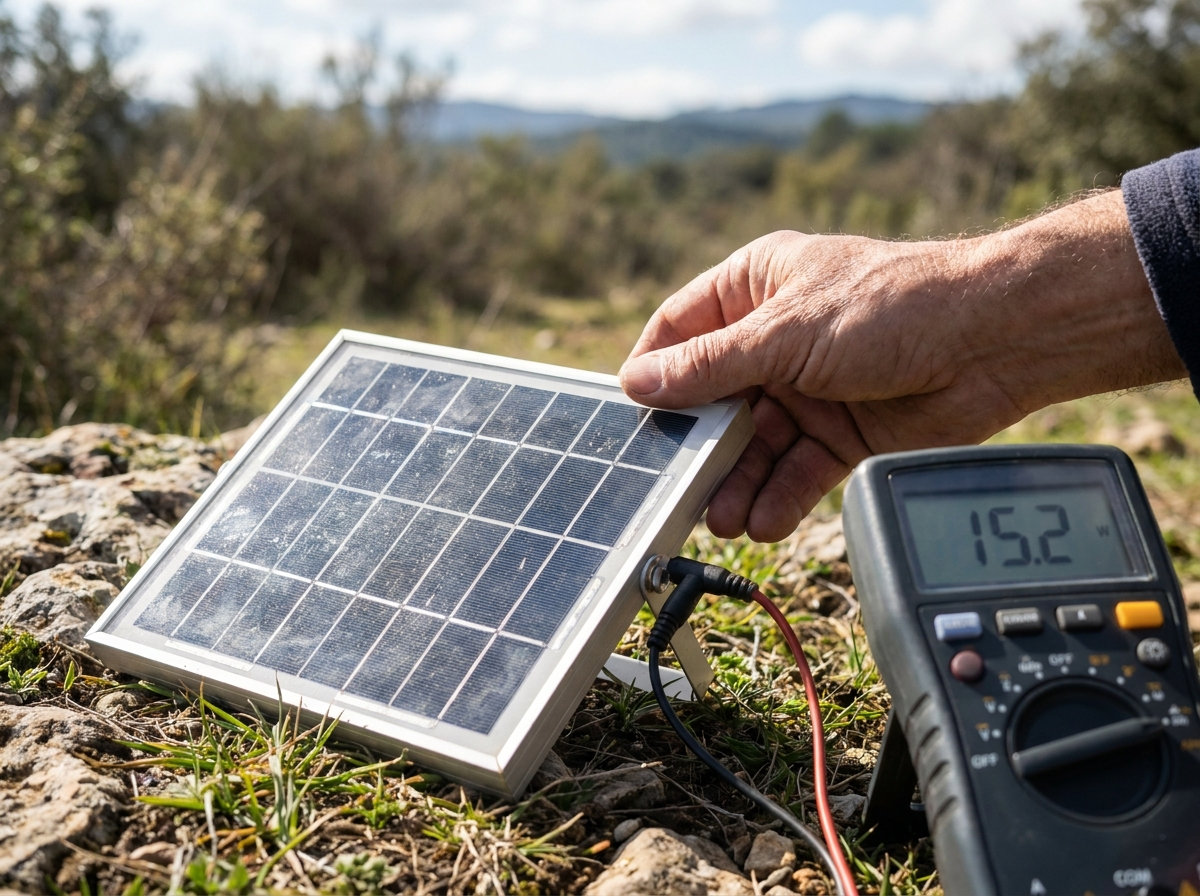
    A realistic rule of thumb: expect 70–80% of rated wattage on a clear, sunny day with ideal panel angle. In hazy conditions, partial shade, or high heat, output drops further. A 200W panel in direct summer sun might deliver 140–160W into a compatible charge controller. That’s not a defect — that’s physics.

    Why does this matter for buying? Because a 100W panel from a budget brand and a 100W panel from a reputable one may have the same label but very different real outputs. The difference often shows up in cell efficiency and how aggressively the marketing team rounded up.


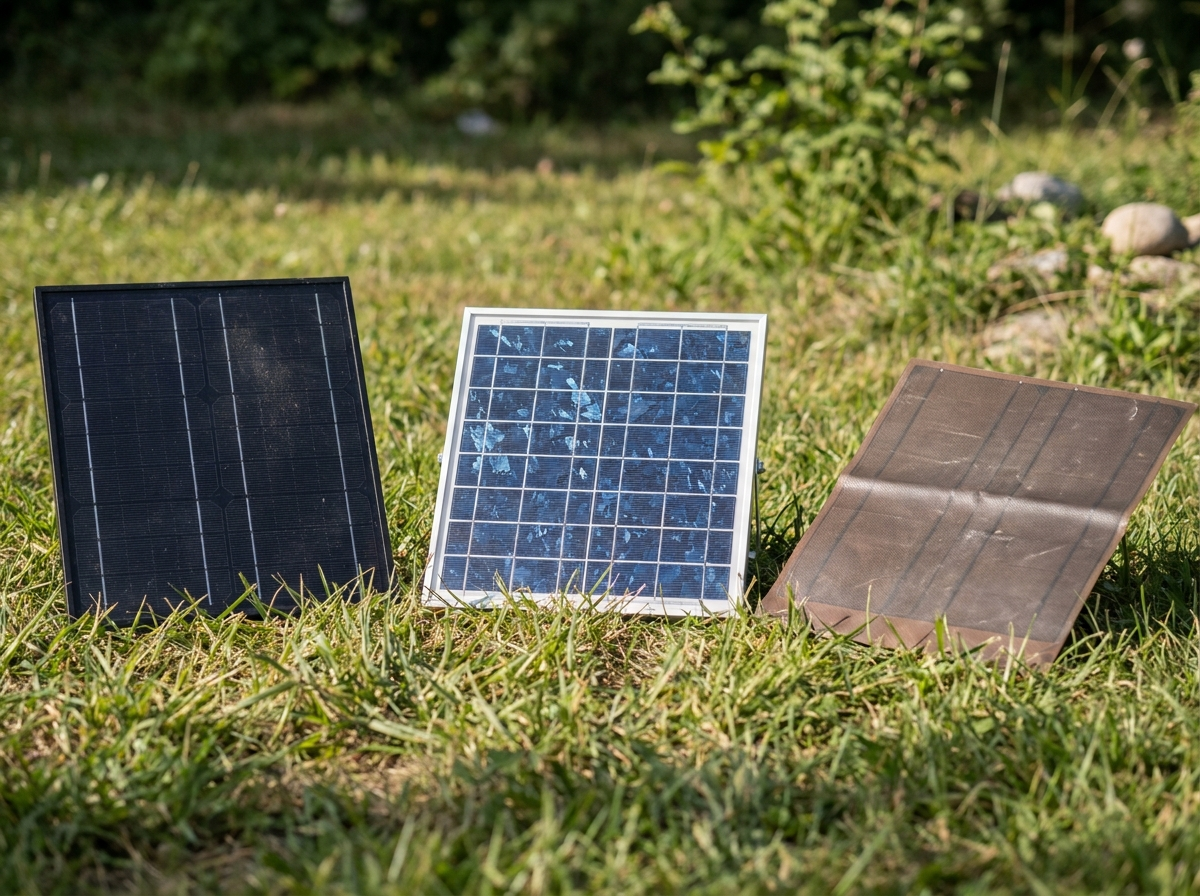
    Panel Types: Monocrystalline vs. Polycrystalline vs. Thin-Film

    portable solar power panels

    Monocrystalline

    This is what you want for portable use. Monocrystalline cells are cut from a single silicon crystal, which gives them the highest efficiency per square inch — typically 20–23% for quality cells. That translates directly to more power from a smaller, lighter panel. For backpacking, van life, or fitting panels on a small balcony, size-to-output ratio is everything.

    Polycrystalline

    Polycrystalline panels use silicon fragments fused together, which makes them cheaper to produce but less efficient — usually 15–17%. They’re larger and heavier for the same wattage. Honestly, they’ve mostly been displaced in the portable market. If a product page doesn’t specify which type, that’s a flag worth noting.

    Thin-Film (CIGS, CdTe, Amorphous Silicon)

    Thin-film panels are flexible and lightweight, which is why you see them sewn into rollable or foldable form factors. Their efficiency is generally lower than monocrystalline rigid panels, but they handle low-light and diffuse light better and degrade more gracefully under partial shade. The trade-off: they typically have shorter lifespans and can be expensive per watt. Good for ultralight applications where weight is paramount; not ideal if maximum output is the goal.


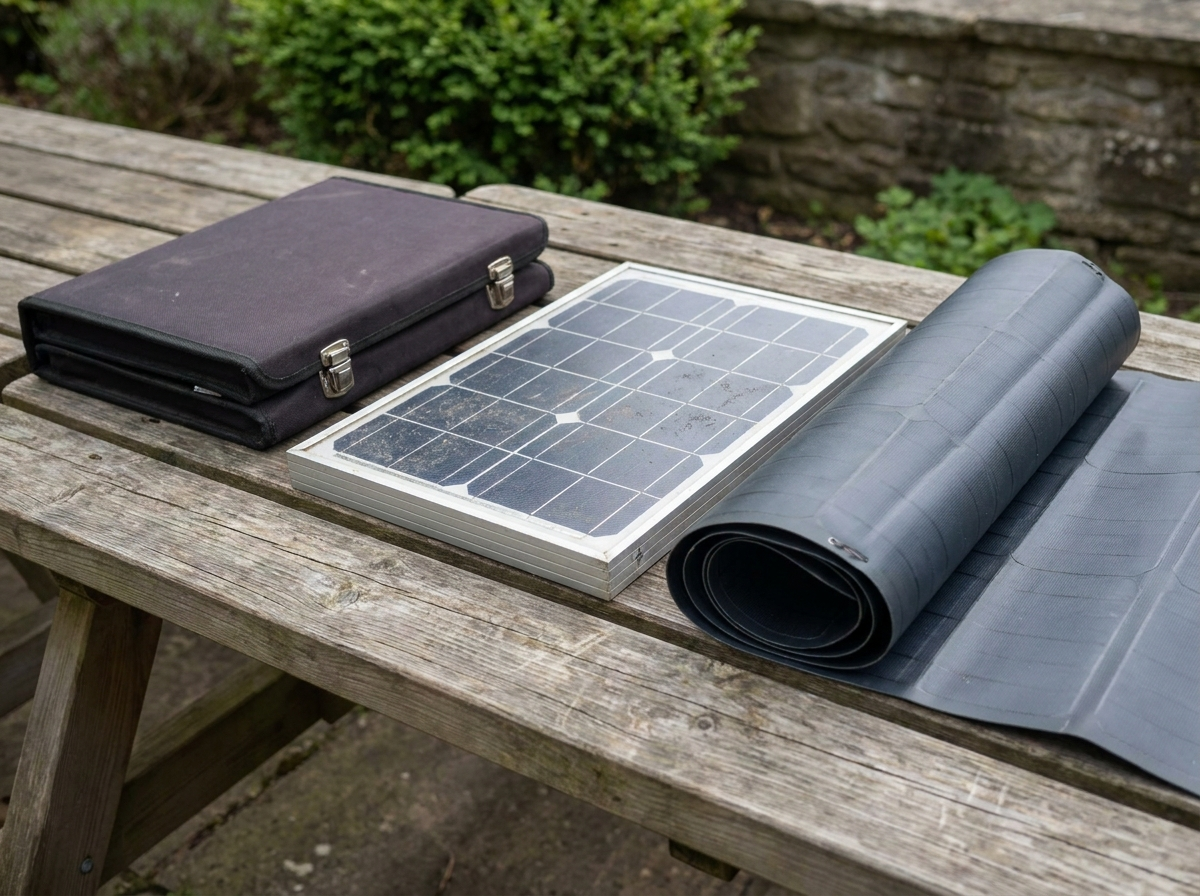
    Form Factors: Foldable, Rigid, and Rollable

    portable solar power panels

    Foldable panels are the most popular portable format. Two to four monocrystalline panels hinged together with a fabric backing, folding down to a briefcase-sized unit. They’re practical, durable enough for regular use, and usually include a kickstand. Most have a carrying handle. These are the go-to for camping, overlanding, and pairing with a portable power station.

    Rigid panels in a portable context usually means smaller, frameless panels meant to be placed or strapped flat. Some overlanders carry full-size rigid panels that get clamped to a roof rack or propped against a vehicle. More output per dollar, but far less convenient to move around.

    Rollable panels are a niche product — extremely light, packable into a cylinder or tube, good for bikepacking or long-distance hiking. Output-to-weight ratio impresses, but they tend to cost significantly more per watt and need care to avoid crease damage.


    Connectors and Compatibility: Don’t Skip This

    portable solar power panels

    This is where people get burned. Portable solar power panels ship with different output connectors — MC4, Anderson Powerpole, XT60, DC barrel jacks, and proprietary formats. Your power station or charge controller needs to match, or you’ll need an adapter.

    MC4 is the standard on most standalone panels and what solar charge controllers expect. Many portable power stations have a proprietary input port with their own branded cable. Check before you buy. Some stations include an MC4 adapter in the box; others charge extra for it.

    Also check voltage and current specs carefully. Most portable power stations accept solar input up to a maximum voltage — often somewhere in the 12–50V range, sometimes higher on larger units. Connect panels in series and you multiply voltage; in parallel, you multiply current. Get this wrong and you risk damaging the charge controller. The station’s documentation will list max input voltage and max input wattage — treat those as hard limits.


    How Much Solar Do You Actually Need?

    Size your panels to your consumption, not your anxiety. Here’s how to think about it practically:

    • Figure out your daily watt-hour draw from whatever you’re powering
    • Assume 4–5 peak sun hours in a reasonable location (less in winter, more in summer desert conditions)
    • Divide daily Wh by peak sun hours to get the panel wattage needed
    • Add 25–30% buffer for real-world losses

    Example: you want to recharge a 500Wh power station from empty in one day. At 5 peak sun hours with 75% efficiency, you’d need roughly 133W of panels minimum — so a 160–200W foldable panel is a practical match.

    For car camping or van life, people often run 100–200W and find it more than enough for lights, phone charging, a fan, and moderate laptop use. For a full off-grid cabin setup, portable solar power panels are typically a supplement or emergency backup rather than a primary source.


    Build Quality Signals Worth Checking

    A few things that separate panels that last from ones that don’t:

    ETFE vs. PET laminate: ETFE (ethylene tetrafluoroethylene) is the surface coating on quality foldable panels. It’s more scratch-resistant, handles UV degradation better, and is easier to wipe clean. PET is cheaper and more common on budget panels. You can usually tell — ETFE has a slightly harder, more glass-like feel.

    Cable quality and strain relief: Thin, stiff cables with poor strain relief at the junction point fail first. Look for braided or silicone-jacketed cables with reinforced entry points into the panel.

    Stitching and corner grommets: On foldable units, check the fabric backing. Reinforced corner grommets let you stake or tie the panel down in wind. Cheap stitching at fold points delaminates over time.

    IP rating on the junction box: The panel cells themselves don’t need submersion protection, but the junction box where the cables exit should be at least IP65 to handle rain and morning dew without corroding.


    A Few Honest Caveats

    Portable solar power panels are excellent tools with real limitations. They don’t generate power after dark. They underperform in shade, even partial shade — a shadow across one corner of a series-wired panel can cut output dramatically. They need to be aimed: a panel lying flat on the ground produces meaningfully less power than one tilted toward the sun.

    Also, portability has a weight cost. A 200W foldable panel typically weighs somewhere around 10–15 lbs. That’s manageable for a campsite but significant for a hike. Know what you’re actually going to do with the panel before optimizing for wattage.

    The best setup for most people: a quality foldable monocrystalline panel in the 100–200W range, matched to a portable power station with a compatible input voltage, ETFE laminate surface, MC4 or station-specific cable included in the box, and ETFE rather than PET coating. That combination handles the overwhelming majority of portable and backup power use cases reliably.

    If you’re comparing two panels and one is significantly cheaper with the same specs, ask what’s different — it’s usually the cells, the laminate, or the warranty. Those differences show up in year two and three, not on day one.

  • 4Patriots Generator: Honest Review Before You Buy

    4Patriots Generator: Honest Review Before You Buy

    4Patriots Generator: What You Actually Need to Know Before Buying

    Disclosure: This site may earn a commission from purchases made through links in this article.

    The 4patriots generator line gets heavy promotion through email lists, survival newsletters, and direct-response ads — which means a lot of people arrive at the purchase page already half-sold by marketing copy. That’s exactly when it pays to slow down. This article cuts through the promotional framing and gives you the kind of practical context that actually helps you decide.

    What 4Patriots Actually Sells

    4Patriots is primarily a direct-to-consumer brand built around emergency preparedness — food kits, survival gear, and portable solar power products. Their generator products are solar generators (sometimes called power stations), not gas-powered generators. That distinction matters enormously for how you use them.

    A solar generator is a battery pack with a built-in inverter, charge controller, and AC outlets. You charge it from solar panels, a wall outlet, or a car’s 12V port. There’s no fuel, no exhaust, and no engine noise. Great for some scenarios. Limited in others.

    The Patriot Power Generator Line

    4Patriots markets several Patriot Power Generator models under different wattage tiers. The lineup has evolved over the years, and they regularly run promotions that bundle solar panels with the unit. Without inventing specs I can’t verify, here’s what’s consistently true across their lineup:

    • LiFePO4 battery chemistry — most current models use lithium iron phosphate, which is safer than standard lithium-ion, handles more charge cycles before degradation, and performs better in temperature extremes. This is a genuine selling point, not just marketing.
    • Multiple output types — AC outlets, USB-A, USB-C, and 12V car ports are standard across the line.
    • Pass-through charging — you can run devices while the battery charges, which matters for emergency use.
    • MPPT solar charge controller — more efficient than PWM controllers at extracting power from panels, especially in partial shade or low light.

    These are real features worth having. They’re also features you’ll find on competing units from Jackery, EcoFlow, Bluetti, and Anker at similar or overlapping price points.

    Where the 4Patriots Generator Genuinely Shines

    4patriots generator

    Off-grid cabin or RV use with modest loads. If you’re running LED lighting, phone charging, a CPAP machine, a fan, and occasionally a small appliance, a mid-range solar generator handles this well. The LiFePO4 chemistry means the battery survives years of regular cycling without the capacity loss you’d see in older lithium chemistries.

    Emergency preparedness without fuel storage hassles. Gas generators require fuel that degrades, storage that’s regulated or restricted in many areas, and maintenance between uses. A solar generator sits on a shelf, stays partially charged, and is ready when you need it. Pair it with a foldable solar panel and you have a self-replenishing system.

    Power outages under 24–48 hours. For the typical grid outage — severe weather, local infrastructure failure — a properly sized unit keeps your phone charged, powers medical devices, runs a portable fan or space heater (check wattage carefully), and keeps a radio going. That’s genuinely useful.

    Low-noise environments. Hospitals, apartments, neighborhoods with HOA restrictions, camping areas with quiet hours. No exhaust, no noise, no complaints.

    Where It Falls Short

    4patriots generator

    Here’s what the promotional materials won’t tell you clearly.

    Solar recharge is slow. Even with good panels and full sun, recharging a large battery from near-empty takes most of a day. If it’s cloudy — and emergencies often involve storms — you’re relying on whatever charge you stored beforehand or a wall/car charge. This isn’t a flaw unique to 4Patriots; it’s physics. But the marketing imagery of unlimited solar power glosses over it.

    High-draw appliances will drain the battery fast. Electric kettles, toasters, hair dryers, portable air conditioners, and electric space heaters pull 1,000–1,500W or more. A battery that looks large on paper can be depleted in an hour or two by sustained high-wattage loads. Know your power needs before you size your purchase.

    You’re paying a brand premium. 4Patriots spends heavily on marketing — their ad presence is significant. That cost gets built into the product price. Competing units from established power-station brands often offer comparable or superior specs at similar or lower prices. That doesn’t automatically make 4Patriots wrong for you, but it means you should shop comparatively rather than clicking the first order button.

    The direct-to-consumer model has trade-offs. 4Patriots sells primarily through their own channels. That means you’re not buying through Amazon or a major retailer where return processes are frictionless. Read the return and warranty policy carefully before purchasing. Their customer service reputation has been mixed — some users report smooth experiences, others describe friction with returns or warranty claims.

    How to Size the Right Unit for Your Needs

    4patriots generator

    This is where most buyers go wrong — they guess, get seduced by a specific product’s marketing, and end up with something either undersized (frustrating) or way oversized (expensive overkill).

    Do a quick load calculation first:

    1. List every device you’d want to power during an outage.
    2. Find the wattage of each (check the label on the device or the manual).
    3. Estimate daily hours of use.
    4. Multiply watts × hours = watt-hours per day.

    Add 20–30% buffer for inverter inefficiency and battery depth-of-discharge limits (you shouldn’t consistently drain LiFePO4 to absolute zero).

    If your daily needs come out to 500Wh, a unit with 500Wh capacity will last about one day without recharge. Plan accordingly.

    A Practical Example

    CPAP at 50W × 8 hours = 400Wh. LED lights at 20W × 5 hours = 100Wh. Phone charging = ~20Wh. That’s roughly 520Wh per day. A unit in the 1,000Wh range gives you roughly two days of that load without recharge — a reasonable safety margin.

    Comparing to the Competition

    Before committing to a 4patriots generator, spend 30 minutes looking at equivalent-capacity units from:

    • EcoFlow — faster charging and app control are genuine differentiators
    • Bluetti — strong build quality and expandable battery options
    • Jackery — wide retail availability and solid service network
    • Anker (SOLIX line) — newer entrant with competitive specs and pricing

    Compare LFP vs. NMC battery chemistry, recharge speed (both AC and solar), warranty length, and actual measured capacity (some units test below rated capacity). Read reviews from people who’ve owned units for 12+ months, not just unboxing impressions.

    None of this means 4Patriots makes bad products. It means they operate in a competitive market where informed buyers get better outcomes.

    The Buyer Who Should Consider It

    You’re already in the 4Patriots ecosystem — you use their food kits, trust their brand, want a single source for your preparedness gear. That’s a legitimate reason to buy. Brand consistency and a single support relationship have real value, especially for less tech-savvy buyers.

    Or you’ve seen a specific bundle deal — generator plus solar panel plus accessories — that genuinely pencils out better than building the same kit component by component. That happens. Run the numbers.

    Or you want LiFePO4 chemistry and the particular form factor or feature set of a specific Patriot Power Generator model that competitors don’t match at the same price. Possible.

    Final Guidance

    Buy based on specs and use case, not marketing narrative. The 4patriots generator products are legitimate solar power stations with real features — they’re not a scam, and LiFePO4 chemistry is genuinely worth seeking out. But the brand premium is real, the marketing is heavy, and the competition is strong.

    Don’t buy the largest unit because an emergency feels scary. Buy the unit that matches your calculated load. Don’t assume solar recharge will save you during a multi-day weather event — charge from the wall regularly so you always start with a full battery. And read the return policy before you order, not after.

    The best backup power setup is one you’ve actually tested before you need it. Plug it in. Run your devices. See how fast it drains. Then you’ll know exactly what you have.

  • Solar Generator for RV: How to Power Your Rig Right

    Solar Generator for RV: How to Power Your Rig Right

    Solar Generator for RV: How to Power Your Rig Right

    Disclosure: This site earns a small commission on purchases made through some links, at no extra cost to you.

    A solar generator for RV camping is one of those things that sounds simple until you actually try to size one correctly. The gap between “enough power to charge my phone” and “enough power to run my 12-volt fridge through a cloudy day in the Pacific Northwest” is enormous — and most of the generic advice online glosses right over it.

    This article covers what actually matters: how much capacity you need, how solar charging works in real RV conditions, where these systems fall short, and how to set yours up so it performs instead of frustrates.


    What a Solar Generator Actually Is

    The term gets used loosely, but a solar generator is essentially a large lithium battery pack with a built-in inverter, charge controller, and AC/DC outputs — all in one box. You pair it with one or more portable solar panels, and it becomes a self-contained power system.

    What it is not: a traditional fuel generator. No exhaust, no oil changes, no noise. That’s the appeal for RV use specifically. You can run it inside the vehicle, use it in campgrounds with noise restrictions, and leave it charging silently on your roof or picnic table.

    The tradeoff is recharge time. A gas generator can refuel in two minutes. A solar generator depends entirely on sunlight and panel wattage.


    Sizing: The Part Most People Get Wrong

    This is where to spend your energy before you spend your money.

    Calculate Your Daily Load First

    List everything you actually run in your RV and estimate how many hours per day you use each item. A 12-volt compressor fridge is usually the biggest draw — it doesn’t pull much instantaneous wattage, but it runs a good portion of every hour. A small one might average 30–50 watts continuously. Over 24 hours, that’s 720–1,200 watt-hours just for the fridge.

    Add in:
    – Lighting (LED strips are efficient; 20–40W total is typical)
    – Phone and laptop charging (50–100W intermittently)
    – A CPAP machine if needed (variable, but significant)
    – A small fan or 12V water pump
    – Occasional device like a coffee maker or induction cooktop (these spike demand hard)

    A realistic light-use RV setup — fridge, lights, device charging — often lands around 600–1,000 watt-hours per day. Moderate use with a laptop and fan pushes that to 1,200–1,500Wh. Running any AC or electric cooking regularly? You’re looking at a different category of system entirely.

    Match Capacity to Actual Needs

    Lithium battery capacity in solar generators is rated in watt-hours. But you shouldn’t plan to drain any battery to zero — that’s hard on the cells and leaves you with nothing in reserve. Planning to use about 80% of rated capacity is a reasonable approach.

    For a 1,200Wh daily load, you’d want at least 1,500Wh of capacity, ideally closer to 2,000Wh if you’re spending multiple days in overcast conditions. Many of the popular mid-range units land in the 1,000–2,000Wh range. Units in the 2–3kWh range are becoming more common and more practical for extended trips.

    Solar Panel Wattage: Recharge Is Everything

    Here’s the honest reality of using a solar generator for RV applications: the battery size is only half the equation. If you can’t recharge fast enough, you’ll drain the battery over consecutive days no matter how big it is.

    A rough rule: divide your daily watt-hour consumption by 4–5 peak sun hours (a conservative average for most of the continental US in good weather). That gives you the minimum panel wattage needed to keep up. For 1,200Wh per day, you’d need 240–300 watts of solar.

    In practice, go bigger. Panels are cheap relative to batteries. A 400W panel array charges faster on good days and keeps pace on mediocre ones. Most portable solar generators accept panels up to a specific wattage input — check the maximum solar input spec before adding panels.


    Real-World Conditions That Change Everything

    Shade and Panel Angle

    A panel producing 200W in direct noon sun might produce 60W when the sun is low or when you’re parked under trees. Partial shading on a single panel can drag down your whole array depending on how it’s wired. This is why real-world output rarely matches spec-sheet numbers.

    Parking your RV facing south and tilting panels toward the sun makes a measurable difference. Even a 20-degree tilt adjustment can increase daily harvest significantly compared to flat.

    Temperature

    Lithium batteries charge more slowly in cold weather — some units throttle charging below 32°F or have built-in heating that consumes power. In hot weather, performance is generally fine, but keep batteries and units out of direct sun to avoid thermal management issues.

    Generator Pairing

    Many RVers use a solar generator alongside a small conventional generator. The solar handles the day-to-day; the gas generator tops things off when you’ve had three bad weather days in a row or need to run the AC hard. This hybrid approach is practical and removes the anxiety of relying purely on sun.


    Practical Setup in an RV

    Panel Options

    You have two main choices: foldable portable panels or rigid panels mounted to the RV roof. Portable panels give you flexibility — you can angle them for optimal sun while the RV stays in shade. Rooftop panels are always working and require no setup, but you’re locked into whatever angle the roof sits at, and you have to run the RV to get them into sun.

    For boondocking, many people run both: portable panels to maximize harvest, rooftop panels for passive charging while driving or parked normally.

    Cabling and Placement

    Keep cable runs short between panels and the generator — longer runs with undersized cable lose meaningful wattage to resistance. Most solar generators use MC4 connectors on their input, the same standard as rooftop solar systems, so connecting panels is straightforward.

    Store the battery unit somewhere with airflow. Under a bed with the doors closed gets hot. A vented compartment or inside the living area is better.

    Managing Load

    The best setup in the world still benefits from load awareness. Running a high-draw appliance — an electric kettle, a hair dryer, a microwave — for a few minutes is manageable. Running it constantly is not. Knowing your appliances’ wattage and being intentional about heavy loads makes a surprisingly large difference in how long your battery lasts.


    Limitations Worth Being Honest About

    A solar generator for RV use has real limits. If you need to run rooftop air conditioning for hours every day in summer, you’re looking at a much larger battery and solar system than any portable unit provides — or you need shore power or a fuel generator.

    Solar input is also genuinely dependent on weather. A week of heavy cloud cover in the Pacific Northwest or the Southeast monsoon season can leave you relying almost entirely on stored capacity. Either accept that limitation or plan a backup charging method.

    Finally, capacity claims can be optimistic. Real-world output at high or low temperatures, at sustained loads, and accounting for inverter efficiency losses is always somewhat less than the rated spec. Factor in a 10–15% efficiency buffer when planning.


    Getting the Most Out of Your System

    A few habits that genuinely extend how long your charge lasts:

    • Charge during peak sun hours, even partially — don’t wait until the battery is nearly empty.
    • Use 12V outputs for 12V devices rather than running them through the inverter to AC; inverter conversion loses energy.
    • Disable Bluetooth and app connectivity on units that support it when you don’t need it — constant wireless activity draws a small but continuous load.
    • Monitor actual consumption with the built-in display rather than guessing; most modern units show real-time draw and estimated runtime.

    A well-sized solar generator for RV use, paired with adequate panels and run with a little awareness, can genuinely run a comfortable off-grid setup for extended periods. The key is starting with honest math about your load, not hoping a popular model is “good enough.”