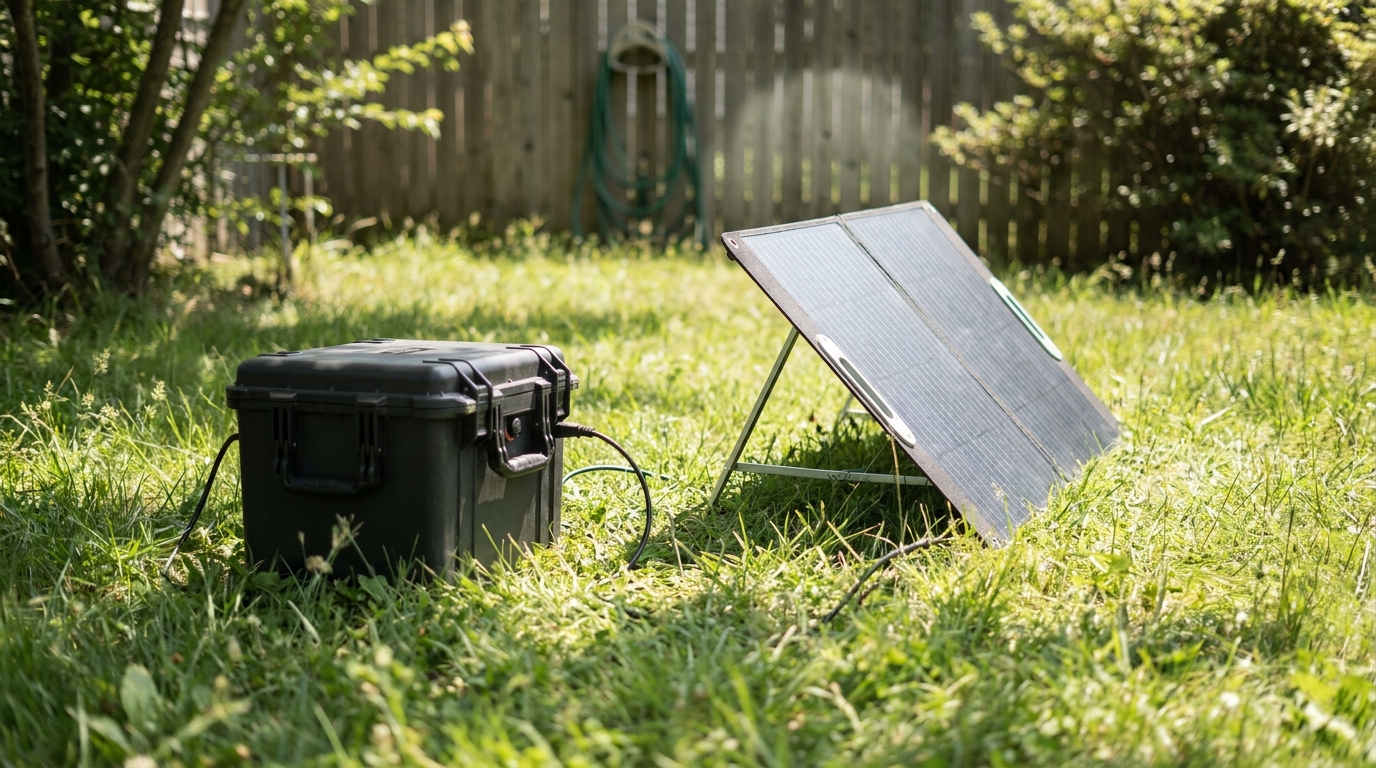
Powerness Solar Generator: What to Know Before You Buy
Disclosure: This site may earn a small commission from purchases made through links in this article, at no extra cost to you.
If you’ve stumbled across the powerness solar generator while shopping for backup or off-grid power, you’re probably trying to figure out whether it’s a legitimate option or just another crowded-market also-ran. Fair question. The portable power space is flooded with brands that look identical on spec sheets and fall apart after a camping season. Powerness sits in a competitive mid-market tier, and whether it makes sense for you depends almost entirely on what you actually need to power — and for how long.
Let’s get specific.
What “Solar Generator” Actually Means Here
The term is a bit misleading, so let’s clear it up fast. A solar generator isn’t a standalone machine that produces power from nothing — it’s a battery-based power station that accepts solar input through built-in MPPT or PWM charge controllers. You still need solar panels, sold separately. The generator part refers to the fact that it can output AC power (like a wall outlet) rather than just DC.
This distinction matters because buyers sometimes underestimate the total system cost. The unit itself is one purchase; panels are another. Budget accordingly.
The Real Use Cases — and Where It Fits
Camping and Van Life
For weekend camping, a powerness solar generator in the 300–600Wh range handles the basics comfortably: phone and laptop charging, LED lighting, a small fan, maybe a portable speaker. What it won’t do is run a full-size coffee maker or hair dryer for long without eating through the battery quickly. High-wattage resistive loads (anything with a heating element) are the enemy of small battery packs.
The practical rule: if the appliance has a wattage rating under 100W and you’re not running it continuously, you’re probably fine.
Home Backup
This is where buyers need to be more careful. A powerness solar generator can bridge a short outage for essential items — a CPAP machine, phone charging, keeping a small fridge cold for a few hours, or powering a few lights. It is not a whole-home backup solution. It won’t run a central air unit, a well pump, or an electric range.
If your goal is outage resilience for medical equipment or food preservation over a multi-day blackout, you’ll want to look at capacity in the 1000Wh+ range and confirm the continuous output wattage can actually handle your device’s startup surge — not just its running wattage. A fridge, for example, can spike two to three times its running draw on startup.
Off-Grid Cabins and Remote Work
For a cabin used on weekends with modest power needs, pairing a Powerness unit with 100–200W of foldable solar panels is a workable setup. Recharge times depend heavily on panel wattage, sun hours in your location, and how aggressively you’re drawing from the battery at the same time. Four to six hours of good sun with appropriately sized panels is a reasonable expectation — don’t trust marketing claims that assume perfect conditions all day.
Key Specs to Actually Evaluate
Ignore the headline number on the box and dig into these:
Battery capacity (Wh): The total energy the unit can store. Divide this by the wattage of your appliance to get a rough runtime in hours. A 500Wh unit running a 50W device = roughly 10 hours, minus efficiency losses (plan for about 85–90% usable capacity in real conditions).
Continuous output wattage: This is the maximum sustained power the inverter can deliver. If your device draws more than this, the unit will cut off. Check this number against everything you intend to plug in simultaneously.
Peak/surge wattage: The short burst capacity for motor startups. Critical for refrigerators, power tools, and air compressors.
Solar input wattage and voltage range: This tells you how fast you can recharge from panels and what panel configurations are compatible. A narrow input voltage range limits your panel options.
Battery chemistry: LiFePO4 (lithium iron phosphate) batteries offer significantly longer cycle life — typically 2,000–3,500 cycles to 80% capacity — compared to older NMC lithium cells. If a powerness solar generator model uses LiFePO4, that’s a meaningful durability advantage worth paying for.
Ports: Count the AC outlets, USB-A, USB-C (and the wattage on each), and DC outputs. A unit with one AC outlet is fine for a solo camper; not great for a cabin.
Honest Trade-Offs
No portable power station is perfect. Here’s what you’re accepting when you buy in this category:
Weight vs. capacity: More capacity means more weight. A 1000Wh unit will typically weigh 20–30 lbs. That’s manageable for a car camping setup or putting it in the back of a van, but it’s not something you throw in a daypack.
Recharge speed limitations: The main friction point with most mid-market units is slow wall-charging or limited solar input. Some models take 8–10 hours to recharge from wall power. If that bothers you, look specifically for units that advertise 2-hour or faster AC recharge and verify the input wattage supports it.
Inverter efficiency overhead: Pure sine wave inverters — which you want for sensitive electronics, medical devices, and most modern appliances — use some power just by being on. You’ll lose a small percentage of your stored energy to the inverter’s idle draw even before you plug anything in.
Warranty and support reality: This is where smaller brands sometimes struggle. Look for at minimum a 24-month warranty and check whether there’s actual customer support — a phone number or responsive email, not just a contact form that disappears into a void.
Sizing: The Practical Method
Instead of guessing, do this:
- List everything you want to power.
- Find the wattage of each device (on the label, in the manual, or by looking up the model online).
- Estimate how many hours per day you’ll run each one.
- Multiply wattage × hours for each device and add them up — that’s your daily Wh need.
- Add 20–25% buffer for efficiency losses and headroom.
If that number comes out to 300Wh, a 500Wh unit gives you comfortable margin. If it’s 800Wh, you’re looking at 1000Wh+ territory.
Don’t buy exactly the capacity you need. Buy the next size up. You’ll always find more uses for the headroom.
Solar Panel Pairing Tips
When pairing panels with a powerness solar generator, the two most common mistakes are buying underpowered panels (the 100W folding kit that actually delivers 60W in real conditions) and mismatching voltage ranges.
- Match the panel’s open-circuit voltage (Voc) to the unit’s input voltage range. Exceed the max, and you risk damaging the charge controller.
- More panels in parallel keep voltage within range while increasing current and charge speed.
- Monocrystalline panels perform better in low-light conditions than polycrystalline — worth the slight cost premium.
- If you’re in a region with inconsistent sun, prioritize panel wattage over everything else. You can’t store power you didn’t generate.
Before You Pull the Trigger
A powerness solar generator can be a genuinely useful piece of kit — for camping, for short outages, for a work-from-anywhere setup that needs reliable power without a generator’s noise and fumes. But match the tool to the job. Verify the specs matter to your use case rather than the marketing use case. Check that your highest-draw appliance falls within the continuous output rating. And if you’re buying primarily for home backup, pressure-test the scenario: how many hours does your fridge need to stay cold, what’s your CPAP draw, and does the math actually work?
A few minutes with a calculator now saves a lot of frustration at 2am when the power’s out and the unit dies sooner than expected.
Leave a Reply