Solar Panel Generator: What to Know Before You Buy
Disclosure: This site earns a small commission on purchases made through some links, at no extra cost to you.
A solar panel generator sounds straightforward — panels catch sun, battery stores it, inverter runs your stuff. But the gap between a system that actually covers your needs and one that disappoints you on day two is mostly about decisions made before purchase. This guide cuts through the noise on what matters.
What “Solar Panel Generator” Actually Means
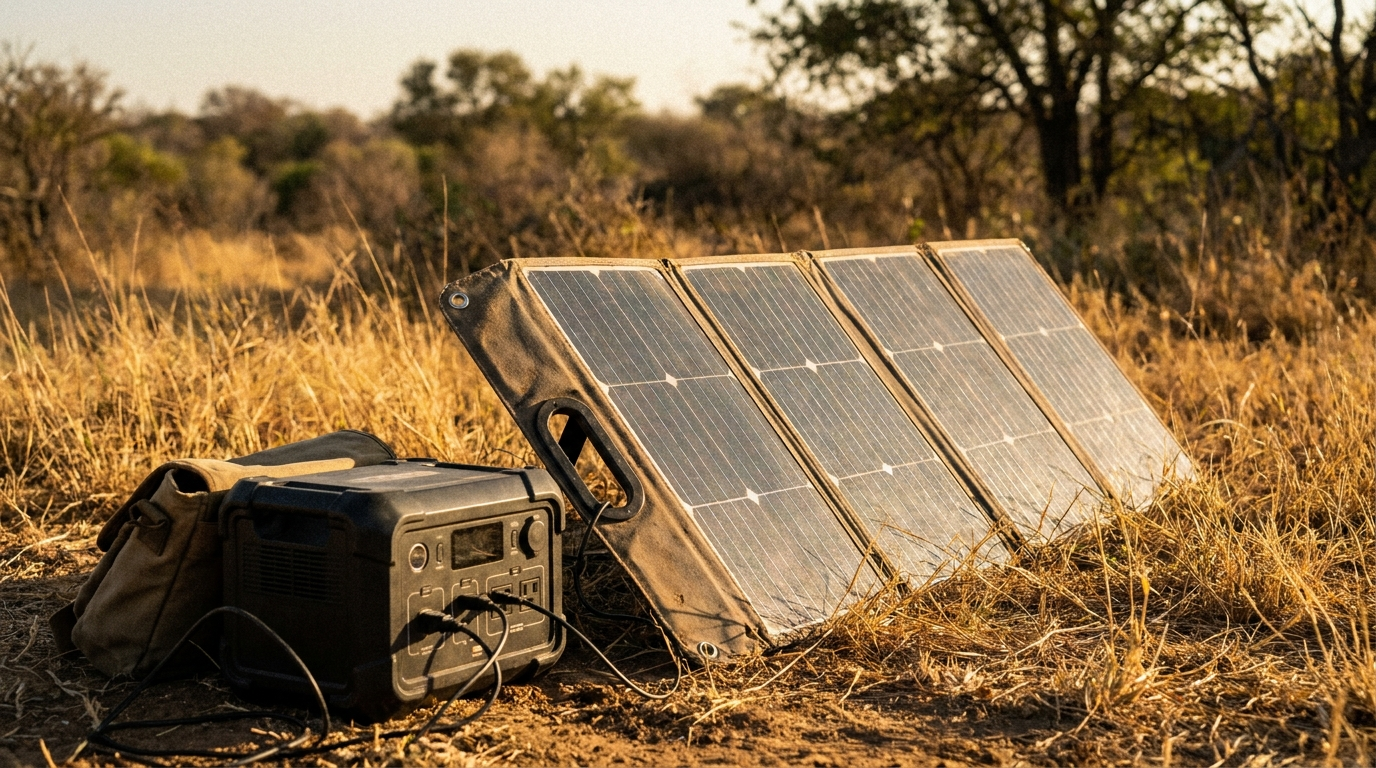
The term gets used loosely. Technically, a solar panel generator is a portable power station — a battery with a built-in inverter, charge controller, and AC/DC outputs — paired with one or more solar panels. It’s a closed-loop system you can move, set up in a driveway or campsite, and run without a fuel can or extension cord to the grid.
That’s its real appeal. No fumes, quiet operation, and the running cost drops to near zero once you own the hardware.
What it isn’t: a whole-home backup solution in most configurations. A 1,000Wh station running a full refrigerator, a few lights, and phone chargers will last a day or so. Useful — but you need to size realistically.
Capacity First, Then Everything Else
Start with the battery capacity, not the panel wattage. Panels just determine how fast you refill what you use.
How to estimate what you need:
Add up the wattage of devices you’d run, multiply by the hours you’d run them, and that’s your daily Wh need. A laptop at 65W run for four hours is 260Wh. A CPAP machine might pull 30–40W for eight hours — about 280Wh. A portable fridge cycles on and off and might average 40–60W, so roughly 500–700Wh per day depending on the model and ambient temperature.
Add those up, then build in a buffer. Lithium cells shouldn’t be fully drained regularly; most manufacturers recommend not going below 20% for longevity. So if you need 800Wh of usable power, you want at least a 1,000Wh station, probably 1,200Wh.
LFP vs. NMC Batteries
This matters more than most buyers realize.
- LFP (lithium iron phosphate): Slower to degrade, rated for far more charge cycles (often 2,000–3,500), and less prone to thermal issues. Heavier per Wh, slightly lower energy density.
- NMC (nickel manganese cobalt): More energy-dense, so lighter for the same capacity. But cycle ratings are often lower — sometimes under 1,000 cycles before meaningful capacity loss.
If you’re buying a solar panel generator for long-term use — camping every summer, emergency backup that might sit for months — LFP is usually the smarter investment even at a higher initial cost.
Panel Wattage and Real-World Charging
Panel specs are peak ratings under lab conditions (1,000 W/m², 25°C cell temp). In practice, expect 70–80% of that on a good day, less on overcast days or if the angle isn’t dialed in.
A 200W panel in decent summer sun, well-positioned, might put 600–800Wh into your battery over a full day. That’s enough to recover what a moderate user spends overnight. Add a second 200W panel and you’re charging faster than you’re using — which is where the system actually feels liberating.
Wiring panels in series vs. parallel:
Most portable power stations have a maximum solar input voltage (commonly 12V–150V depending on the unit). Series wiring raises voltage; parallel wiring raises current. You need to stay within the station’s voltage ceiling. Connecting panels without checking this is the most common beginner mistake — it can damage the charge controller permanently.
Foldable vs. Rigid Panels
Foldable panels are convenient and portable but tend to run hotter because there’s limited airflow underneath, which reduces efficiency. They also use thin-film or lower-grade monocrystalline cells more often than rigid panels do.
Rigid monocrystalline panels are bulkier but generally more efficient, and they last longer. If you have a fixed campsite or use the system at home, rigid panels are a better value per watt. For backpacking or van life where weight and pack size matter, foldable wins on convenience despite the tradeoff.
The Inverter: Where Bad Specs Actually Hurt You
The inverter converts battery DC power to the AC your household devices need. Two specs matter:
Continuous wattage — what it can sustain. A 1,000W inverter can run up to about 1,000W of devices simultaneously. Exceed that and it shuts off or throttles.
Surge capacity — the short burst it can handle at startup. Motors (refrigerators, drills, air compressors) draw 2–3x their running wattage when they start. A fridge rated at 150W running might surge to 450W at startup. If the inverter’s surge capacity is only 1,200W and your station is already running a 1,000W continuous load, that fridge won’t start.
Pure sine wave vs. modified sine wave:
Get pure sine wave. Full stop. Modified sine wave causes heat and audible buzz in motors, can damage some sensitive electronics, and is generally a false economy. Nearly every reputable portable station ships with pure sine wave now, but verify — especially on budget units.
Charging Speed and Dual-Input
One underrated feature: simultaneous solar and AC charging. Some stations let you plug into the wall and connect solar panels at the same time, which dramatically speeds up recharge when you have access to both. Useful for topping off before a trip.
Also check the maximum AC input wattage, not just solar input. A station that accepts 1,000W AC input will fully recharge in an hour or two. One limited to 300W AC takes all afternoon. If you’re using this for power outages and want to stay topped up between events, faster AC input actually matters.
What the Marketing Glosses Over
Weight. A 2,000Wh station with a good LFP pack can weigh 45–55 lbs. Portable is relative. If you’re carrying this any distance, check the weight seriously.
Cold weather performance. Lithium batteries lose capacity in cold temperatures. Some stations have self-heating functions for the battery; most don’t. Expect a meaningful capacity reduction below freezing — sometimes 20–30% less usable capacity at 0°C. This matters for winter camping or unheated cabin use.
App connectivity bugs. Many newer stations have Bluetooth or Wi-Fi apps for monitoring. These are sometimes genuinely useful, sometimes riddled with connection issues. Don’t make a purchase decision based on app features unless you’ve seen hands-on reviews confirming they actually work reliably.
Warranty and customer support. A few manufacturers in this space have strong support; others are hard to reach after the sale. Longer warranties are only valuable if the company will be around to honor them. Mid-tier brands with three-year warranties and a reputation for responsive support often beat a budget brand’s vague five-year claim.
Pairing Advice for Common Use Cases
Weekend Camping
A 500–1,000Wh station with a single 100–200W folding panel covers lights, phone charging, a small speaker, and phone-based navigation comfortably. You probably don’t need more unless you’re running a portable fridge.
Extended Off-Grid or Full-Time Van
You’ll want 2,000Wh or more, expandable battery support if available, and 400W+ of rigid panel capacity. Budget for a second battery if the station supports expansion — it’s usually cheaper than buying a whole second unit.
Home Emergency Backup
Focus on AC input speed so you can charge from the grid when power returns. Prioritize which loads matter: medical devices, a freezer, phone charging. Don’t try to run everything — size the system for the critical list and practice managing loads before you actually need it.
The right solar panel generator for someone riding out hurricane season is very different from the right one for weekend kayaking trips. Get clear on your actual use case, work backward from capacity, match the panels to fill it in a day, and verify the inverter specs against your real startup loads. That process gets you to the right answer faster than any spec-sheet comparison ever will.
Leave a Reply