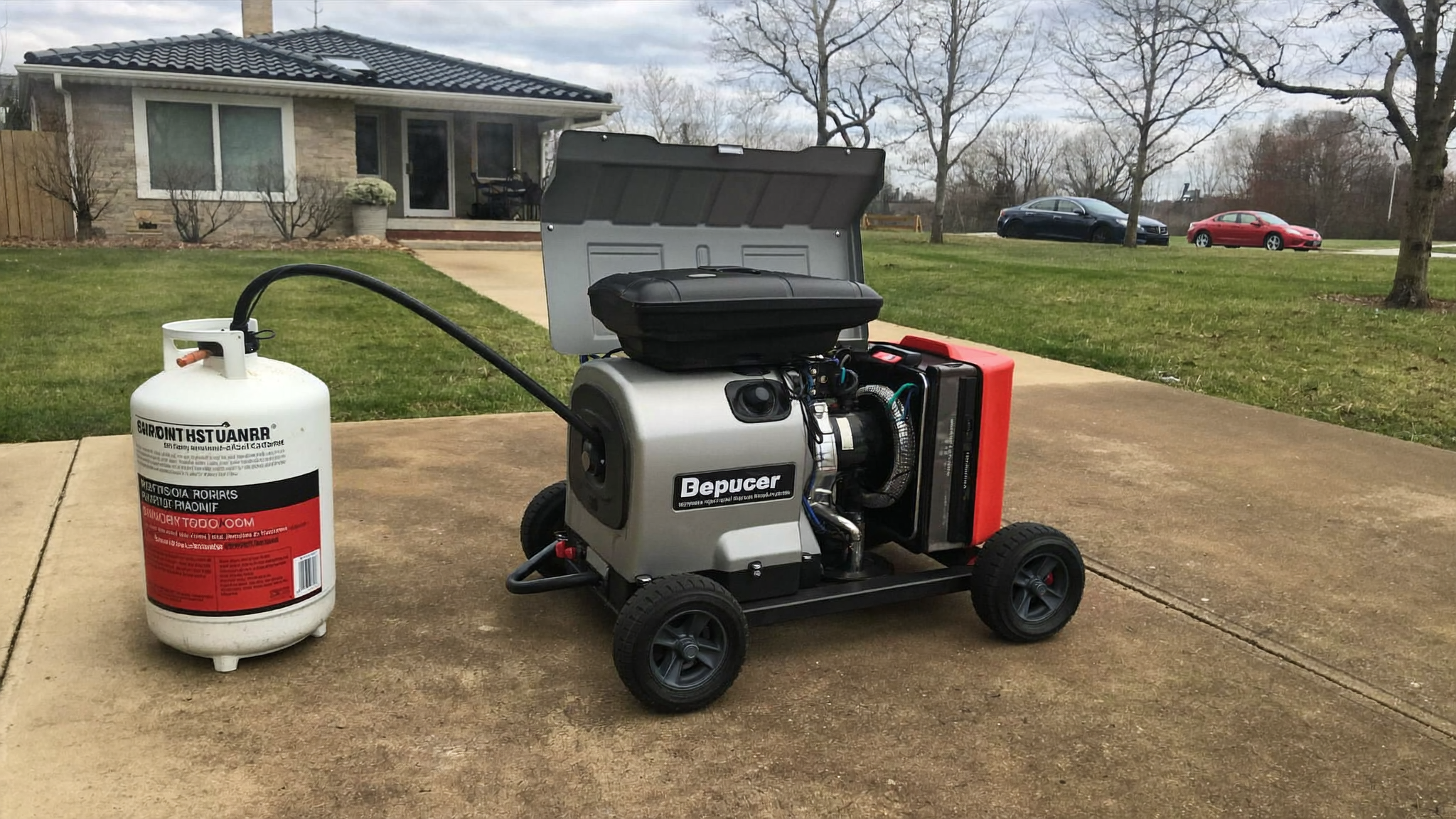
What a Firman Tri Fuel Generator Actually Does
Disclosure: This site earns a small commission on qualifying purchases at no extra cost to you.
A firman tri fuel generator is exactly what the name says — a generator engineered to run on three separate fuel sources: gasoline, liquid propane (LP), and natural gas (NG). You switch between them using a selector valve, and the carburetor or fuel system is tuned to handle all three without a conversion kit. That’s the core idea, and it’s more useful than it sounds once you think through real emergency scenarios.
Gasoline is the default. Most people start there because it’s familiar. But gasoline goes stale, it’s in short supply after major storms, and storing large quantities creates safety and regulatory headaches. Propane stores almost indefinitely and burns cleaner. Natural gas connects to your house line, which means you never run out as long as the utility is running. Each fuel has a specific window where it’s the right call. A tri-fuel machine lets you pick that window instead of being locked in.
How the Fuel Switching System Works
The mechanics are straightforward. There’s a fuel selector dial — typically labeled GAS, LPG, and NG — that controls which fuel pathway is open. The carburetor on a tri-fuel unit is designed with jets and passages sized to accommodate the different energy densities of each fuel. Gasoline has the highest energy content per unit volume, propane is somewhat lower, and natural gas lower still. Because of this, you’ll see a rated wattage drop when you move away from gasoline.
For example, a unit might produce its full rated peak wattage on gasoline, but drop to perhaps 85-90% on propane and lower still on natural gas. The exact figures vary by model, and you should check the spec sheet for whichever unit you’re looking at. The point is: this is normal and expected. It’s not a defect.
Natural gas mode requires a dedicated hose connection to a gas line or portable tank fitting. You’ll need the right fittings and a compatible regulator — some come included, some don’t. Propane mode typically uses a standard POL or QCC1 fitting compatible with common 20 lb and 100 lb tanks.
The Real-World Advantage of Three Fuels
Here’s where experience matters more than spec sheets.
During a hurricane or ice storm, gas stations run dry within hours. Everyone with a gasoline-only generator is hunting for fuel or rationing what they have. If you’ve got a 100 lb propane tank sitting next to your grill — which a lot of households already do — you have a significant backup that most neighbors don’t. And if you have a home connected to a natural gas line that stays live (which it often does even when power is out), you have essentially unlimited runtime for as long as the utility infrastructure holds.
That natural gas connection is underrated. People focus on propane because tanks are tangible and portable. But a generator running on the house natural gas line, powering a refrigerator and a window unit through a Southern summer outage, doesn’t need you to think about refueling at all. You just run it.
Propane wins on storage. A sealed propane tank doesn’t degrade over years the way gasoline does. If you’re prepping for infrequent emergencies and don’t want to rotate fuel stock, filling a couple of propane cylinders and leaving them in the shed is a genuinely low-maintenance approach.
Gasoline still makes sense when you need maximum output and runtime efficiency, or when you’re already carrying gas for other equipment.
Maintenance Differences Across Fuels
Gasoline is hardest on the engine over time. It leaves varnish deposits if left sitting in the carburetor, which is why the standard advice is to run the carb dry before storage. Propane and natural gas burn much cleaner — less carbon buildup, fewer carb cleaning sessions, longer time between oil changes in some cases.
That said, running on natural gas or propane doesn’t mean you skip maintenance. Oil changes still happen on schedule (check the manual — hours-based intervals are standard). Air filters still clog. Spark plugs still wear. The difference is that fuel-system maintenance becomes less frequent and less fussy.
One practical note: if you’ve been running gasoline and want to switch to propane for storage season, run the tank low, switch the selector to propane, and let it burn through the remaining gasoline in the lines before shutting down. Cleaner handoff, less gunk sitting in the system.
Natural Gas Connection: What You Need to Know
Connecting to a home natural gas line isn’t plug-and-play. The generator needs to be positioned close enough to the line, you’ll need a properly rated flexible gas hose (not all hoses are appropriate for generator use), and the connection should comply with local codes. In many jurisdictions, a licensed plumber or gas fitter needs to make or inspect the connection.
Pressure matters too. Home natural gas systems run at low pressure, and your generator needs to be compatible with that pressure range. Most tri-fuel generators designed for residential use are, but confirm before assuming.
If you’re running long hours on natural gas — say, several days during an extended outage — the fuel savings compared to gasoline or propane can be significant, and the convenience factor is hard to overstate.
Noise, Size, and Placement Considerations
A firman tri fuel generator in the conventional open-frame configuration is not quiet. These are not inverter generators (though inverter models with multi-fuel capability do exist separately). Expect operational noise levels that require you to keep the unit well away from windows and sleeping areas.
Placement also matters for fuel connections. If you’re running a natural gas line, the generator needs a semi-permanent spot. If you’re using propane tanks, you want to keep them away from the exhaust. Carbon monoxide from any generator is deadly — this isn’t abstract. These units run outdoors only, minimum 20 feet from any door, window, or vent, full stop.
Who Gets the Most Value From Tri-Fuel Capability
Homeowners in hurricane or ice-storm country benefit most. The ability to pivot fuel sources when one becomes unavailable is genuinely useful, not a marketing feature.
People with existing propane infrastructure — already using propane for heating, cooking, or an auxiliary tank — have a natural fit. They’re not adding a new fuel type to manage; they’re extending what they already have.
Small farms or rural properties on natural gas also make strong candidates. A generator on the house line covers extended outages without requiring any logistics.
If you’re in a mild climate with rare outages and you have easy access to gasoline, the tri-fuel premium may not be worth it. A reliable single-fuel inverter generator might serve you better.
Running Costs by Fuel Type
Fuel costs shift constantly, but the relative picture is fairly stable. Natural gas is typically the cheapest per kilowatt-hour generated. Propane sits in the middle. Gasoline is usually most expensive and most volatile in price. The trade-off is that natural gas requires infrastructure investment upfront, and propane requires tank management. Gasoline requires neither, which is why it’s the default despite the cost.
If you run your generator frequently — during seasonal outages, for job sites, or as part of a regular off-grid setup — those per-hour cost differences add up meaningfully over a year.
One Underrated Feature: Peace of Mind During Prolonged Outages
After day two of a power outage, fuel anxiety becomes a real psychological burden. People make bad decisions — driving long distances to find gas, overfilling containers, running generators unsafely close to homes. Having propane or natural gas as a fallback removes that pressure entirely. You already have fuel. You can focus on other things.
That’s not a small thing. It’s one of the most practical arguments for tri-fuel capability, and it rarely shows up in spec comparisons.
Leave a Reply