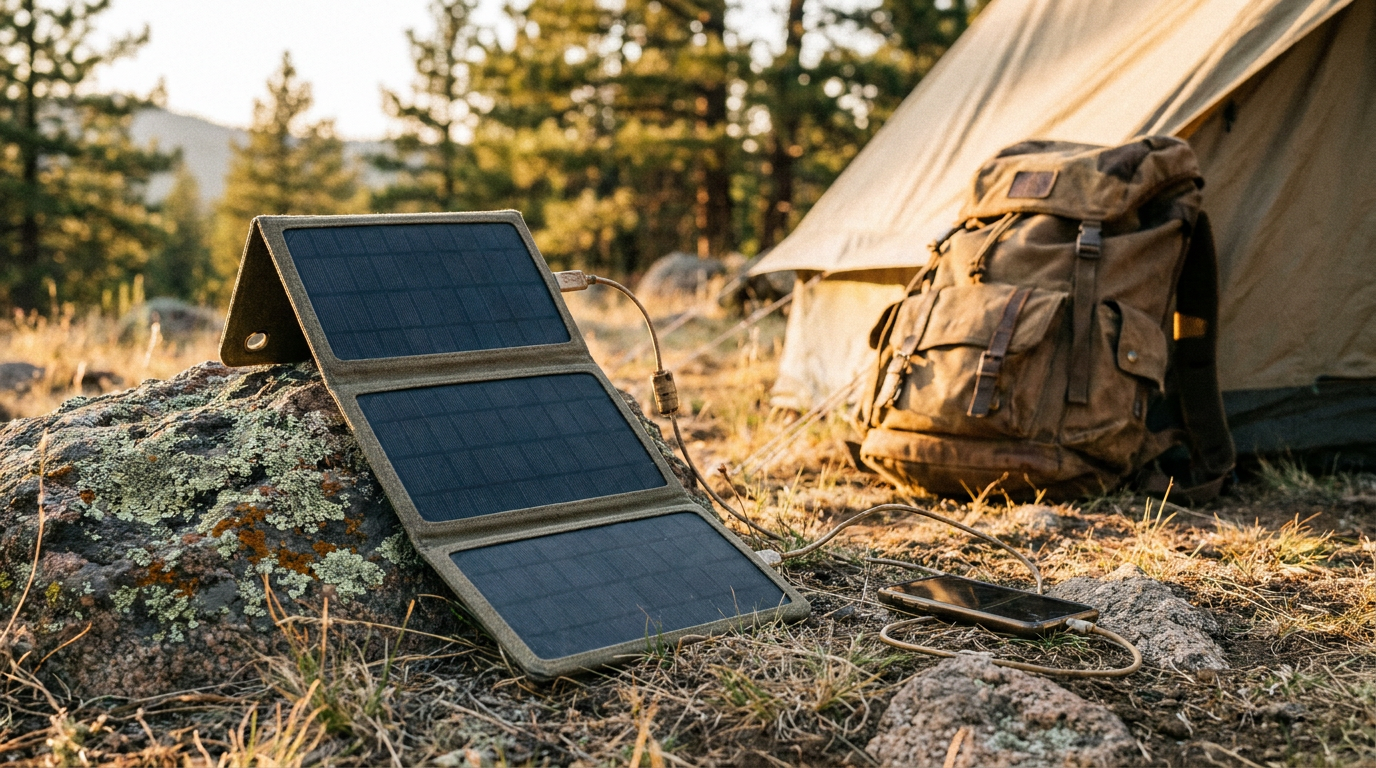
Solar Phone Charger: How It Works and What to Expect
Disclosure: This site may earn a small commission from links in this article, at no extra cost to you.
A solar phone charger sounds simple — point a panel at the sun, plug in your phone, done. In practice, it’s a bit more nuanced than that, and understanding the nuances saves you from real frustration. I’ve used solar panels in the field for years, from weekend camping trips to longer off-grid stretches, and the questions I hear most often come down to the same core confusion: why is my phone charging so slowly, why did it stop, and is this thing actually worth it?
This article answers all of that properly.
What a Solar Phone Charger Actually Is
The phrase covers two very different products, and mixing them up is where most people go wrong.
Direct-charging panels — typically foldable, anywhere from 5W to 21W or so — output USB power directly from the solar cells. Plug your phone straight in. No battery inside the panel itself.
Solar chargers with a built-in battery — often called solar power banks — have a small lithium battery inside. The panel charges the battery, and the battery charges your phone. Much slower to solar-charge, but the battery acts as a buffer.
These work completely differently in practice. Knowing which one you have (or want) changes how you use it.
How Direct Solar Charging Works — and Why It’s Inconsistent
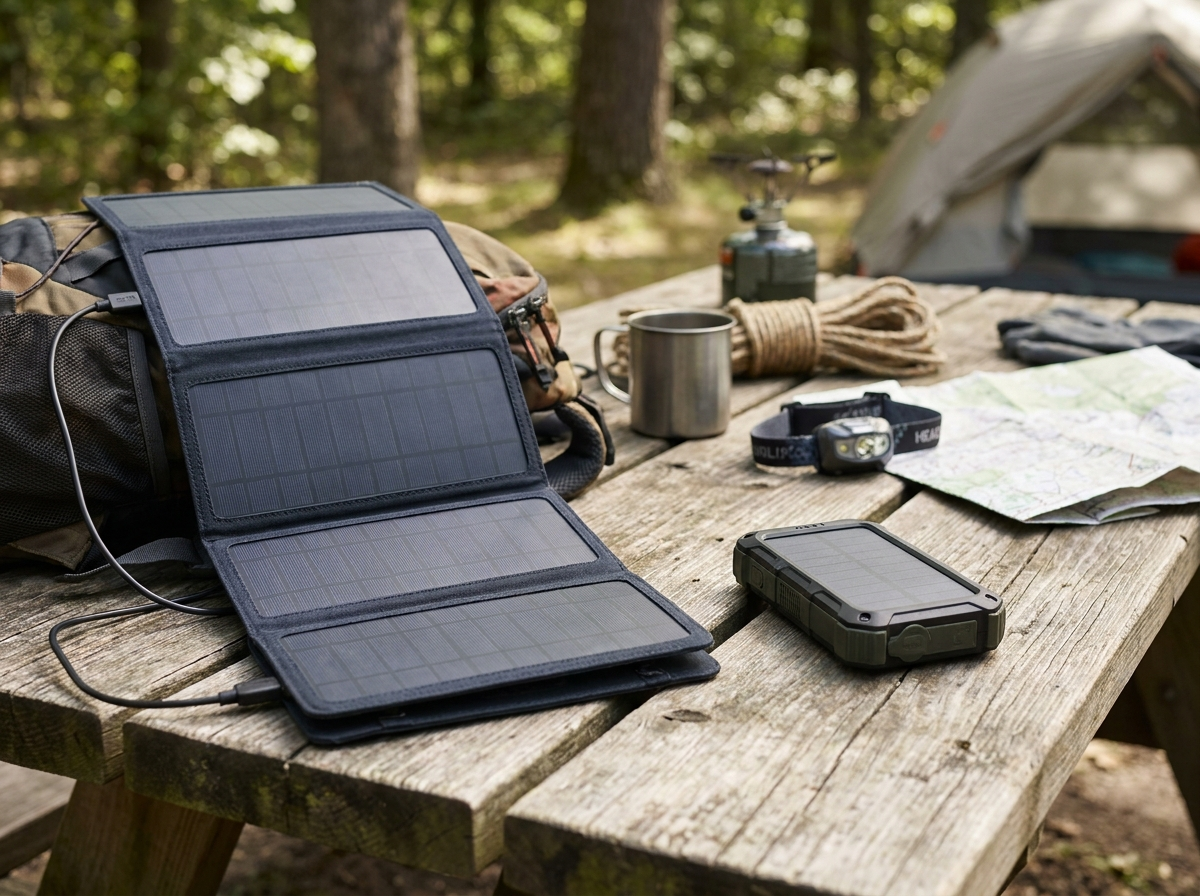
Solar panels produce power proportional to the light hitting them. A 15W panel in direct noon sun in July might actually deliver 10–12W to your phone after conversion losses. That same panel under thin cloud cover might drop to 3W. A shadow crossing it? Output can tank to near zero in seconds.
Here’s the problem: most phones don’t like that variability. Voltage and current fluctuations can cause your phone to repeatedly connect and disconnect from the charger, barely making progress. Some phones handle it gracefully. Others don’t.
Better portable solar panels address this with a technology called Maximum Power Point Tracking (MPPT) or, on simpler panels, a capacitor or small internal buffer that smooths out the output. If a panel explicitly mentions stable output or has an MPPT controller built into its USB port circuitry, it handles clouds and shifting shade much better.
Without that stabilization, a direct-charging panel works best in strong, steady, unobstructed sunlight. That’s a real constraint.
Charging Speed: What’s Realistic
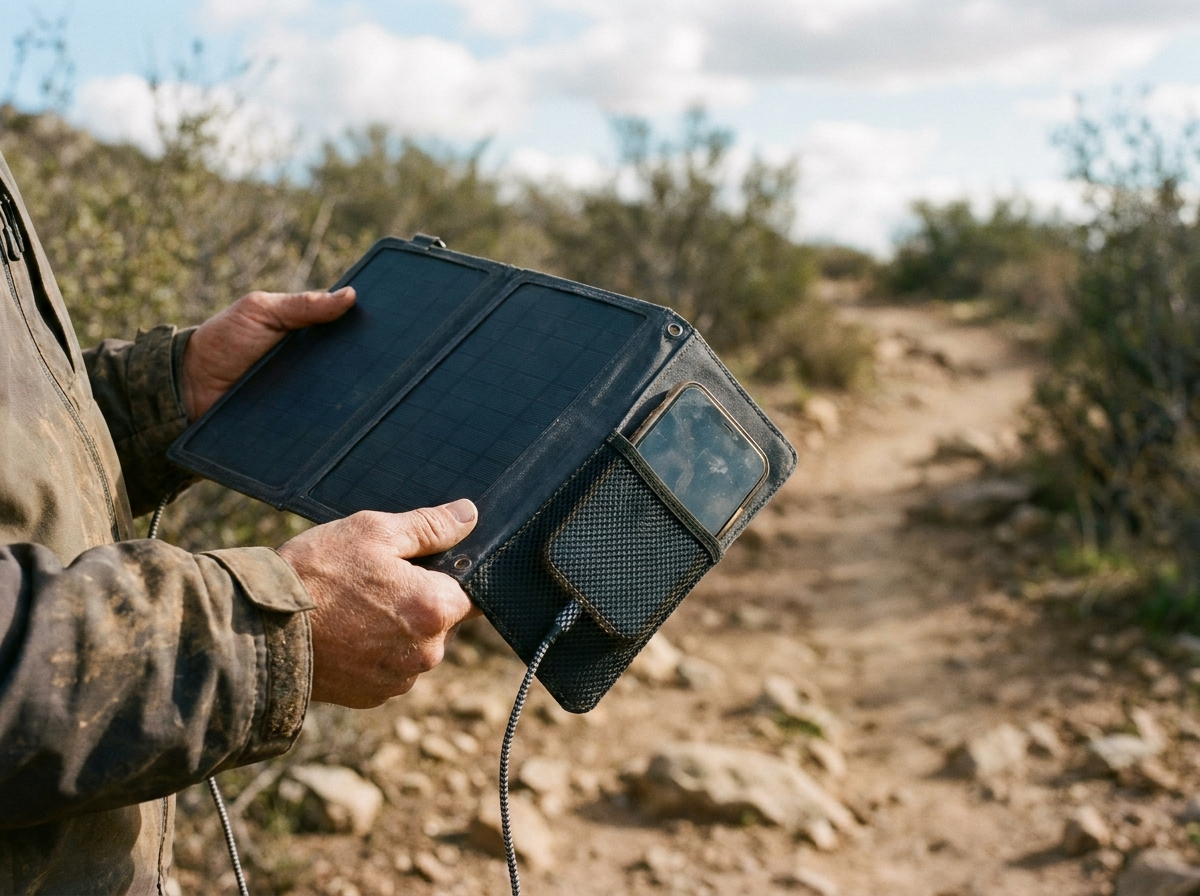
A modern smartphone battery holds roughly 15–20Wh of energy. A 10W solar panel in good sun puts out maybe 7–8W of usable power after efficiency losses.
Do the math: under ideal conditions, that’s roughly 2–3 hours to charge a phone from flat. Under real-world conditions — some cloud, non-perfect panel angle, cable losses — budget 3–5 hours for a full charge from a small panel.
Smaller panels (5W and under) are honest enough in their limitations. They’re fine for topping up a phone during a long hiking day where you clip the panel to your pack and your phone is just ticking along. Don’t expect them to recover a dead phone in an hour.
For context, a 5W panel in decent sun delivers about 300–400mAh into your phone per hour. Most phones have batteries between 3,000–5,000mAh. That’s a slow trickle, not a fast charge.
Solar Power Banks: The Trade-Offs
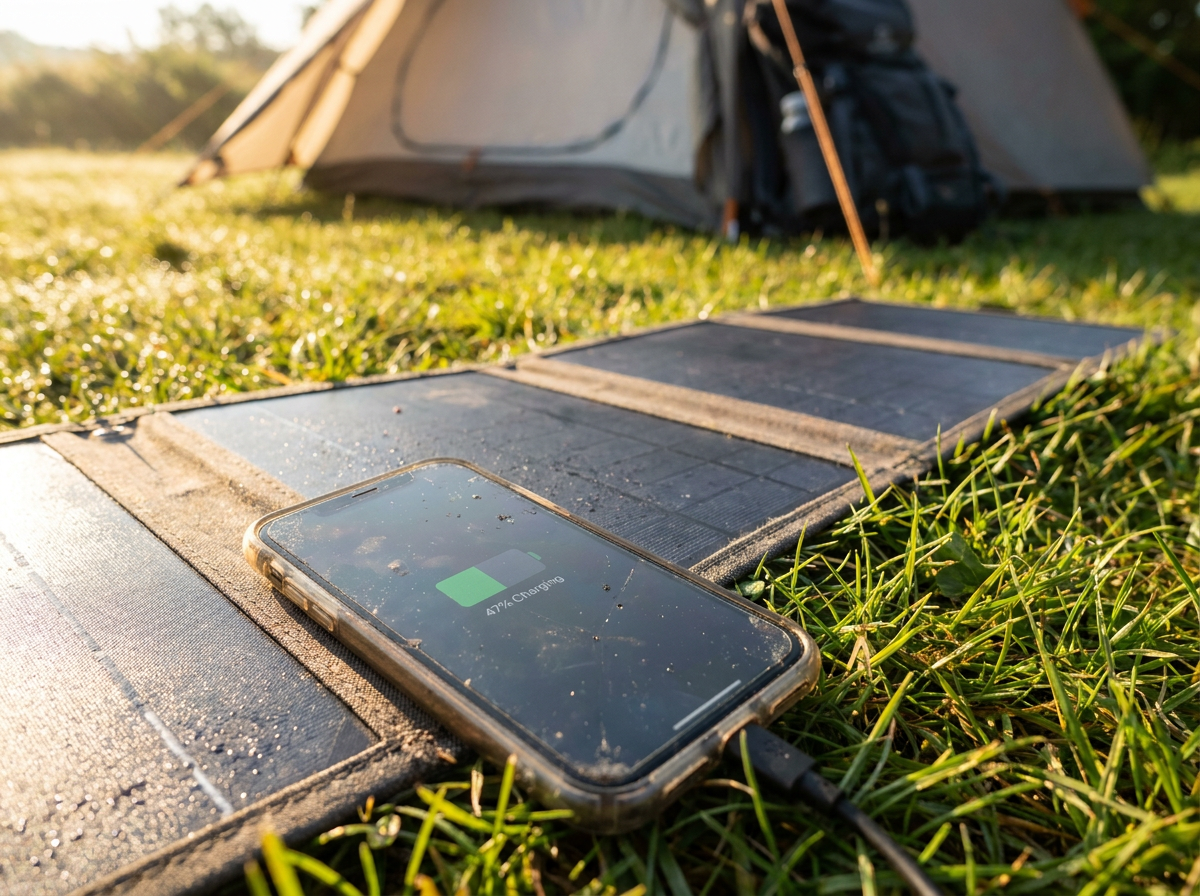
A solar power bank with a small built-in panel (usually 1–3W) is one of the most misunderstood products in this space. People assume the solar panel is a meaningful charging source. It isn’t, really.
That 1W panel, in perfect sun, generates about 1Wh per hour. Most of these power banks hold 10,000–20,000mAh (37–74Wh). You’d need days of direct sun to charge the battery from empty via solar alone.
The solar panel on a power bank is best understood as a trickle maintenance feature — useful for offsetting self-discharge during storage, or slowly adding charge during a long outdoor day. It’s not a primary charging method.
If you want solar to genuinely charge a battery bank, you need a proper panel (10W minimum, realistically 20W+) paired with a separate power bank or portable power station.
When a Panel Alone Is Enough — and When It Isn’t
A direct-charging solar panel without any battery storage works well when:
- You have reliable sun for several hours
- You can leave your phone plugged in and stationary (not in your pocket)
- You’re charging during the day and using the phone at night
- You’re topping up, not recovering from flat
It gets frustrating when:
- You’re in variable weather or partial shade
- You need your phone charged and ready quickly
- You’re moving — hiking, cycling — and can’t keep the panel optimally angled
- You need to charge at night
For those latter situations, a small portable power station or a quality power bank charged by a separate solar panel is a significantly more reliable setup. The panel charges the battery during the day; you charge your phone from the battery whenever you need it. The buffer completely eliminates the variability problem.
Panel Wattage: How Much Do You Actually Need?
For charging a phone only:
- 5W: Fine for slow top-ups during a day hike, but marginal for a full charge in reasonable time.
- 10W: The practical minimum for reliably charging a phone from flat within a day.
- 15–21W: Hits a sweet spot — charges a phone comfortably and can also charge small power banks or other devices simultaneously.
- 40W+: Overkill for just a phone, but makes sense if you’re also running a tablet, camera batteries, or small power station.
Panel efficiency matters too. Monocrystalline panels (the dominant type now) outperform polycrystalline in low-light and high-temperature conditions. Most decent portable panels today are monocrystalline, but it’s worth checking the spec sheet.
Practical Tips From Actual Use
Angle matters more than people think. A panel lying flat loses a significant percentage of output compared to one angled perpendicular to the sun. On a clear day, re-angling every couple of hours makes a measurable difference.
Heat reduces output. Counterintuitively, very hot surfaces hurt solar performance. A panel lying on hot black asphalt in summer sun will underperform the same panel propped up with airflow underneath it. This is why folding panels are often mounted on backpacks rather than laid flat — airflow helps.
USB-C with Power Delivery. If your phone supports USB-C PD fast charging, check whether the panel’s USB-C port supports it. Many budget panels output 5V/2A max regardless of the port type. A panel that actually supports 18W or 30W PD output will charge compatible phones noticeably faster and can handle tablets and laptops too.
Check your cable. A degraded cable or a charging-only cable (no data wires) can silently limit your charging current. When troubleshooting slow solar charging, the cable is always worth swapping out first.
The Honest Bottom Line
A solar phone charger is genuinely useful in the right context — it’s not a gimmick. But it works best when you understand what it can and can’t do. A decent 15W+ foldable panel in good sun will charge your phone reliably over a few hours. A tiny panel on a power bank will add a trickle, not a charge.
For serious off-grid use, pair a real panel with a battery bank. That combination is far more practical than relying on direct solar charging, especially once the weather turns or the sun goes down.
If you’re specifically trying to keep a phone alive during multi-day backcountry trips, a 10–15W folding panel plus a 10,000–20,000mAh power bank is the setup I’d recommend without hesitation. It covers both continuous daytime charging and on-demand nighttime power — and it fits in a side pocket.
Leave a Reply