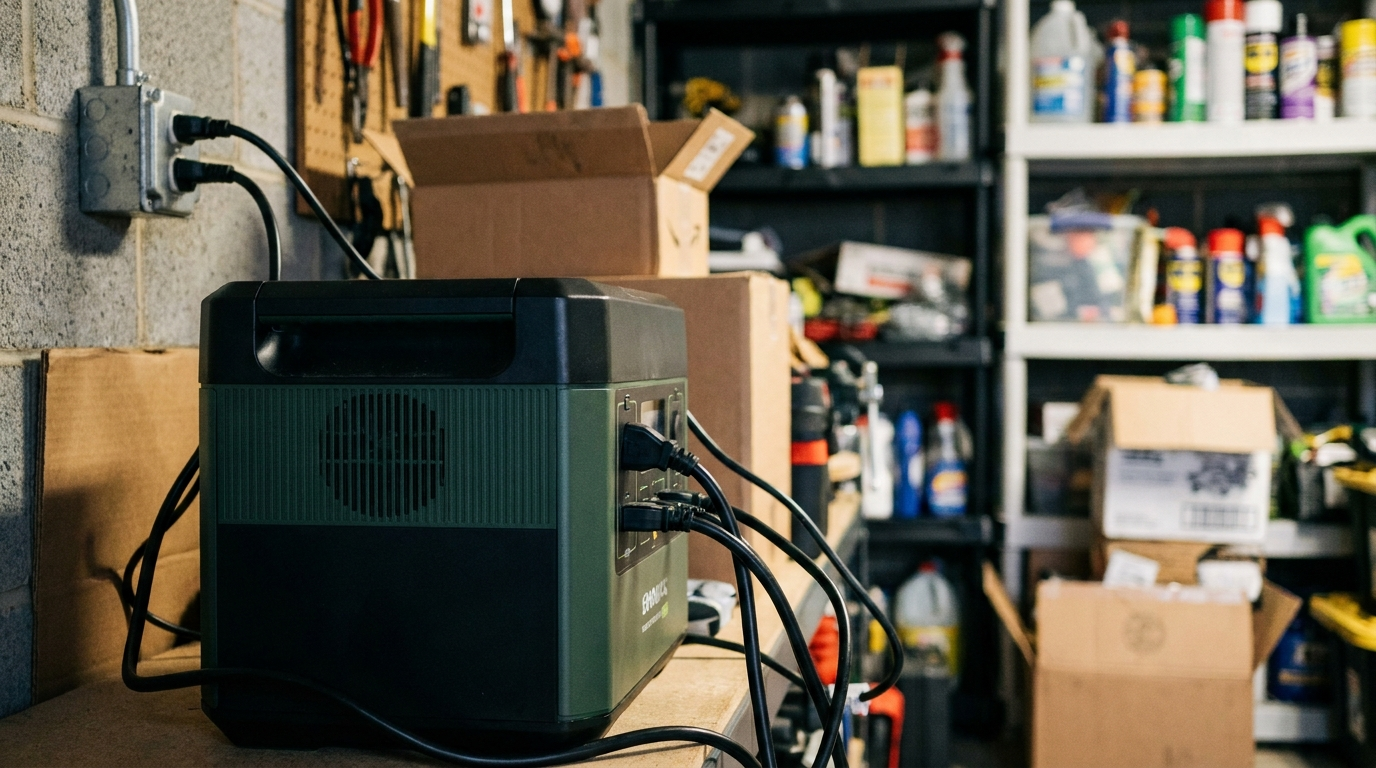
EcoFlow Delta Pro Review: Real-World Strengths and Limits
Disclosure: This site uses affiliate links; we may earn a commission if you buy through them, at no extra cost to you.
The ecoflow delta pro lands in a category that’s getting crowded fast, but it still holds a distinct position. It’s not the cheapest large-capacity station, not the lightest, and not the most compact. What it is — and this matters — is one of the most genuinely expandable home-backup systems available without hiring an electrician for most of the setup. That combination of size, speed, and flexibility is the real story here.
What You’re Actually Getting
The Delta Pro ships with a 3.6 kWh usable capacity, which sounds abstract until you start mapping it to real loads. Running a full-size refrigerator (around 150W average draw), you’re looking at roughly 20+ hours of runtime. A window AC unit pulling 900W? Maybe 3 to 4 hours. A CPAP machine overnight? Easy. A power tool for occasional cuts in a garage? No problem at all.
The 3,600W AC output (with X-Boost pushing compatible devices up to 4,500W equivalent) means it can run most household appliances without complaint. That includes microwave ovens, electric kettles, and hair dryers — stuff that smaller stations either refuse outright or limit to a few-minute burst.
Weight is a genuine consideration: the unit is heavy. Moving it solo is awkward. The built-in wheels help, but stairs or loading it into a truck bed solo is a two-person job. Plan accordingly.
Charging Speed Is the Standout Feature
This is where EcoFlow genuinely separates itself. The Delta Pro can accept up to 1,800W from a wall outlet using the included cable, which means a full charge from near-empty in roughly two hours. That’s unusually fast for a station this size. Most competitors at similar capacity require four to six hours for a full AC charge.
Solar input accepts up to 1,600W as well — you’d need a substantial panel array to hit that ceiling, but it means on a good solar day with the right panels, you can refill the unit faster than almost any other station in its class.
The EV charging station adapter (sold separately) adds another option for people who have a Level 2 charger at home, getting you full in about two hours as well. It’s not a feature everyone needs, but it’s the kind of thoughtful flexibility that signals the product was designed with real use cases in mind.
Expandability: The Feature That Changes the Math
Smart Generators and Extra Batteries
The ecoflow delta pro supports two add-on 3.6 kWh battery packs, taking total capacity to 10.8 kWh. For a home backup setup intended to cover an overnight outage or a full day off-grid, that’s genuinely meaningful storage. Add EcoFlow’s dual-fuel smart generator and you have a system that can auto-start the generator when battery drops below a threshold you set — completely hands-off.
This is the configuration that makes the Delta Pro worth considering over cheaper single-unit competitors. You’re not just buying a battery; you’re buying into an ecosystem.
Smart Home Panel Integration
EcoFlow sells a whole-home integration panel that lets you connect the Delta Pro to your home’s circuits without a transfer switch installation. This is a significant practical advantage. Traditional whole-home generators require a licensed electrician and a transfer switch. EcoFlow’s approach is designed for DIY connection to a subset of circuits. Important caveat: local electrical codes vary, and you should verify compliance before installation. But for many users in outage-prone areas, this is the feature that pushes the purchase from “nice to have” to “actually solves my problem.”
Real-World Performance Observations
A few things you learn after spending time with the unit:
The battery percentage display isn’t perfectly linear. It can read 20% and then drop to zero faster than expected under a heavy load. EcoFlow has improved this through firmware updates, but it’s worth knowing — don’t let it run down to the wire on critical loads.
Fan noise at high output is noticeable. Under a 1,500W+ sustained load, the cooling fans kick into a mode that’s audible across a room. Fine in a garage. Less ideal in a bedroom during a power outage at 2 AM.
The app is genuinely useful, not just a gimmick. Real-time monitoring of input, output, and estimated runtime is accurate and refreshes quickly. You can set charging limits (stopping at 80% or 85% to preserve long-term battery health if it sits plugged in most of the time) — a feature worth using if this is a standby unit.
LFP chemistry matters here. The Delta Pro uses lithium iron phosphate cells, which trade energy density for longevity and safety. EcoFlow rates the battery for 3,500 cycles to 80% capacity. For a unit you might charge daily during an off-grid period or a few times monthly for backup use, that’s a decade or more of service life. Other chemistries at this price point often rate far lower.
Where It Falls Short
Honesty requires mentioning what the Delta Pro doesn’t do well.
It’s not a van-life or overlanding unit. At over 100 lbs, it’s designed to live in a house, a garage, or a cabin — not bounce around in a vehicle. If portability matters, there are better-suited options.
The ecosystem lock-in is real. The expansion batteries, the smart generator, the home panel — they’re all EcoFlow-specific. If EcoFlow discontinues support or you want to mix components from another brand, you can’t. That’s a reasonable trade-off for most buyers, but it’s worth knowing.
AC charging at maximum speed produces heat. Charging at the full 1,800W for two hours in a warm room or enclosed space isn’t ideal. In a basement or climate-controlled area, it’s fine. In a hot garage in summer, you might want to back off the charge rate through the app.
Who Should Buy It
The ecoflow delta pro makes the most sense for a specific buyer: someone who experiences meaningful power outages (a few times a year or more), owns or rents a home where they can use the home panel integration, and wants a system that can actually grow with their needs rather than requiring a full replacement when they want more capacity.
It’s also well-suited for:
– Remote cabin or off-grid property owners who have or plan to install solar
– Small contractors who need a reliable jobsite power source for tools and lighting
– People on medical equipment who need dependable backup runtime
It’s not ideal for someone who wants occasional camping power, or who primarily needs something light enough to carry to a tailgate. There are more purpose-built options for those use cases at lower price points.
A Note on Value
The Delta Pro sits at a premium price. It competes with offerings from Bluetti, Jackery, and others in the large-capacity segment, and honest comparison shopping is worthwhile. What you’re paying for here is primarily charging speed, the expansion ecosystem, and the home integration features. If you don’t need those things, there are capable alternatives at lower cost. If you do — especially the home panel integration — the Delta Pro is genuinely hard to match.
Check current pricing directly from EcoFlow’s site and from authorized retailers, since pricing shifts with promotions and bundle deals. The expansion batteries and smart generator frequently appear in bundle pricing that changes the per-kWh math meaningfully.
The one thing worth doing before you buy: map out your actual loads. List the appliances you need to run during an outage, their wattage, and for how many hours. Run the math against the capacity. That exercise will tell you whether the base unit is enough or whether expansion batteries belong in your budget from day one.
Leave a Reply