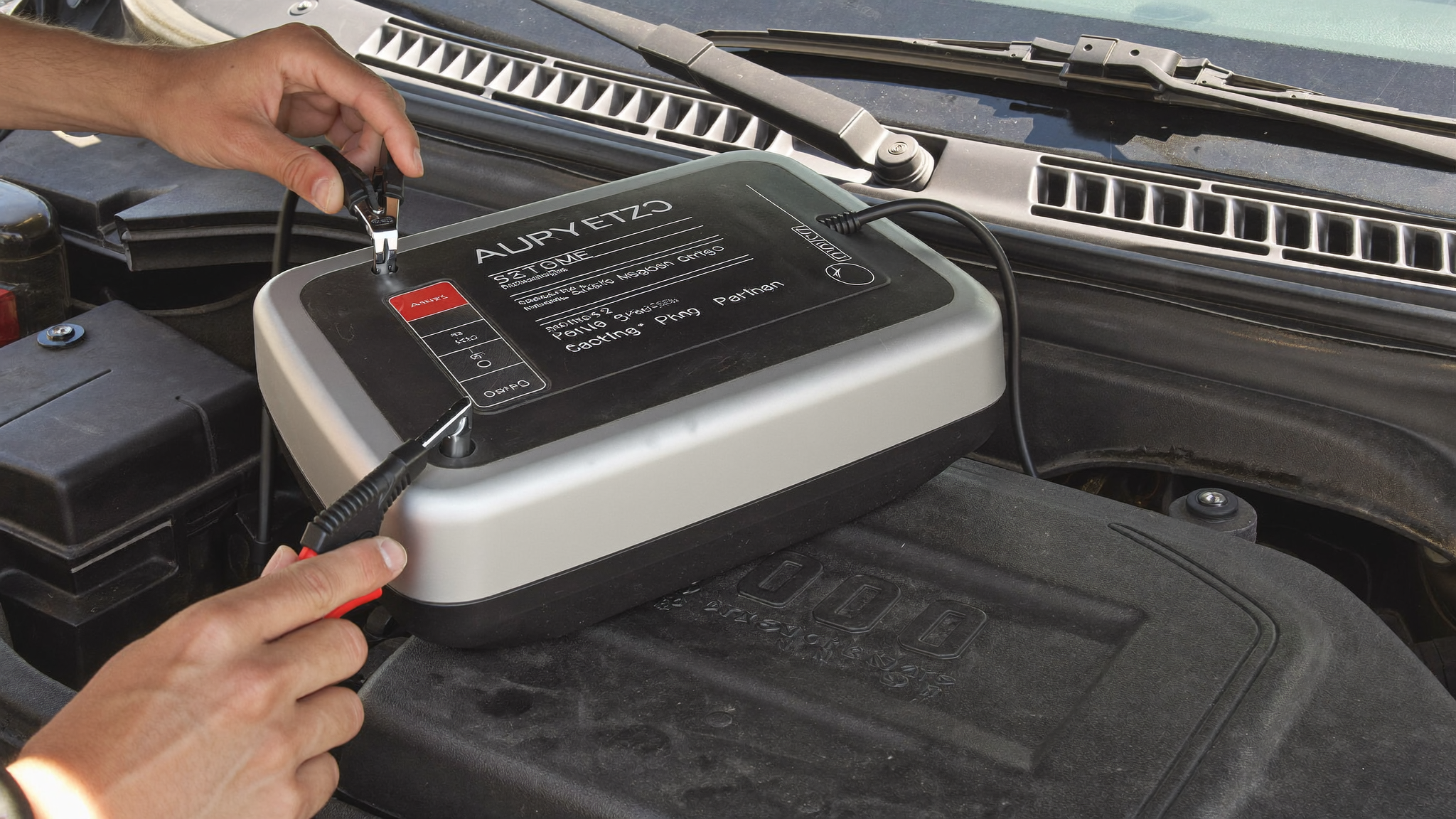
What a Portable Vehicle Charger Actually Does
Disclosure: This page contains affiliate links, and we may earn a commission if you purchase through them.
A portable vehicle charger is exactly what it sounds like — a charging unit you can take with you rather than one bolted to a wall in your garage. No fixed installation, no dedicated circuit (usually), no electrician required. You plug one end into a power source and the other into your car. Simple in concept. Considerably more nuanced in practice.
If you drive an electric vehicle or plug-in hybrid, you’ve probably already dealt with the reality that range anxiety isn’t always about the battery — sometimes it’s about not knowing whether you’ll have access to a usable outlet at your destination. A portable vehicle charger is the answer to that specific problem. Not a perfect answer, but a real one.
The Two Fundamentally Different Types
Level 1: The One That Comes in the Box
Most EVs and PHEVs ship with a portable Level 1 charger, sometimes called an EVSE (Electric Vehicle Supply Equipment). These run on a standard 120V household outlet and typically deliver somewhere between 1 and 1.4 kW of power.
That sounds modest — because it is. Roughly 3 to 5 miles of range per hour of charging is the realistic expectation. Overnight you might recover 40 to 50 miles. For a plug-in hybrid with a small battery pack, that’s often plenty. For a long-range EV, it’s slow but still functional if you have 8 to 10 hours to spare.
Where Level 1 shines: road trips where you’re staying overnight somewhere with only a regular outlet, camping with a generator or portable power station, or topping off at a friend’s house. It’s not exciting, but it works reliably and there’s almost always a 120V outlet nearby.
Level 2: Portable but Faster
Portable Level 2 chargers operate on 240V — the same voltage as a clothes dryer or oven — and require either a compatible outlet (like a NEMA 14-50 or 6-50) or a hardwired connection. The payoff is real: typical output runs 3.3 kW to 7.2 kW, which translates to roughly 15 to 25 miles of range per hour depending on your car’s onboard charger capacity.
These units are physically larger and heavier than a Level 1 cable, but many fit in a duffel bag or carry case. Some are dual-voltage, meaning you can plug them into a standard 120V outlet and they’ll drop down to Level 1 speeds automatically. That flexibility is genuinely useful.
The catch is outlet availability. NEMA 14-50 receptacles are common at RV parks, some vacation rentals, and workplaces that have added them. If you’re traveling and plan to use a portable Level 2 charger regularly, calling ahead to verify outlet availability saves real headaches.
What Actually Determines Your Charging Speed
This is where a lot of people get confused. The charger itself is only one variable.
Your car’s onboard charger is the ceiling. Every EV and PHEV has an internal charger that converts AC power from the outlet to the DC power the battery stores. If your car accepts a maximum of 7.2 kW on AC Level 2, connecting a portable charger rated for 11.5 kW gives you exactly zero benefit. The car limits the intake regardless.
The outlet matters just as much as the unit. A portable Level 2 charger rated for 40 amps plugged into a circuit with a 20-amp breaker will trip that breaker or throttle itself down. Portable chargers typically have adjustable amperage settings specifically for this reason — you set it to match what the circuit can safely handle.
Cable length and gauge add resistance. Using a cheap extension cord with a portable vehicle charger is genuinely risky, not just inefficient. If an extension cord is unavoidable, it needs to be rated for the amperage and kept as short as possible. Most manufacturers advise against extension cords entirely for Level 2 units.
Temperature affects both ends. Cold batteries charge more slowly regardless of what you plug in — the battery management system deliberately limits charge rate to protect the cells. Extremely hot ambient temperatures can also trigger thermal throttling. Neither of these is something the charger controls.
Portable Power Stations as a Charging Source
One setup that’s become genuinely practical in the last few years: using a large portable power station to charge through a portable vehicle charger. This works, but comes with real caveats.
A high-capacity portable power station — think 2 kWh or above — with a 120V inverter output can run a Level 1 charger and deliver meaningful range in a pinch. Some larger units now offer 240V output or pass-through charging, which opens the door to running a portable Level 2 charger from them.
The math requires honesty though. Inverter losses mean you won’t get 100% of the station’s rated capacity into your car battery. Realistically, plan on 75–85% transfer efficiency on a good day. A 2 kWh station might deliver 1.5 to 1.6 kWh to the vehicle — enough to add 5 to 8 miles of range in a genuine emergency. Not a primary charging strategy, but a meaningful backup.
Where this combo shines is overlanding, remote camping, or situations where you’ve parked somewhere without grid access overnight. Some people run a solar panel array into a portable power station and trickle charge an EV this way over multiple days. It requires patience and planning, but it’s real energy independence.
Connector Types and Compatibility
Connectors on the vehicle side are not universal, which catches people off guard.
J1772 is the standard AC connector used by most non-Tesla EVs and PHEVs in North America. Nearly all portable vehicle chargers use J1772 on the car end.
NACS (North American Charging Standard) is the connector design that originated from one automaker and has been adopted by several others as an industry standard. As more vehicles use this connector, the adapter situation becomes important — some portable chargers now include or sell compatible adapters.
CCS and CHAdeMO are DC fast charging standards. Portable Level 1 and Level 2 chargers don’t use these — they’re AC equipment. If you’re looking at DC fast charging, you’re talking about fixed infrastructure at charging stations, not something portable in any practical sense yet.
Always verify connector compatibility before traveling with a portable charger as your backup plan.
Practical Usage Situations
Hotels and short-term rentals. Most hotel rooms have standard 120V outlets. A Level 1 cable means you wake up with more range than you arrived with. Not revolutionary, but consistently useful.
RV parks and campgrounds. These often have NEMA 14-50 or TT-30 outlets available at campsites. A portable Level 2 charger with a TT-30 adapter lets you charge at moderate speeds in genuinely remote locations. Charging rates through a TT-30 will be slower (it’s a 30-amp circuit), but you’re still talking 3–4x faster than a standard wall outlet.
Rural destinations. Visiting family in an area with no public charging infrastructure? One call ahead to ask if they have a 240V outlet in the garage — for a welder, an air compressor, a dryer — can change the whole trip.
Emergency range extension. This is the honest floor of what a portable vehicle charger provides. If you’re stranded with low charge, any outlet you can access turns from useless to genuinely helpful.
Safety Isn’t Optional
Portable chargers from reputable sources include built-in protections: ground fault detection, over-temperature shutoff, surge protection, and automatic amperage adjustment. These aren’t marketing features — they’re what separates a portable charger from a fire hazard.
Always plug directly into a properly wired, grounded outlet. If you’re unsure whether an outlet is properly grounded, a basic outlet tester (a small device widely available for a few dollars) tells you in seconds. Never charge through an ungrounded outlet — it defeats the safety systems in the charger.
Check the cable for damage before each use. Bent pins, cracked insulation, or a connector that doesn’t seat firmly are reasons to stop and sort the issue before charging, not after.
A portable vehicle charger handled correctly is genuinely safe equipment. Handled carelessly, the risks are real. The margin for error on 240V circuits is thin.
Leave a Reply