Portable Power Station Buying Guide: What Actually Matters
Disclosure: Some links on this site may earn a small commission at no extra cost to you.
A portable power station sounds simple—battery inside a box, plug stuff in. But spend time testing them and you quickly learn that two units with identical watt-hour ratings can perform completely differently in real use. One runs your CPAP through the night; the other shuts off at 3 a.m. because the inverter choked on a startup surge. The specs on the box don’t tell you that story. This guide does.
Capacity Is Not the Whole Story
Every portable power station lists a watt-hour (Wh) number. A 1,000 Wh unit should, in theory, run a 100W device for ten hours. In practice, you lose somewhere between 10–20% to inverter conversion inefficiency—more if it’s a cheaper unit. Cold temperatures cut lithium capacity noticeably; below freezing you might get 70–80% of rated capacity.
So when you see 1,000 Wh, mentally budget around 800 usable watt-hours under normal conditions. Plan for less in winter.
More importantly, pay attention to continuous output wattage, not just capacity. A station with 1,000 Wh but only a 600W inverter can’t run most portable refrigerators or coffee makers. And peak (surge) wattage matters for inductive loads—motors in refrigerators, sump pumps, and power tools need 2–3x their running wattage to start. A unit advertised with a 2,000W peak might only sustain that for half a second. Know the difference.
Battery Chemistry: LFP vs. NMC

This is the single most important spec most buyers overlook.
NMC (lithium nickel manganese cobalt) batteries are energy-dense, which is why they dominated early portable power stations—you get more capacity in a smaller, lighter package. The trade-off is cycle life. Most NMC units are rated for 500–800 charge cycles before capacity degrades to 80%. Use it daily and you’re replacing it in two years.
LFP (lithium iron phosphate) has a lower energy density—heavier for the same capacity—but the cycle life is dramatically better. Many LFP units are rated for 3,000+ cycles. The chemistry is also more thermally stable; it doesn’t enter thermal runaway as readily as NMC, which matters if you’re using it in a hot garage or enclosed van. If you plan to use a portable power station heavily, or want something that lasts a decade, LFP is worth the extra weight.
For occasional camping trips, NMC is fine and often cheaper. For a home backup that charges from solar daily, go LFP. Don’t let anyone talk you out of this distinction.
Inverter Quality: The Part Nobody Talks About
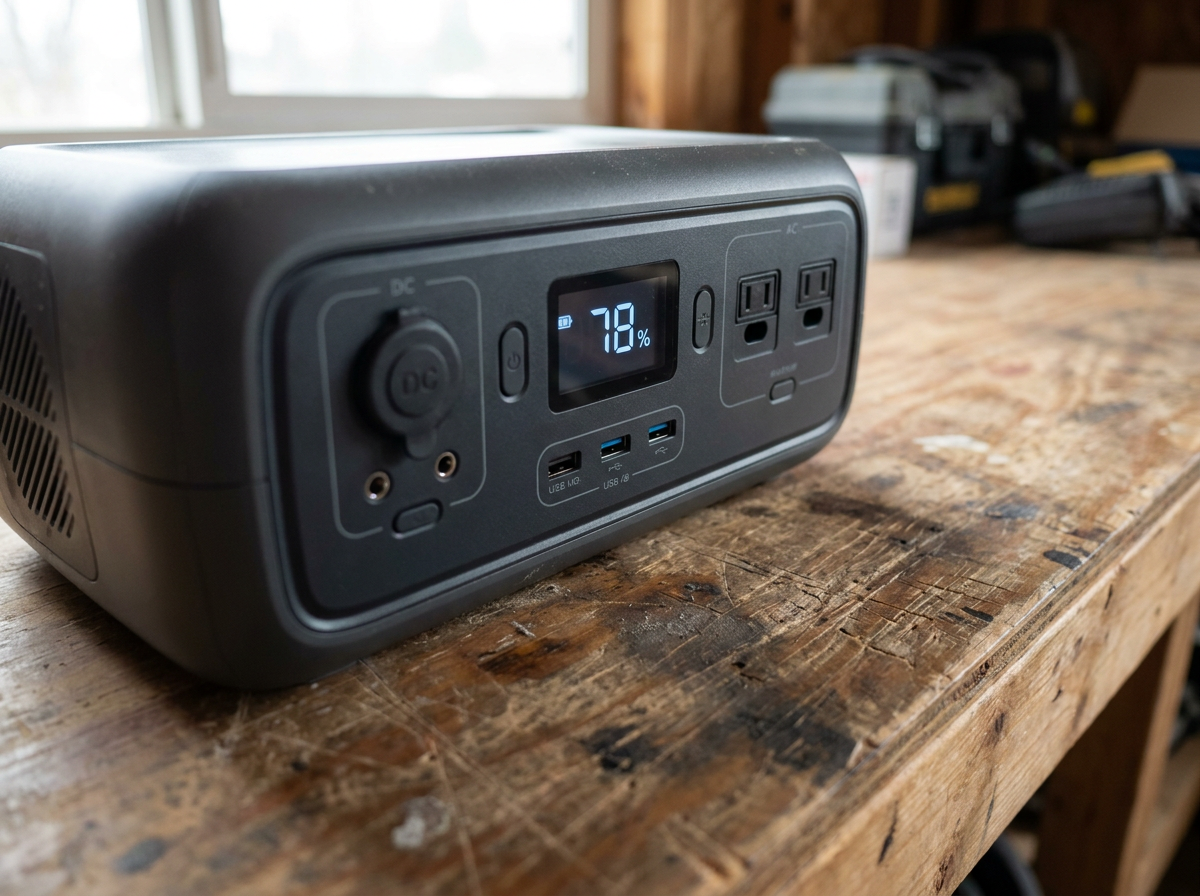
The inverter converts stored DC power to the AC your appliances need. Cheap inverters produce a modified sine wave. Most electronics tolerate it—your phone charger doesn’t care—but some devices are sensitive: certain CPAP machines, laser printers, some power tools with brushless motors, and audio equipment. Modified sine wave can cause humming, overheating, or outright refusal to run.
Every reputable portable power station made in the last few years uses a pure sine wave inverter. If a listing doesn’t specify, or you see “simulated sine wave,” walk away.
Beyond sine wave quality, look at how well the inverter handles surge loads. Some units throttle back under sustained high draw. A 2,000W rated inverter that throttles to 1,500W after 30 seconds is a real thing—it just doesn’t show up in spec sheets. User forums and teardown reviews are your best source here.
Charging: Speed, Sources, and Real Flexibility
AC Wall Charging
Fast wall charging has gotten genuinely impressive. Some units can go from near-empty to full in under an hour. But there’s a catch: fast charging generates heat, and repeated fast-charging accelerates battery degradation. Many units let you enable a slower “standard” charge mode. Use it when you’re not in a hurry.
Solar Input
Solar compatibility specs are often listed in the most confusing way possible. What you need to know:
– Max solar input wattage: how fast it can charge from panels
– MPPT vs. PWM controller: MPPT is more efficient, especially in partial shade—it’s standard on any serious unit
– Voltage range: must match your panel’s output voltage; mismatches mean zero charging or damaged equipment
A portable power station with a 400W solar input sounds fast until you realize your two 200W panels rarely produce anywhere near rated output in real conditions. Budget for roughly 70–75% of panel wattage in practical harvesting.
Car Charging and Pass-Through
Cigarette-lighter 12V charging is slow—useful on long drives, not for emergency prep. Some units accept a higher-voltage DC input from a car’s alternator if you wire it properly; that’s faster. Pass-through charging (running devices while the station charges) works on all modern units but generates more heat and slightly stresses the battery—fine occasionally, not ideal as a permanent UPS setup unless the unit is specifically rated for it.
What Size Do You Actually Need?
Stop guessing and do five minutes of math.
List the devices you’d realistically run. Multiply each device’s wattage by the hours you’d run it. Add them up. That’s your minimum Wh target—then add 20–25% for inverter losses and buffer.
Some examples to calibrate against:
– A standard CPAP without a heated humidifier runs around 30–50W. A 500 Wh station covers a full night comfortably.
– A full-size refrigerator pulls 100–200W but cycles; budget 500–800 Wh per 24 hours depending on efficiency.
– A window AC unit will drain almost any consumer portable power station inside a few hours. If climate control is the goal, you need expandable capacity or solar input to keep up.
– Charging laptops and phones is trivial. A 300 Wh unit handles a weekend trip for two people’s devices.
Most buyers buying for emergencies underestimate how long an actual outage lasts. A one-day backup and a three-day backup require very different equipment.
Features Worth Paying For (and a Few That Aren’t)
Worth it:
– Expandable battery capacity (some systems let you add battery modules)
– A proper app with real-time watt-in/watt-out monitoring—it transforms how you manage power
– Multiple AC outputs (at least two; preferably four)
– USB-C PD at 100W or higher—covers almost every modern laptop
– Quiet fan management—some units run fans constantly; others only kick them on under load
Not worth the premium for most buyers:
– Built-in wireless charging pads—slow and often positioned awkwardly
– Overly complex LCD dashboards on units under 500 Wh—they’re fine but not a reason to pay more
– “Tactical” branding and military-grade claims with no substance behind them
A Few Buying Mistakes to Avoid
Buying by weight alone is a mistake in both directions. Heavy can mean robust LFP chemistry—or just a cheap, heavy case. Light can mean efficient engineering—or a suspiciously small real-world capacity.
Don’t ignore the warranty and the company behind it. A two-year warranty from a company with no U.S. service presence is close to worthless. Look for brands that have been around long enough to actually honor claims.
Finally: buy from a category where the product has been reviewed under real load conditions, not just unboxing videos. Reviewer teardowns that check the actual cell quality, BMS behavior, and inverter output under load will tell you more than any spec sheet ever will. Seek those out before you commit to any portable power station over a few hundred dollars.
The market has matured significantly. There’s genuinely good equipment at most price points now. But the gap between a thoughtful purchase and a regretted one still comes down to understanding a handful of specifics—and now you do.
Leave a Reply