Jackery USA: What Buyers Actually Need to Know
Disclosure: This site may earn a small commission if you buy through links here, at no extra cost to you.
If you’ve been researching portable power stations for more than ten minutes, you’ve already landed on Jackery USA. They dominate the category in search results, on store shelves, and in camping forums. That visibility isn’t entirely undeserved — but it also means you’ll find just as much hype as honest information. This guide cuts through both.
What Jackery Actually Does Well
Jackery built its reputation on ease of use, and that reputation holds up. The Explorer lineup — their core consumer series — has a consistent interface across models. If you’ve used one, you can pick up another and be running in under two minutes. That matters when you’re handing a unit to a family member who doesn’t want to read a manual.
Build quality on the mid-range units is solid without being exceptional. The plastic housings feel durable enough for car camping and tailgating. They’re not tank-built for genuine abuse, but they’re not flimsy either. The carrying handles are well-placed and the buttons are tactile. Small things, but they matter.
The solar ecosystem is genuinely coherent. Jackery’s SolarSaga panels connect directly to their Explorer stations without adapters, and the MPPT charge controllers on most modern units are efficient. If you’re buying both a station and panels, buying them as a matched set from jackery usa usually makes practical sense.
Where the Trade-Offs Bite
Here’s where I’d push back against the marketing.
LFP vs. NMC Chemistry
For years, most Jackery models used lithium NMC (nickel manganese cobalt) cells. NMC packs more energy density into a smaller package — that’s why these units aren’t enormous — but the trade-off is cycle life. You typically get around 500 charge cycles to 80% capacity with NMC.
Jackery has been rolling out LFP (lithium iron phosphate) chemistry in select newer models, which pushes cycle life dramatically higher — often 3,000+ cycles. If you’re buying a unit you plan to use heavily for five or ten years, the LFP versions are worth the premium and any size/weight penalty. If you’re not sure which chemistry a specific model uses, check the product page carefully. It’s listed, but not always prominently.
This distinction matters more than almost any other spec for long-term value.
Inverter Wattage vs. Surge Capacity
Jackery’s rated wattages are honest on continuous draw, but surge capacity — the brief spike of power an appliance needs at startup — gets less attention in the marketing. Compressor refrigerators, power tools, and some coffee makers draw significantly more at startup than at steady state. If you’re trying to run a mid-size 12V fridge as a primary use case, verify the surge specs, not just the continuous output. A unit rated at 500W continuous but only 800W surge will struggle with appliances that surge to 1,000W at startup.
Pass-Through Charging
Jackery USA does support simultaneous charging and discharging — what’s often called pass-through. But they’ve historically noted that running pass-through continuously can generate heat that accelerates battery wear. For occasional UPS-style backup use, it’s fine. As a full-time home energy buffer, that’s not what these units are designed for. Don’t mistake a portable power station for a full home battery backup system.
Which Series Is Actually Worth Buying
Explorer Series (Entry to Mid-Range)
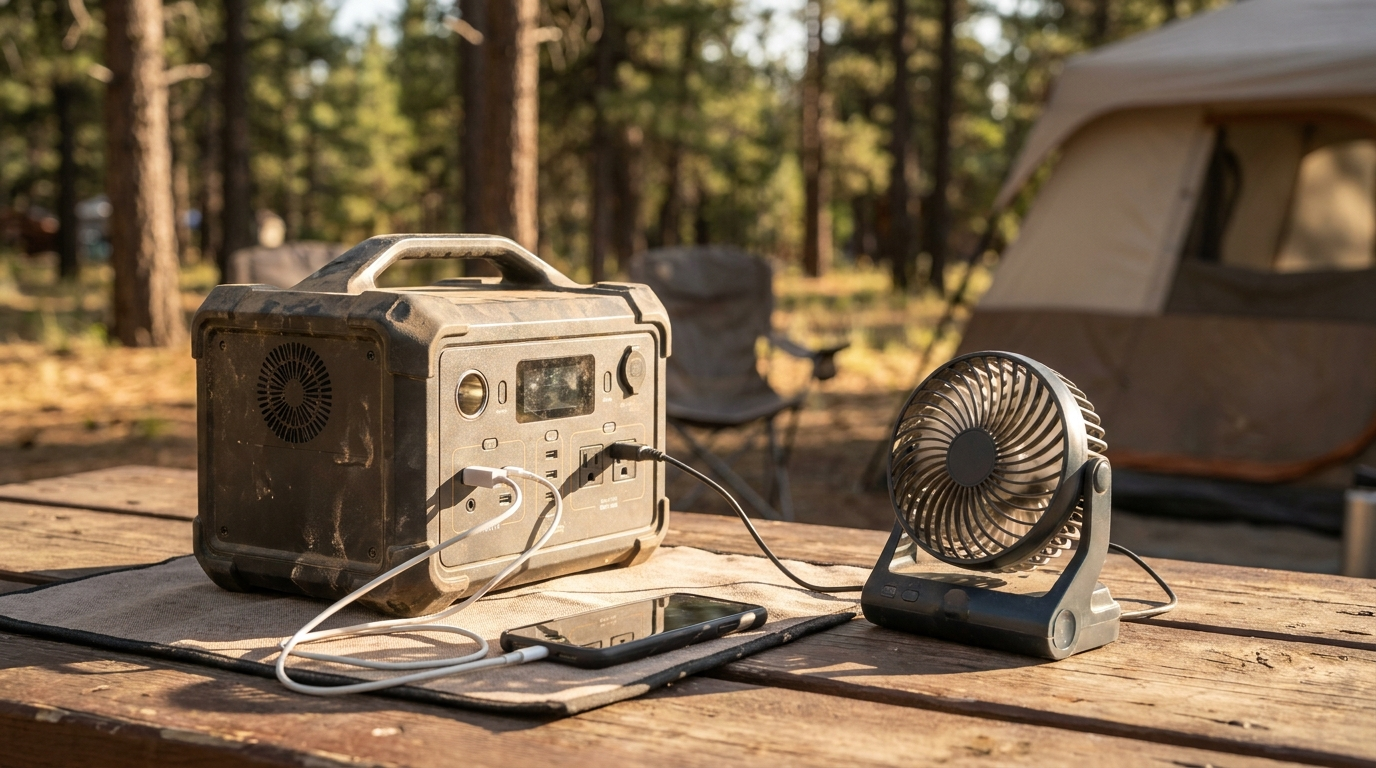
The bread and butter of the lineup. Models range from compact units suitable for phone and laptop charging up to larger units that can run a full-size fridge for several hours. The sweet spot for most car campers and road trippers is in the 500–1,000Wh range — enough to run a CPAP machine overnight, keep devices charged, and power a light or fan without being too heavy to move easily.
For anyone buying a first portable station, an Explorer in this range is a reasonable, low-risk choice. You’re not getting the absolute best specs for the dollar, but the user experience is polished and customer support through jackery usa is generally responsive.
Explorer Pro and Plus Series
These sit above the standard Explorers with improved charge speeds, better inverter wattages, and — on some models — LFP chemistry. If you’re willing to spend more and plan to use the unit regularly, the Pro/Plus variants are where Jackery actually earns its premium over budget competitors. The faster solar input on some Plus models is a real differentiator if you’re doing multi-day trips with panel charging.
Larger “Power Station” Models (2,000Wh+)
Jackery has pushed into the high-capacity market with units designed for extended outages and off-grid setups. These compete more directly with brands like EcoFlow and Bluetti. At this tier, the comparison gets serious. Charging speeds, expandable battery support, and smart app integration vary significantly across brands, and jackery usa doesn’t always win on specs at the high end.
If your primary use case is home backup during outages rather than portability, spend extra time comparing before defaulting to Jackery at this capacity level.
Buying From Jackery USA Directly vs. Retailers
Jackery runs frequent sales on their own site — Black Friday deals in particular tend to be substantial. Amazon pricing is usually competitive but not always the lowest. Costco occasionally carries Jackery bundles that represent genuine value, though selection is limited.
Warranty is worth noting: Jackery USA covers their products with a standard warranty, and they do honor it. The key detail is that registering your product on their site typically extends your coverage period — check the current terms on their site, as this has changed over time. It takes about two minutes and is worth doing.
Avoid gray-market sellers on secondary marketplaces. Jackery warranty claims require proof of purchase from an authorized seller, and a discounted price from an unknown reseller isn’t worth voiding your coverage on a several-hundred-dollar purchase.
What Competitors Do Better (and Worse)
EcoFlow generally leads on AC charging speed across its lineup — their dual-charging feature, which combines solar and AC simultaneously, can fully charge a large unit faster than most Jackery models. If fast recharge from the wall matters to you, EcoFlow has an edge.
Bluetti’s LFP lineup is strong for long-term use cases and they offer expandable battery systems at a competitive price point. Their interface is more complex, which is either a feature or a drawback depending on how you feel about configuration options.
Goal Zero is a legitimate alternative for people deeply invested in a solar ecosystem, though pricing tends to run higher.
Jackery’s actual advantages are simplicity, reliability, and brand support — jackery usa has a real US-based presence, which matters if you ever need to deal with a warranty claim or technical issue. That’s not nothing.
Practical Buying Checklist
Before you finalize any Jackery purchase:
- Confirm the cell chemistry. LFP if you plan to use it heavily; NMC is fine for occasional use.
- Add up your wattage needs. List every device you’d run, then size up slightly rather than buying right at your calculated maximum.
- Check AC charge speed. Some smaller units charge slowly from the wall — if you need fast turnaround, verify the input wattage spec.
- Look at solar input specs if you’re buying panels. Maximum solar input wattage and voltage range both matter for real-world charging performance.
- Register after purchase. Warranty extension is usually available and often ignored by buyers.
The right Jackery is a genuinely capable tool for camping, van life, and light backup power. The wrong one — wrong chemistry, wrong capacity, wrong inverter specs for your appliances — will frustrate you and sit unused. The specs are all published. Take fifteen minutes to match them to your actual use case before buying.
Leave a Reply