Portable Solar Power Panels: A Practical Buyer’s Guide
Disclosure: This site earns a commission on purchases made through some links on this page.
Most people shopping for portable solar power panels get tripped up by the same things: inflated watt ratings, confusing connector types, and panels that look identical on paper but perform very differently in the field. This guide cuts straight to what separates a useful panel from a frustrating one.
Rated Watts vs. Real-World Output: The Number That Matters Most
Manufacturers test panels under Standard Test Conditions — 1000 W/m² of light, 25°C cell temperature, perfect spectrum. You will almost never replicate those conditions outside a lab.
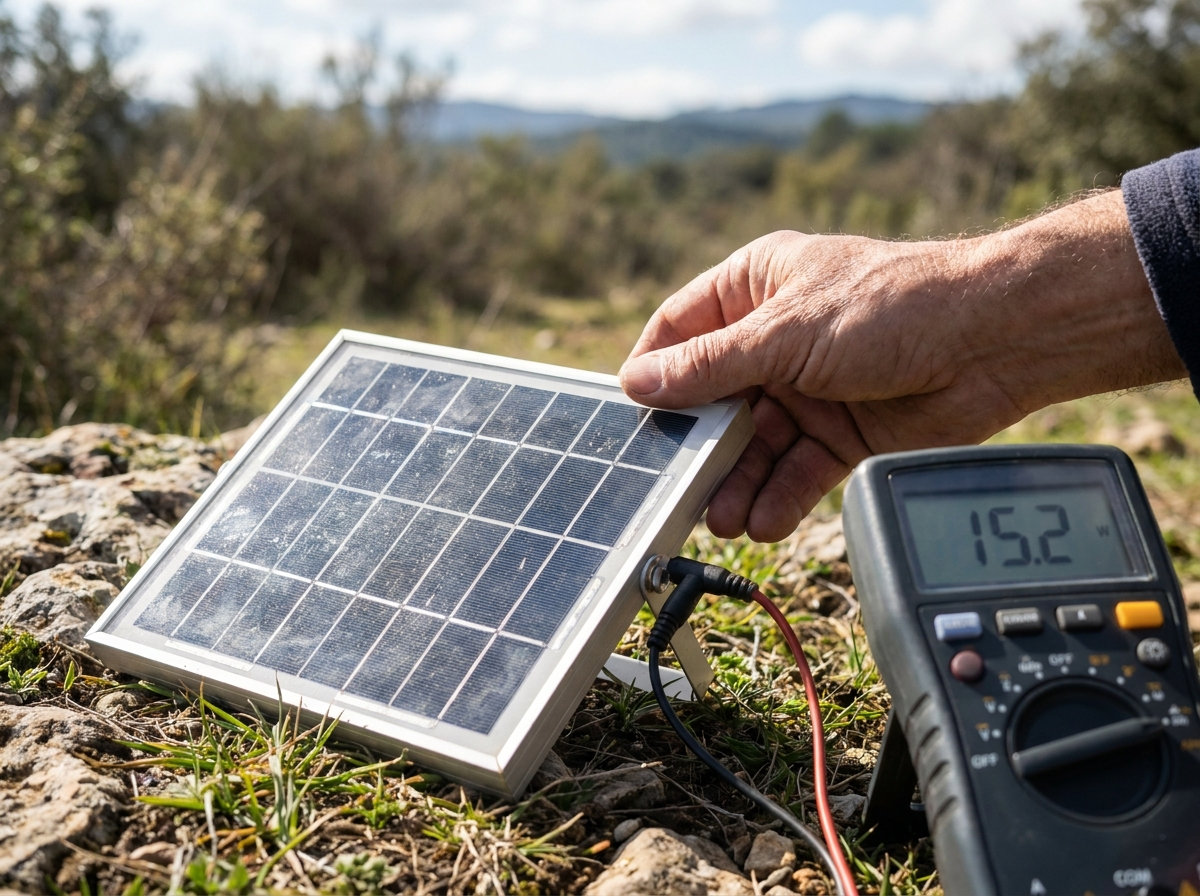
A realistic rule of thumb: expect 70–80% of rated wattage on a clear, sunny day with ideal panel angle. In hazy conditions, partial shade, or high heat, output drops further. A 200W panel in direct summer sun might deliver 140–160W into a compatible charge controller. That’s not a defect — that’s physics.
Why does this matter for buying? Because a 100W panel from a budget brand and a 100W panel from a reputable one may have the same label but very different real outputs. The difference often shows up in cell efficiency and how aggressively the marketing team rounded up.
Panel Types: Monocrystalline vs. Polycrystalline vs. Thin-Film
Monocrystalline
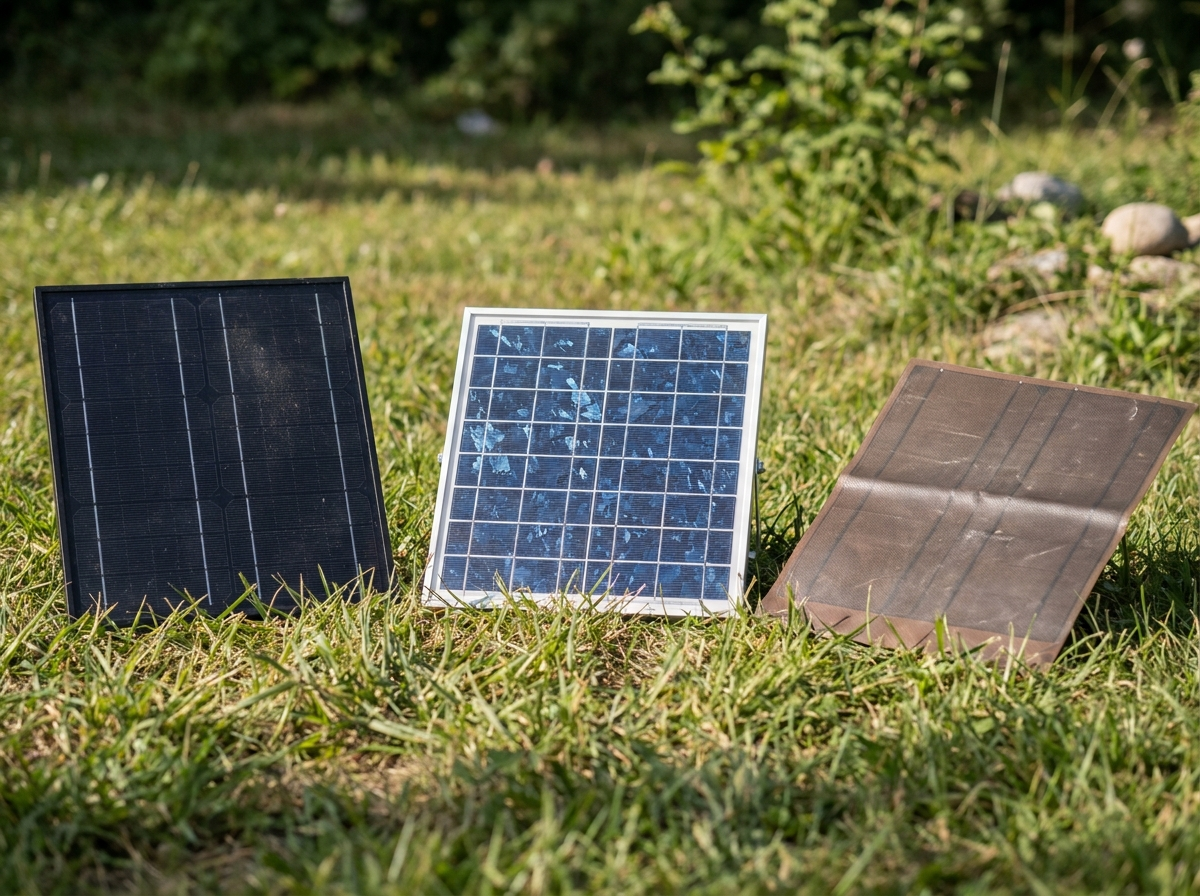
This is what you want for portable use. Monocrystalline cells are cut from a single silicon crystal, which gives them the highest efficiency per square inch — typically 20–23% for quality cells. That translates directly to more power from a smaller, lighter panel. For backpacking, van life, or fitting panels on a small balcony, size-to-output ratio is everything.
Polycrystalline
Polycrystalline panels use silicon fragments fused together, which makes them cheaper to produce but less efficient — usually 15–17%. They’re larger and heavier for the same wattage. Honestly, they’ve mostly been displaced in the portable market. If a product page doesn’t specify which type, that’s a flag worth noting.
Thin-Film (CIGS, CdTe, Amorphous Silicon)
Thin-film panels are flexible and lightweight, which is why you see them sewn into rollable or foldable form factors. Their efficiency is generally lower than monocrystalline rigid panels, but they handle low-light and diffuse light better and degrade more gracefully under partial shade. The trade-off: they typically have shorter lifespans and can be expensive per watt. Good for ultralight applications where weight is paramount; not ideal if maximum output is the goal.
Form Factors: Foldable, Rigid, and Rollable
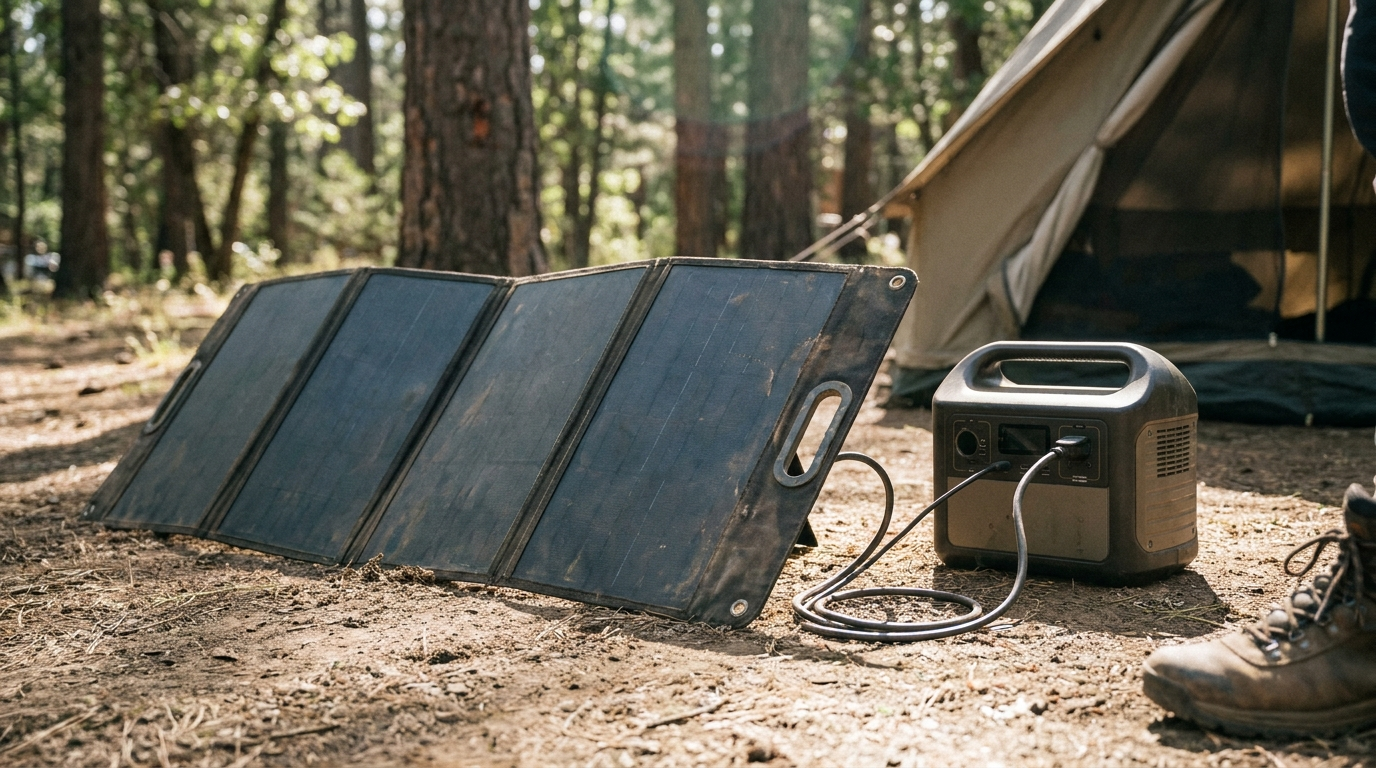
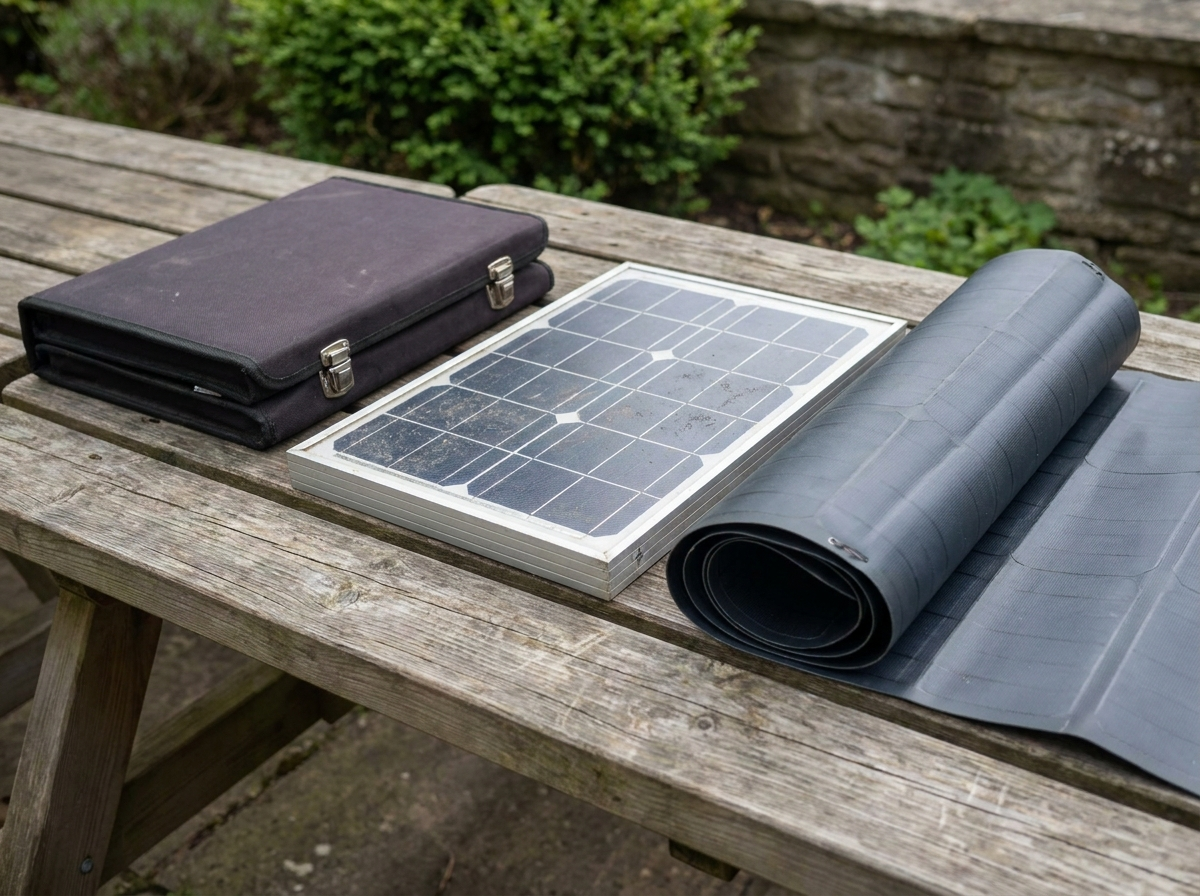
Foldable panels are the most popular portable format. Two to four monocrystalline panels hinged together with a fabric backing, folding down to a briefcase-sized unit. They’re practical, durable enough for regular use, and usually include a kickstand. Most have a carrying handle. These are the go-to for camping, overlanding, and pairing with a portable power station.
Rigid panels in a portable context usually means smaller, frameless panels meant to be placed or strapped flat. Some overlanders carry full-size rigid panels that get clamped to a roof rack or propped against a vehicle. More output per dollar, but far less convenient to move around.
Rollable panels are a niche product — extremely light, packable into a cylinder or tube, good for bikepacking or long-distance hiking. Output-to-weight ratio impresses, but they tend to cost significantly more per watt and need care to avoid crease damage.
Connectors and Compatibility: Don’t Skip This
This is where people get burned. Portable solar power panels ship with different output connectors — MC4, Anderson Powerpole, XT60, DC barrel jacks, and proprietary formats. Your power station or charge controller needs to match, or you’ll need an adapter.
MC4 is the standard on most standalone panels and what solar charge controllers expect. Many portable power stations have a proprietary input port with their own branded cable. Check before you buy. Some stations include an MC4 adapter in the box; others charge extra for it.
Also check voltage and current specs carefully. Most portable power stations accept solar input up to a maximum voltage — often somewhere in the 12–50V range, sometimes higher on larger units. Connect panels in series and you multiply voltage; in parallel, you multiply current. Get this wrong and you risk damaging the charge controller. The station’s documentation will list max input voltage and max input wattage — treat those as hard limits.
How Much Solar Do You Actually Need?
Size your panels to your consumption, not your anxiety. Here’s how to think about it practically:
- Figure out your daily watt-hour draw from whatever you’re powering
- Assume 4–5 peak sun hours in a reasonable location (less in winter, more in summer desert conditions)
- Divide daily Wh by peak sun hours to get the panel wattage needed
- Add 25–30% buffer for real-world losses
Example: you want to recharge a 500Wh power station from empty in one day. At 5 peak sun hours with 75% efficiency, you’d need roughly 133W of panels minimum — so a 160–200W foldable panel is a practical match.
For car camping or van life, people often run 100–200W and find it more than enough for lights, phone charging, a fan, and moderate laptop use. For a full off-grid cabin setup, portable solar power panels are typically a supplement or emergency backup rather than a primary source.
Build Quality Signals Worth Checking
A few things that separate panels that last from ones that don’t:
ETFE vs. PET laminate: ETFE (ethylene tetrafluoroethylene) is the surface coating on quality foldable panels. It’s more scratch-resistant, handles UV degradation better, and is easier to wipe clean. PET is cheaper and more common on budget panels. You can usually tell — ETFE has a slightly harder, more glass-like feel.
Cable quality and strain relief: Thin, stiff cables with poor strain relief at the junction point fail first. Look for braided or silicone-jacketed cables with reinforced entry points into the panel.
Stitching and corner grommets: On foldable units, check the fabric backing. Reinforced corner grommets let you stake or tie the panel down in wind. Cheap stitching at fold points delaminates over time.
IP rating on the junction box: The panel cells themselves don’t need submersion protection, but the junction box where the cables exit should be at least IP65 to handle rain and morning dew without corroding.
A Few Honest Caveats
Portable solar power panels are excellent tools with real limitations. They don’t generate power after dark. They underperform in shade, even partial shade — a shadow across one corner of a series-wired panel can cut output dramatically. They need to be aimed: a panel lying flat on the ground produces meaningfully less power than one tilted toward the sun.
Also, portability has a weight cost. A 200W foldable panel typically weighs somewhere around 10–15 lbs. That’s manageable for a campsite but significant for a hike. Know what you’re actually going to do with the panel before optimizing for wattage.
The best setup for most people: a quality foldable monocrystalline panel in the 100–200W range, matched to a portable power station with a compatible input voltage, ETFE laminate surface, MC4 or station-specific cable included in the box, and ETFE rather than PET coating. That combination handles the overwhelming majority of portable and backup power use cases reliably.
If you’re comparing two panels and one is significantly cheaper with the same specs, ask what’s different — it’s usually the cells, the laminate, or the warranty. Those differences show up in year two and three, not on day one.
Leave a Reply