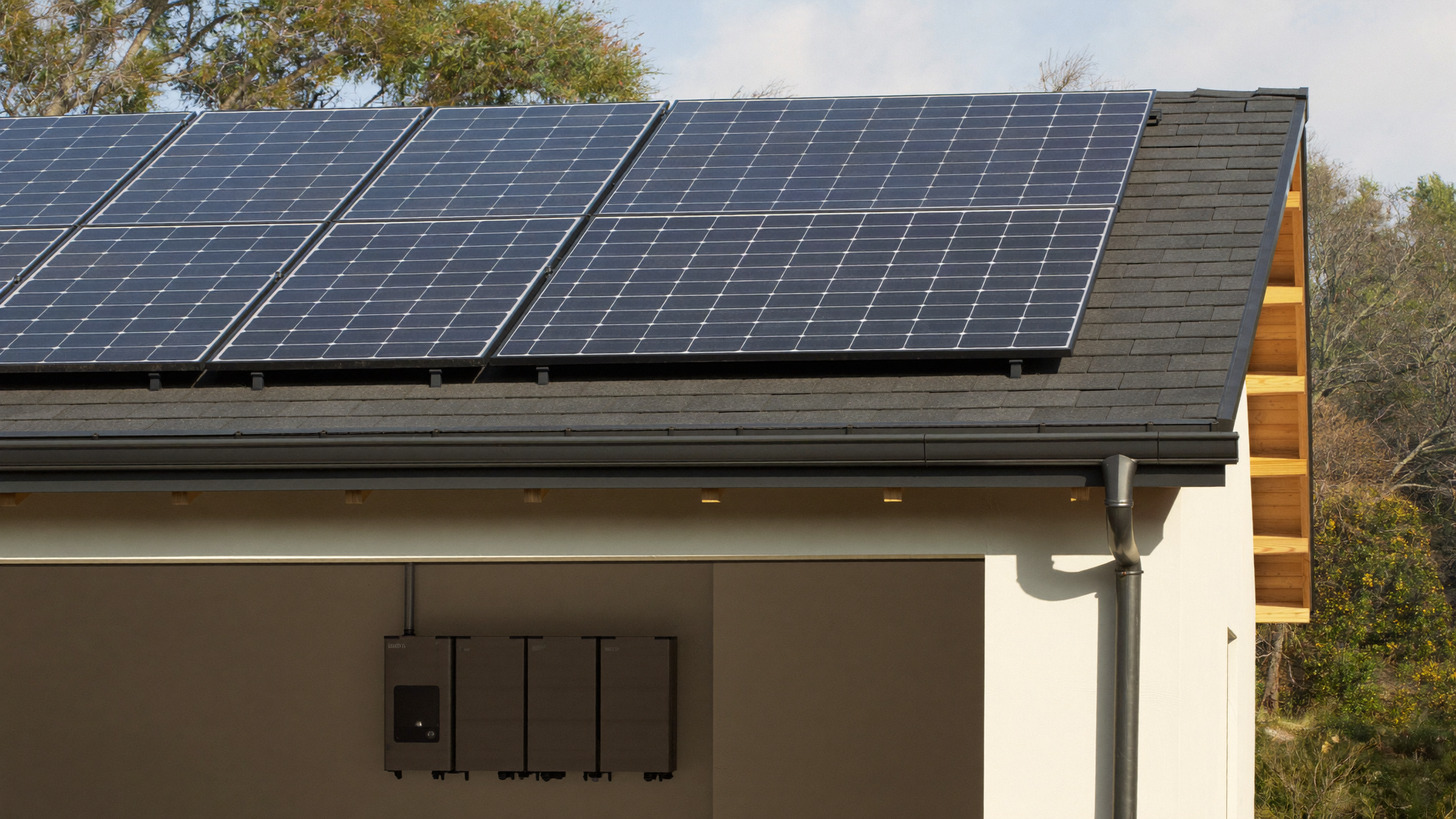
Solar power and battery storage are two separate technologies that become genuinely useful when they work together. Solar panels generate electricity when the sun is out. Batteries hold that electricity so you can use it when the sun isn’t. That’s the core of it — but the details between those two sentences are where most people get tripped up, and where the real decisions live.
This article covers how the system works from panel to outlet, what actually limits performance, and how to think about sizing a setup for your situation.
How Solar Generation Actually Works
A solar panel is made of photovoltaic cells that produce direct current (DC) electricity when sunlight hits them. The amount of power produced depends on three things: panel wattage, sunlight intensity, and panel temperature.
Panel wattage is the rated output under ideal lab conditions — bright, direct sun at a cool temperature. In real use, you’ll consistently get less. Partial shade, haze, morning and evening angles, and even hot weather all reduce output. A 200W panel on a good sunny day in a temperate climate might average 150W of actual production over the usable solar hours.
Peak sun hours are the key metric for estimating daily output. This isn’t the total hours of daylight — it’s the number of hours per day when solar intensity is equivalent to 1,000 watts per square meter. Most of the continental US gets between 4 and 6 peak sun hours, depending on location and season. Desert Southwest gets more; the Pacific Northwest gets significantly less.
So a 200W panel in a 5 peak-sun-hour location produces roughly 1,000 watt-hours (1 kWh) on a good day. That’s before any system losses.
DC vs. AC and the Role of the Inverter
Most household devices run on AC power. Solar panels produce DC. Something has to bridge that gap.
In a portable power station, the inverter is built in. In a home solar installation, it’s a separate component — either a string inverter, a microinverter on each panel, or a hybrid inverter that also manages battery charging. Conversion always involves some efficiency loss, typically 5–10%. That loss matters when you’re calculating how much usable energy you actually have.
How Battery Storage Fits In
Solar power and battery storage pair together to solve the fundamental mismatch between when solar generates power (midday) and when people actually need it most (evenings, nights, cloudy days, grid outages).
Batteries store the surplus electricity your panels produce during the day. When generation drops — clouds roll in, the sun sets — you draw from the battery instead of the grid or instead of going without power entirely.
Battery Chemistry Matters
The two chemistries you’ll encounter most are lithium iron phosphate (LFP) and traditional lithium-ion (NMC).
LFP batteries run cooler, tolerate more charge cycles before capacity degrades, and are safer in confined spaces. Most quality portable power stations and increasingly home battery systems use LFP. NMC packs more energy into a smaller space but degrades faster and is more sensitive to heat.
Lead-acid batteries still exist in budget off-grid setups. They’re cheaper upfront but heavier, less efficient, and can only be safely discharged to about 50% of their rated capacity. With LFP, you can use 80–90% of rated capacity regularly without meaningful harm to cycle life.
Capacity vs. Usable Capacity
A battery rated at 1,000Wh (1 kWh) doesn’t give you 1,000Wh of usable power. After accounting for inverter losses and the manufacturer’s recommended depth of discharge, you might realistically get 850–900Wh from a quality LFP unit. Lead-acid gives you closer to 500Wh from the same rated capacity.
This is why comparing battery capacities across chemistries requires adjusting for usable capacity, not just sticker numbers.
Sizing a Solar-Plus-Storage System
This is where most guides hand you a vague formula. Here’s a more grounded approach.
Step 1: Know Your Load
List what you want to power and for how long. Be specific:
- A full-size refrigerator runs at roughly 100–150W but cycles on and off, averaging maybe 50–60W over 24 hours — call it 1,200–1,500Wh per day.
- A CPAP machine without a humidifier draws 30–60W. Eight hours a night is 240–480Wh.
- A laptop is 45–65W while charging. Two hours a day is under 150Wh.
- LED lighting, phone charging, and a fan are modest loads — maybe 200Wh combined for a typical day.
Add up daily watt-hours. That’s your daily consumption target.
Step 2: Size Your Battery
Your battery needs to cover at least one day of consumption, preferably two for cloudy-day buffer. If you’re running 2,000Wh/day and want a two-day reserve, you need 4,000Wh of usable capacity. In LFP terms, that’s roughly a 4.5–5 kWh rated system.
For portable setups — camping, van life, emergency backup — a portable power station with an expandable battery system can reach 2–4 kWh. For a whole-home backup or off-grid cabin, you’re looking at dedicated home battery systems that typically start around 10 kWh.
Step 3: Size Your Solar Array
You need your panels to refill the battery in a reasonable window. Divide your daily consumption by your local peak sun hours to find the panel wattage needed.
2,000Wh ÷ 5 peak sun hours = 400W of panels, before losses. Add 20–25% to account for real-world inefficiencies. Call it 500W of solar to be comfortable.
More panels than you strictly need isn’t wasteful — it means faster recharge on good days and more resilience on bad ones.
Where Solar Power and Battery Storage Actually Falls Short
No system covers every scenario. Honesty here prevents expensive frustration.
Heavy loads are the real constraint. Electric ranges, central air conditioning, electric water heaters, and EV charging draw enormous power. Running a 1,500W space heater for eight hours eats 12 kWh — more than most residential battery systems hold. Unless you have a very large array and a large battery bank, solar-plus-storage works best when you’re selective about what you power.
Winter and cloudy climates cut production sharply. Four days of overcast skies can drain a battery bank that solar can’t keep up with. In those climates, a generator backup or grid tie is often part of a realistic system rather than a failure of the concept.
Charging time is often underestimated. A portable power station rated for 100W of solar input takes ten-plus hours to fully charge from empty in ideal conditions. Most people don’t have ideal conditions. Expect longer.
Off-Grid vs. Grid-Tied vs. Portable
These three configurations suit very different situations.
Grid-tied with battery backup is the most practical for most homeowners. You use the grid normally, export excess solar, and the battery kicks in during outages. You get resilience without needing to fully cover your own loads.
Off-grid requires a system sized to cover 100% of your needs year-round, including the worst solar month. That means larger arrays, more battery capacity, and usually a backup generator. It’s viable but demands rigorous load management.
Portable solar-plus-storage — a foldable solar panel paired with a portable power station — is genuinely useful for camping, work sites, and short-term power outages. It won’t run a refrigerator for a week, but it handles lights, devices, fans, and small appliances reliably. The barrier to entry is low, and the learning curve is short.
Getting the Most From What You Have
A few practices that consistently improve real-world performance:
- Angle your panels toward peak sun. Fixed flat panels on a van roof lose 15–30% compared to tilted panels facing the sun directly.
- Avoid partial shade. Even one shaded cell on a panel can drop output significantly. Position panels in clear sky exposure.
- Charge batteries in mild temperatures. LFP chemistry charges poorly below freezing and degrades faster in sustained heat.
- Run high-draw appliances during solar hours. Charge laptops and run the microwave while the panels are generating, not after sunset.
The mechanics of solar power and battery storage aren’t complicated once you break them into their component parts. Panels generate. Batteries store. Inverters convert. Your loads consume. Size each part to the others, know where the gaps are, and you’ll have a system that does what you actually need it to do.
Leave a Reply