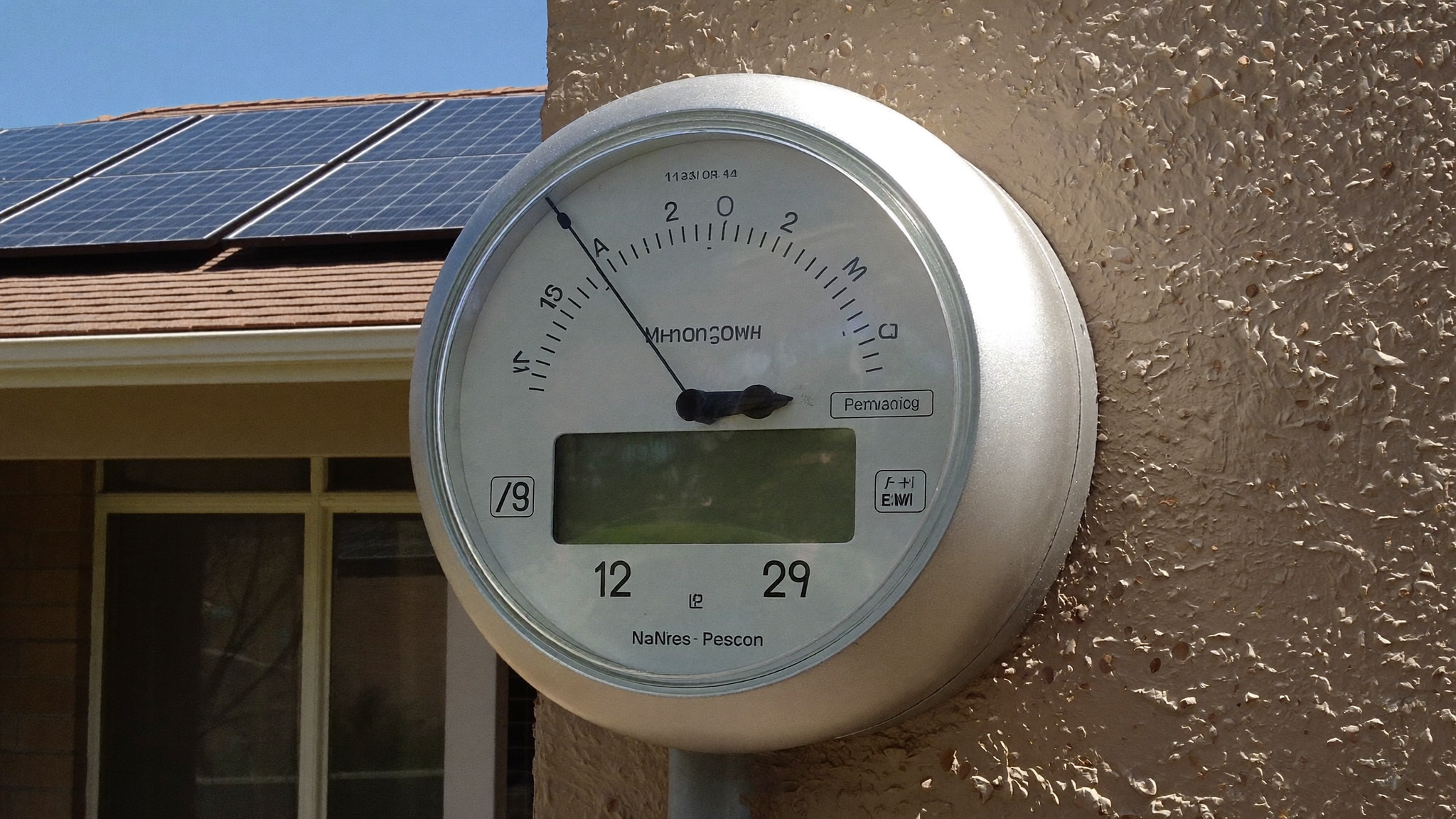
How a Net Meter Works and Why It Matters for Your Home
Disclosure: This site earns a small commission on qualifying purchases made through links in our content, at no extra cost to you.
If you’ve looked at your utility bill after going solar and wondered what those positive and negative kilowatt-hour numbers actually mean, you’ve already met the net meter — you just didn’t have a proper introduction. Understanding it changes how you think about energy storage, backup power, and whether a portable power station even fits into your setup.
What a Net Meter Actually Is
A net meter is a bidirectional electricity meter. Unlike the old analog dial meters that only measure power flowing into your home, a net meter tracks flow in both directions — power coming in from the grid and power going out from your solar panels or battery system.
The “net” part is straightforward math: kilowatt-hours exported minus kilowatt-hours imported equals your net consumption for the billing period. If you sent more electricity to the grid than you pulled, you’re in credit territory. If you pulled more than you sent, you owe the difference.
Modern net meters are almost always digital smart meters. They log interval data — often in 15-minute increments — and report it back to your utility automatically. Some older installations used mechanical meters that could literally spin backward when you exported power; those are rare now, and most utilities have replaced them.
How It’s Different from a Standard Meter
A standard meter only counts in one direction. It can’t distinguish between solar production you used on-site and solar production you exported. That distinction matters enormously for billing and for understanding the real value of your system.
With a net meter, the utility sees two figures:
– Total kWh imported (what you consumed from the grid)
– Total kWh exported (what your system pushed back)
Some utility billing systems show these as separate line items. Others show only the net. Either way, the meter itself is recording both.
How Net Metering Programs Work
The meter is just hardware. Net metering is the policy built around it, and these policies vary significantly by state, province, and utility.
Under full retail net metering — the most favorable version — every kWh you export is credited at the same rate you’d pay to import a kWh. Export a kWh at peak afternoon solar production, get credit worth a kWh of evening consumption. Simple, and genuinely valuable.
Many utilities have moved away from this model. Increasingly common alternatives include:
- Avoided cost crediting: You’re credited at the utility’s wholesale or “avoided cost” rate — often 30–50% of retail. Your exported power is worth a lot less.
- Time-of-use (TOU) net metering: Credit rates shift by time of day. This can actually favor battery storage systems, since you can store solar power and export during peak-price windows.
- Net billing: Not the same as net metering. Under net billing, the credit for exports and the charge for imports are calculated separately and often at different rates.
Before assuming your solar installation is set up for true net metering, check your interconnection agreement. The net meter on your wall is neutral — it just measures. The billing policy is what determines your economics.
Reading Your Net Meter
Digital net meters typically cycle through several displays. You’ll usually see:
- Total kWh delivered — power the grid sent to you
- Total kWh received — power you exported to the grid
- Sometimes a net total, sometimes instantaneous demand in kilowatts
If you see a negative number on your bill, that typically means your exported credits exceeded your imports — you’re in surplus. What happens to that surplus depends on your utility. Some roll it forward indefinitely, some expire credits annually, and some cut you a small check at the avoided-cost rate. Letting large credits accumulate is rarely the best financial outcome, which is one reason proper system sizing matters.
Where Backup Power and Batteries Fit In
Here’s where things get genuinely interesting — and where a lot of solar customers get confused.
Battery Storage and the Net Meter
A home battery system (charged by solar, grid, or both) doesn’t change how your net meter works, but it changes how you interact with the grid. A battery lets you consume your own solar generation instead of exporting it. Whether that’s better or worse than exporting depends entirely on your net metering rate.
Under full retail net metering, exporting excess solar often makes more sense financially than storing it — you get full retail credit for every kWh you export, and the battery has round-trip efficiency losses. Under avoided-cost crediting, storing your own solar and using it at night beats exporting it at a fraction of retail rate.
Some utilities require a second meter — a “production meter” — to measure all solar generation regardless of whether it’s used on-site or exported. If you have that configuration, your system monitoring will show three figures: total generation, self-consumption, and net export.
Portable Power Stations in a Net Metering Household
A portable power station — essentially a large rechargeable battery with AC/DC outputs — operates completely off-grid within your home. It doesn’t interact with your net meter at all. You charge it from a wall outlet (which does register on the meter as consumption), and when you draw from it during an outage, you’re using stored energy with no grid connection involved.
This is worth understanding clearly: a portable power station will not generate net metering credits. It’s not a grid-connected device. But for households where the main goal is outage resilience rather than energy economics, a portable power station can be an excellent complement to a solar-plus-net-metering setup. Charge it during the day when your solar panels are covering household loads anyway, and you have a meaningful backup without the cost and complexity of a full home battery installation.
The practical limitation is capacity. A portable power station can run essential devices — refrigerator, lights, phone charging, a CPAP machine — for hours to a day or two depending on size and usage. It won’t replace a whole-home generator or a large-scale home battery for extended outages.
Common Misunderstandings About Net Meters
“My solar panels power my house directly.” Not exactly. In a standard grid-tied solar system, your panels feed power into the home’s electrical panel. What gets used on-site is consumed; what isn’t gets pushed to the grid. During a grid outage, a grid-tied system without battery backup shuts down entirely — a safety requirement so that exported power doesn’t energize utility lines and endanger workers.
“I’m off-grid because I have solar.” Grid-tied solar with net metering is the opposite of off-grid. You’re deeply integrated with the grid — you’re just using it like a giant virtual battery with credits and debits.
“My net meter measures my solar production.” It measures net exchange with the grid. On-site solar consumption is invisible to it. To measure total solar production, you need the inverter’s production data or a separate production meter.
What to Actually Track
If you have a net meter installed, the numbers that matter most are:
- Your net kWh over a 12-month period — the truest measure of whether your system is right-sized
- Your utility’s export credit rate vs. retail rate — determines battery storage economics
- Seasonal patterns — most solar systems run surplus in summer, deficit in winter; knowing your annual net prevents surprises
Your utility’s online account portal usually graphs this data now. Use it. Comparing your solar inverter’s production data against your net metering import/export figures tells you exactly how much of your generation you’re self-consuming versus exporting — and whether adjusting your energy use habits (running the dishwasher at noon instead of midnight, for example) would improve your economics.
The net meter is straightforward hardware doing a simple job. The complexity lives in the policies around it, and in how your broader energy system — solar, batteries, backup devices — interacts with the grid it measures.
Leave a Reply